From Training to the Fireline: Indigenous Wildland Firefighters Build Stronger First Nations Emergency Response
THUNDER BAY — A federally supported effort to train Indigenous wildland firefighters is showing what can happen when emergency-management dollars are invested not only in responding to disasters, but in building skills and capacity within First Nations themselves.
Indigenous Services Canada, working with the Indigenous Police Chiefs of Ontario, the International Wildfire Alliance and experienced trainers from Canada, the United States and beyond, has helped create a pool of Indigenous firefighters trained to recognized wildland firefighting standards.
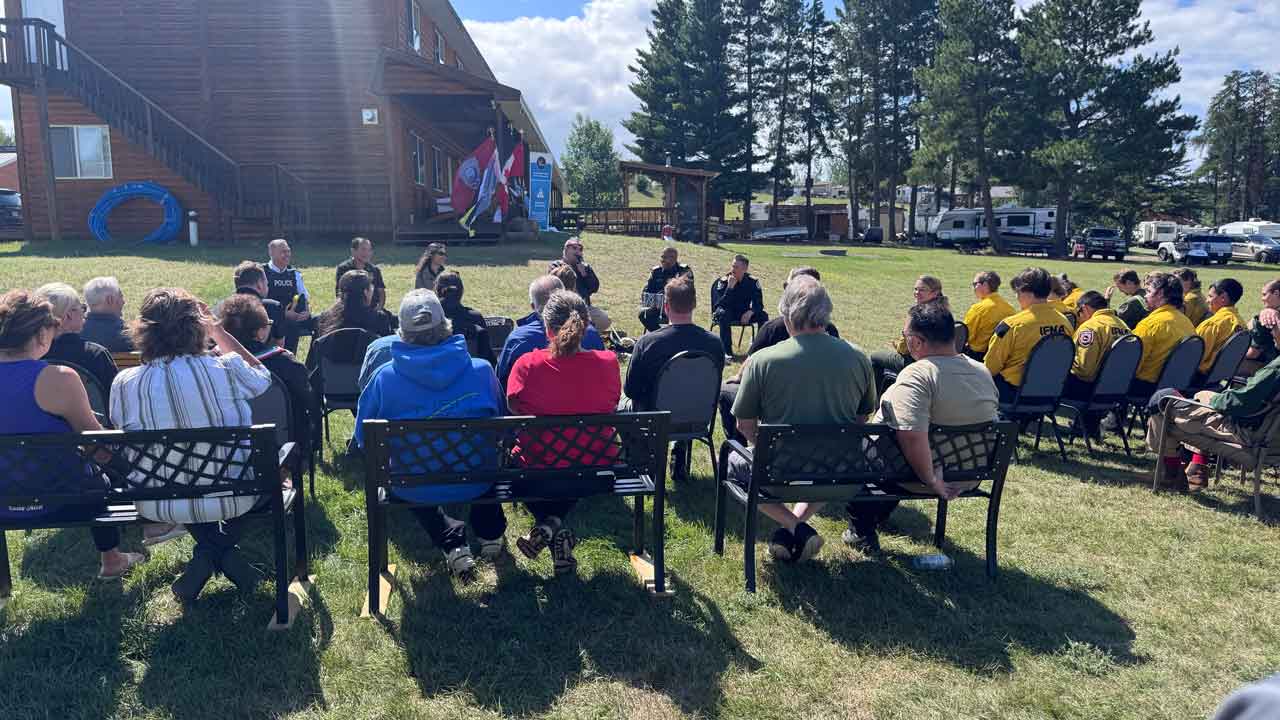
In 2026, that investment moved from training grounds to an active Northwestern Ontario wildfire response. Firefighters from Lac Seul First Nation, Saugeen First Nation, Walpole Island First Nation and Nipissing First Nation deployed to support Whitesand First Nation and operations associated with Thunder Bay 059.
The immediate benefit was more trained people available when a First Nation needed help. The larger benefit could be much more significant: First Nations developing their own emergency-response workforce, leadership and mutual-aid networks rather than remaining almost entirely dependent on governments and outside agencies when wildfires threaten their communities.
Training That Actually Reached the Fireline
Indigenous Services Canada has provided more than $1 million in partnership with IPCO to support Indigenous wildland firefighter training, according to information provided to NetNewsLedger.
IPCO said its program was designed to build a provincial roster of Indigenous wildland firefighters capable of responding when First Nations required additional resources.
Seventy-three participants had completed the program and received the certifications required under the initiative, Indigenous Services Canada told NetNewsLedger. IPCO has described its Response-Ready Wildfire Training Program, developed with the International Wildfire Alliance, as focused on preparing First Nations personnel through practical training and recognized standards.
Further sessions were held in Saugeen First Nation and Nipissing First Nation in 2026, where IPCO reported another 38 people were certified.
Then came the real test.
When the Independent First Nations Alliance requested assistance during the wildfire threat to Whitesand First Nation, personnel trained through the program were deployed.
They were no longer students practising for a possible emergency.
They were firefighters helping another First Nation protect people, infrastructure and territory.
Benefit One: More Firefighters Available When Communities Need Them
The first advantage is also the most straightforward.
Wildfires require people.
During severe fire seasons, Ontario can be managing dozens or even hundreds of simultaneous fires. Crews, aircraft, incident-management personnel and equipment must be assigned according to changing priorities.
Creating another pool of qualified firefighters increases the number of people potentially available when resources are stretched.
That is particularly important for First Nations.
Indigenous Services Canada says Indigenous communities have accounted for 42 per cent of wildland fire evacuations in Canada over the past four decades. In 2025 alone, more than 45,000 people from 73 First Nations were displaced by wildfire.
Those numbers make Indigenous wildfire capacity a public-safety issue, not simply an employment or training program.
The more qualified personnel available before the next severe fire season, the more options emergency managers have when several communities are threatened simultaneously.
Benefit Two: First Nations Can Become Part of the First Response
Perhaps the most important change is philosophical.
For generations, emergency response affecting First Nations has too often been structured around outside agencies arriving to manage an emergency.
Training Indigenous responders changes that relationship.
It creates the possibility that people from First Nations can be part of prevention, preparedness, initial attack, community protection, incident management and recovery from the beginning.
That does not mean Ontario’s Aviation, Forest Fire and Emergency Services, Indigenous Services Canada or other emergency agencies are no longer needed.
Large wildfires require specialized aircraft, heavy equipment, logistics, meteorological information and extensive incident-management systems.
Indigenous crews add capacity to that system.
They also give First Nations a larger operational role in protecting their own communities.
IPCO executive director Kai Liu called the Whitesand deployment a demonstration of a co-ordinated Indigenous-led approach intended to protect residents, infrastructure and traditional territories while developing long-term First Nations wildfire capability.
Benefit Three: Local Knowledge Travels With the Firefighter
Wildland firefighting is technical work, but responding effectively to an emergency also requires understanding the place where that emergency is happening.
First Nations responders can bring knowledge of northern and remote-community realities that may not be obvious to personnel arriving from hundreds or thousands of kilometres away.
That can include understanding how communities are laid out, where vulnerable infrastructure is located, how people travel on the land, the importance of particular cultural areas and how residents communicate during emergencies.
Local knowledge does not replace professional fire science.
The strength comes from combining the two.
A responder who understands fire behaviour, pumps, hose lays, communications, safety zones and incident-command procedures — while also understanding First Nations communities and Indigenous perspectives — brings an additional layer of capability to an emergency operation.
Benefit Four: One Deployment Builds Capacity in Several Communities
The value of the Whitesand operation did not end when firefighters left the fireline.
Personnel deployed from Lac Seul, Saugeen, Walpole Island and Nipissing gained experience working during a real wildfire emergency.
They can now take that experience home.
Training provides the foundation. Operational experience develops judgment.
Firefighters learn how plans change when weather shifts, what logistical problems appear in the field, how agencies communicate, how equipment performs under sustained use and how an incident-management structure functions during an actual emergency.
The IPCO deployment also included an Incident Management Assistance and Training Team of senior personnel providing mentorship and operational support.
NetNewsLedger reported that firefighters gained additional field experience under Carmanah Wildfire Ltd. and wildfire specialists associated with the International Wildfire Alliance.
That creates a multiplier effect.
A firefighter deployed to Whitesand can return home better prepared to help protect another community, train colleagues and eventually move toward crew leadership or incident-management responsibilities.
Benefit Five: First Nations Helping First Nations
There is another important dimension to the model.
The responders supporting Whitesand were themselves from First Nations.
That creates the foundation for an Indigenous mutual-aid network.
When one community is overwhelmed, trained responders from other Nations can potentially be mobilized to help.
That approach is already familiar elsewhere in emergency management. Provinces routinely send firefighters and aircraft to one another during severe wildfire seasons, while Canada both receives and provides international wildfire assistance.
There is no reason First Nations should not have stronger Indigenous-led mutual-aid capacity operating alongside those systems.
A network of deployable Indigenous firefighters could become particularly important across Northwestern Ontario, where communities can be separated by hundreds of kilometres and some have no permanent road connection.
When wildfire threatens several communities simultaneously, additional trained personnel can become invaluable.
Benefit Six: Training Creates Jobs and Career Paths
Wildfire preparedness is also workforce development.
Ontario’s SP100 entry-level wildland firefighter course, for example, covers fire behaviour, suppression equipment, communications, pumps, hand tools and firefighter safety. Certification is a recognized entry point into wildland firefighting work.
Other federally supported Indigenous wildfire programs are pursuing the same objective.
Natural Resources Canada has funded training initiatives involving Independent First Nations Alliance, Pikangikum, Bimose Tribal Council, Keewaytinook Okimakanak and Matawa communities, among others.
Projects include Type I and Type II wildland firefighter training, wildfire prevention, mitigation and employment preparation.
For young people in First Nations, that can mean another route into skilled employment.
A person may begin as a seasonal firefighter and eventually move into crew leadership, emergency management, FireSmart work, forestry, incident command, prevention, mapping or other public-safety occupations.
The federal Fighting and Managing Wildfires in a Changing Climate Training Fund has been explicitly designed in part to reduce employment barriers while strengthening local firefighting capacity.
Benefit Seven: Communities Keep the Investment
Emergency spending often happens after disaster strikes.
Aircraft are chartered. Hotels are booked. Evacuation transportation is organized. Emergency personnel are moved across the country.
Those measures are necessary when lives are threatened.
Training takes a different approach.
It leaves something behind.
When funding pays to train an Indigenous firefighter, the skill remains with that person after the immediate fire season ends.
When communities develop incident-management personnel, mapping expertise and emergency plans, that capacity remains available for the next wildfire — and potentially for floods, prolonged power outages, missing-person searches or other emergencies.
Indigenous Services Canada has been funding two IPCO capacity positions since 2024 to assist First Nations with wildfire-preparedness mapping, flood mapping and 911 planning. The department says IPCO can provide guidance or manage projects for communities that do not have the internal resources to complete that work themselves.
Training firefighters is therefore one part of a larger resilience strategy.
Benefit Eight: Better Preparedness Could Mean Better Evacuations — or Fewer of Them
Not every wildfire can be stopped before a community must evacuate.
In Northwestern Ontario, weather, extreme fire behaviour, remoteness and limited road access can make evacuation unavoidable.
However, stronger community-level preparedness can improve the decisions made before an evacuation becomes necessary.
Trained personnel can assist with mitigation work, identify vulnerable infrastructure, prepare equipment, support community protection and provide leadership as conditions deteriorate.
Where evacuation is necessary, responders who understand the community can also support local leadership and outside agencies.
There is not yet enough evidence from the IPCO program to conclude that it will reduce the number or cost of evacuations.
That should be measured over time.
But increasing preparedness gives communities more tools before the only remaining option is getting residents out.
Benefit Nine: Indigenous Leadership Becomes Part of Emergency Management
There is also an issue of self-determination.
A First Nation facing a wildfire should not have to choose between receiving outside assistance and having a meaningful role in protecting its people and territory.
Both can happen.
First Nations can work with Ontario, Canada, municipalities and outside firefighting agencies while maintaining strong Indigenous operational capacity of their own.
That matters because First Nations leaders have repeatedly called for greater involvement in decisions surrounding evacuations, emergency resources and community protection.
During Northwestern Ontario’s severe 2026 wildfire season, First Nations leaders publicly raised concerns about jurisdictional barriers, response times and whether communities were being adequately included in emergency decisions.
Training Indigenous responders does not solve every one of those problems.
But it changes the starting point.
A community with trained firefighters, emergency managers and incident-command personnel comes to the table with its own expertise and operational capability.
A Positive Model — But One That Requires Long-Term Commitment
The benefits of the program are substantial, but maintaining them will require more than one-time training.
Firefighter qualifications must remain current.
Crews need equipment.
People need opportunities for real-world deployment.
Future crew bosses and incident commanders require mentoring and experience.
Communities need stable funding rather than rebuilding programs every few years.
And Indigenous firefighting capacity should supplement — not become an excuse for reducing — the responsibilities of provincial and federal governments.
Indigenous Services Canada’s Ontario Region told NetNewsLedger it was examining funding with IPCO to train another 100 Indigenous participants ahead of the 2027 fire season.
If that happens, Ontario could enter future fire seasons with a substantially larger network of Indigenous responders.
From Funding to Training to Action
Government programs are often measured by announcements and dollar figures.
This one can be measured by something more tangible.
People were trained.
They became qualified.
A First Nation needed assistance.
And Indigenous firefighters answered the call.
For Northwestern Ontario, where wildfire evacuations have become an increasingly familiar part of summer, that is a significant development.
The positive outcome is not simply that additional firefighters were available for Whitesand First Nation in 2026.
It is that those firefighters are now more experienced than they were before the deployment. Their home communities have people returning with additional knowledge. Other First Nations have seen that a mutual-aid model can operate in practice.
And the next generation of Indigenous firefighters can see a pathway from training to certification, from certification to the fireline, and from the fireline into leadership.
That is what building capacity looks like.
The measure of success now will be whether governments and First Nations partners continue building it.