NAN Grand Chief Alvin Fiddler urges Treaty respect as Mark Carney discusses Indian Act reform and Manitoba Premier Wab Kinew calls for the law’s abolition
NAN Grand Chief raises water and health-care concerns as Carney supports talks on Indian Act reform and Manitoba Premier Wab Kinew calls for its abolition.
OTTAWA, UNCEDED ALGONQUIN TERRITORY — Nishnawbe Aski Nation Grand Chief Alvin Fiddler urged Prime Minister Mark Carney and provincial and territorial premiers to honour Treaty commitments, warning that First Nations face pressure to open their lands to resource development while struggling with unsafe drinking water, health-care failures and the loss of young people.
Addressing the First Nations–First Ministers’ Meeting on October 26, 2026, Fiddler called for direct meetings with NAN leadership and said respecting Treaties must guide efforts to build shared prosperity.
His remarks are reproduced in full below. Only line breaks and spacing have been adjusted.
“I want to acknowledge all of you – relatives and friends that are here in this room. Miigwetch for being here and for accepting our tobacco offering to Elder Claudette Commanda on behalf of NAN so that we can have a good meeting and a good day. Thank you, Claudette, for always supporting our work.
“I acknowledge the sacred fire that is outside, that has been burning for some time now. I also acknowledge our young people that are outside, struggling to have their voice heard about their future, about their land and their waters.
“A year ago, in September, I sent a letter to your office, Prime Minister, and to Premier Doug Ford, asking both of you to sit with our Leadership so that you could hear directly from them about the tremendous pressures they are facing. Pressure to open up their territories for resource development while dealing with a water crisis. Forty percent of boil water advisories nationally, and sixty percent provincially, are in our communities.
“Our communities face these pressures while losing young people to addictions and suicide, and while trying to address the impacts of climate change, as we saw this summer with forest fires and evacuations. They are trying to navigate systems that are supposed to be there for them, like healthcare. Those systems are failing them.
“I want to give you one example of the harm that I talk about.
“A young mother from Fort Severn with three children had major heart surgery in April. She was supposed to have follow-up appointments in May, June, and July. At least five of those appointments did not happen because her travel was denied (by NIHB). She went into medical distress in September and she passed away.
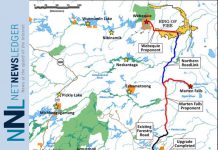
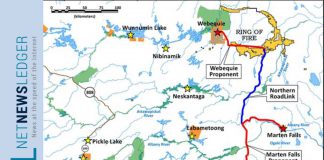
“That is one name on a long list of harms and challenges our communities are navigating while dealing with pressure to open up their lands and territories. The Ring of Fire is just one example.
“How can you expect a community like Marten Falls to effectively negotiate a meaningful agreement while trying to access clean water for themselves? They have been on the boil water advisory list since 2004. The same as my community.
“My message to you, Prime Minister, and to the Premiers, is this: our Treaties should not be seen as obstacles to your economic agenda. They should be viewed as the foundation of our relationship. That is the only way we can make meaningful progress – if there is respect on both sides.
“I will give you the letter I sent you, Prime Minister, and I will send a copy to Premier Ford. Along with that letter is a Treaty document, Treaty No. 9 and Treaty No. 5. I hope you will honour our request to meet.
“Today’s agenda talks about a shared, resilient, prosperous path forward. My message is simple: honour the Treaties, implement the Treaties. According to my father, and those who were there to witness the signings, the Treaties were designed for three things: peaceful coexistence, mutual benefit, and – if you honour those two – we will have prosperity.
“We do not need to create new policy to find a prosperous path forward. All you have to do, everyone in this room, is honour the Treaties.
“Miigwetch.”
Following the meeting, Carney said the federal government would work with First Nations to develop a path beyond the Indian Act. The Prime Minister’s Office said the discussions included both reform and possible abolition of the legislation.
“Canada’s strength comes from what we can build and what we achieve together,” Carney said in the federal government’s meeting summary.
Carney said First Nations should share in the wealth generated by major projects. Ottawa announced discussions on a possible First Nations Sovereign Wealth Fund and said the finance minister would work with First Nations leaders on its design.
The federal announcement also included more than $2.5 billion over five years for emergency management and fire protection, along with nearly $450 million in ongoing funding. Ottawa said the money would support evacuations, emergency assistance and rebuilding after disasters.
Manitoba Premier Wab Kinew called for abolishing the Indian Act while speaking to reporters during a break in the meeting.
“It’s time to abolish the Indian Act,” Kinew said, according to The Canadian Press.
Holding up his First Nations status card, Kinew argued that Canada needs a relationship with Indigenous Peoples that reflects the country today. His comments were a call for change, rather than an announcement that the legislation had been repealed.
Assembly of First Nations National Chief Cindy Woodhouse Nepinak cautioned that the act contains protections and said First Nations must decide how to proceed. Carney said any reform or abolition would be developed in partnership with First Nations leadership.