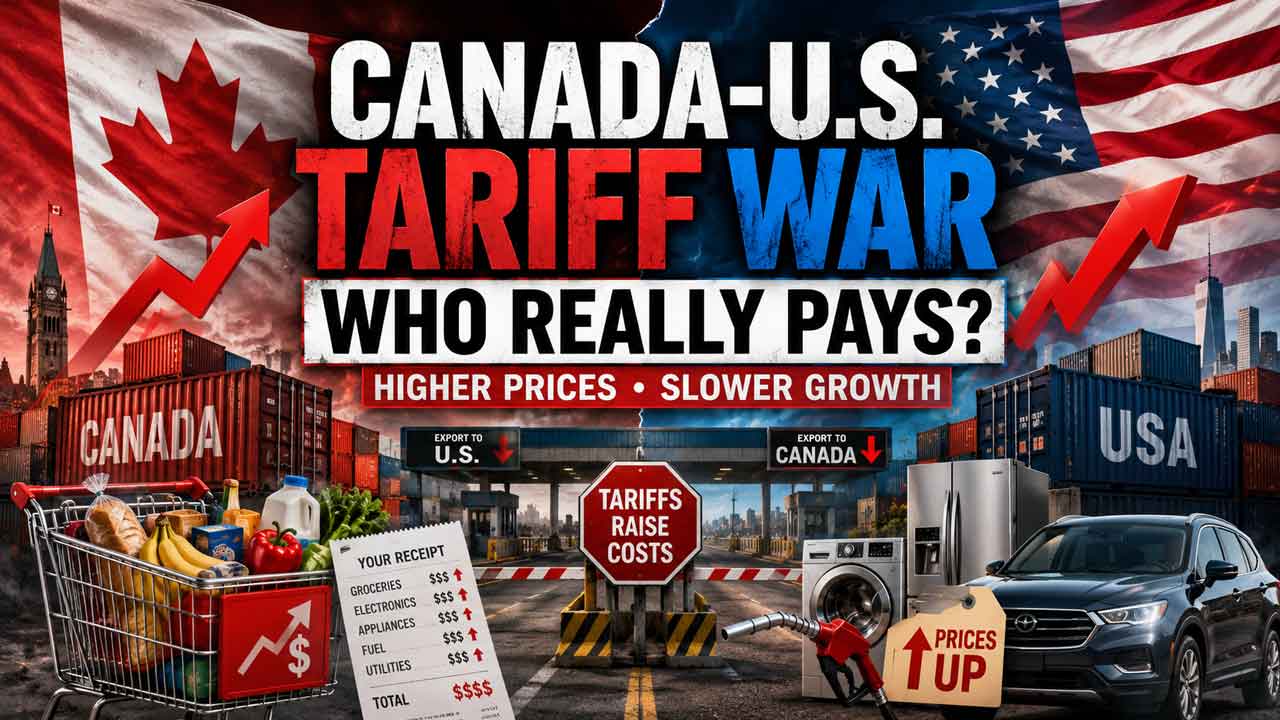
THUNDER BAY – BUSINESS AND CONSUMER NEWS – September 29, 2026 – Canada’s latest counter-tariffs on goods from the United States took effect on September 8, 2026.
The measures apply surtaxes of 15, 25 or 50 per cent to C$27.6 billion worth of selected U.S.-origin imports. They cover far more than steel and industrial machinery. The federal list also includes selected dairy products, honey, cosmetics, clothing, paper products, furniture, major appliances, smartphones, sporting goods and vehicles.
These tariffs are very targeted. Analysts note they are in US States that are in play in the 2026 Mid-term elections in the United States.
For Canadian consumers, the most likely result is not a 50 per cent increase on every item in those categories.
The impact will be uneven. Some importers and retailers will absorb part of the cost, some will switch suppliers, and some will pass a portion of the tariff to shoppers. Products already in Canadian warehouses may also hold their old price until inventories are replaced.
The practical message is simple: check the country of origin, compare the full price and look for a Canadian-made substitute when one genuinely exists.
The Tariffs Are Already in Force
Ottawa announced the new countermeasures on August 25 after the United States imposed tariffs of up to 50 per cent on C$27.6 billion in Canadian goods. Canada’s matching tariffs came into force at 12:01 a.m. on September 8.
The current list includes rates of 15, 25 and 50 per cent. Existing Canadian counter-tariffs on U.S. automobiles also remain in place. The Department of Finance says its online consolidated list is the authoritative source for the products, effective dates and rates.
These are targeted tariffs, not a blanket tax on everything sold by an American company. Customs treatment depends on where the good originates and how it is classified under the Harmonized System.
Who Actually Pays the Tariff?
The Canadian importer pays the surtax when an affected U.S.-origin product enters Canada. The U.S. manufacturer does not write a cheque directly to the Canadian government.
The importer can respond in several ways:
- absorb some or all of the tariff through a lower profit margin;
- ask the U.S. supplier for a lower wholesale price;
- raise the price charged to retailers or consumers;
- switch to a Canadian or non-U.S. supplier;
- stop carrying the product; or
- seek federal tariff remission in exceptional cases where an input cannot reasonably be sourced in Canada or from another country.
That is why a 25 per cent tariff does not automatically mean a 25 per cent increase at the checkout. It is also why the effect can take weeks or months to become clear.
What Earlier Canadian Tariffs Tell Us About Prices
A May 2026 Bank of Canada study provides the strongest recent evidence. It examined more than 110,000 online products during Canada’s six-month tariff episode in 2025.
By mid-June 2025, prices of tariffed products were about six per cent higher than comparable non-tariffed goods. That was roughly one-quarter of the 25 per cent tariff then in place. The study estimated that the counter-tariffs added about 0.3 percentage points to consumer price inflation.
The Bank also found no significant relative price increase among Canadian-made substitutes or comparable goods imported from countries other than the United States. Prices of the tariffed goods moved back toward normal after most of the tariffs were removed.
That history is useful, but it is not a precise forecast for the measures now in force. The new list, tariff rates, exchange rate, retail competition and length of the dispute are different. Some present rates reach 50 per cent, and retailers may pass on more of the cost if they expect the dispute to last.
Where Consumers Are Most Likely to Notice the Impact
Groceries: U.S.-origin cheese faces a 25 per cent tariff, while several milk powders, whey products and honey face 50 per cent. Baking mixes and doughs are also listed at 50 per cent. Canadian supply is strong in dairy and honey, so substitution should be easier than in electronics.
Personal care: Selected U.S.-origin perfumes, makeup, skin-care products and hair preparations face 50 per cent tariffs. Shoppers may see higher prices, fewer promotions or more shelf space given to Canadian and overseas brands.
Homes and renovations: The list includes carpets, plastic floor coverings, plywood, paper products, lighting, furniture and some building inputs. Even when the final product is made in Canada, imported U.S. components can raise a manufacturer’s costs.
Appliances: U.S.-origin air conditioners and heat pumps face tariffs of 15 or 25 per cent. Refrigerators, freezers, washing machines, stoves, ranges and selected small appliances are generally listed at 25 per cent. Canadian manufacturing is limited in several of these categories, which makes repair, refurbished equipment or non-U.S. production important alternatives.
Electronics and recreation: U.S.-origin smartphones and video-game consoles are listed at 50 per cent, as are selected fitness, golf and fishing products. However, an American brand is not automatically a U.S.-origin product. Many phones and consoles are assembled in Asia and may not attract this surtax.
Vehicles: Existing counter-tariffs on U.S.-origin passenger vehicles continue. The impact depends on the assembly location and the specific tariff rules, not simply the nationality of the badge on the hood.
Made-in-Canada Choices for Tariffed Consumer Categories
The examples below are starting points, not endorsements. Product lines and manufacturing locations can change. Check the label on the exact item before buying.
| Tariffed category | Current Canadian tariff on selected U.S.-origin goods | Canadian-made choices or practical substitutes |
|---|---|---|
| Cheese and dairy ingredients | 25 per cent on cheese; 50 per cent on selected milk powders and whey products | Bothwell Cheese products made in Manitoba with Canadian milk; other cheese bearing the Dairy Farmers of Canada Blue Cow logo, which indicates 100 per cent Canadian milk and dairy ingredients. |
| Natural honey | 50 per cent | Bee Maid Honey, which is owned by Canadian beekeepers and sourced from Western Canadian hives; Ontario and Northwestern Ontario apiary honey labelled Product of Canada. |
| Baking mixes and doughs | 50 per cent on listed mixes and doughs | Locally prepared pizza dough and bakery products, or mixes labelled Product of Canada or Made in Canada. Check the qualifying statement because some Canadian-made mixes contain imported ingredients. |
| Makeup, skin care, perfume and selected hair products | 50 per cent | Look at products from Canadian manufacturer Groupe Marcelle, including Marcelle, Annabelle, Lise Watier and CW Beggs and Sons. Verify the individual item’s origin because accessories and product lines may differ. |
| T-shirts, sweaters, jackets and other listed clothing | 50 per cent | Jerico clothing manufactured in Toronto and items in Stanfield’s Made in Canada collection. Do not assume every item sold by a Canadian clothing brand is made here. |
| Toilet paper, facial tissue, paper towels and related paper goods | Generally 25 or 50 per cent, depending on the tariff item | Kruger Products says Cashmere, Purex, SpongeTowels, Scotties and Bonterra products carrying its Made in Canada claim are manufactured in British Columbia, Ontario or Quebec with domestic and imported materials. |
| Plastic kitchenware and household goods | 50 per cent | Where the use allows, choose longer-lasting metal cookware from Meyer Canada lines made in Prince Edward Island. Glass, wood and stainless-steel goods made in Canada can also replace some disposable plastic products. |
| Carpet and floor coverings | 25 or 50 per cent, depending on material and classification | Beaulieu Canada identifies a range of carpets as Made in Canada. Confirm the origin of the exact collection with the retailer. |
| Household furniture and seating | 25 or 50 per cent, depending on the item | Durham Furniture makes solid-wood furniture at its plant in Durham, Ontario. Canadel makes and hand-finishes furniture in Quebec. Confirm that the chosen model carries a Canadian-origin claim. |
| Ranges and cooking stoves | 25 per cent | Elmira Stove Works says its ranges are built from the ground up in Ontario. For mainstream appliances with no Canadian-made match, compare non-U.S.-origin models or repair an existing unit. |
| Fitness equipment | 50 per cent on listed exercise and athletics equipment | Atlantis Strength designs and manufactures its equipment in Quebec. For household budgets, used equipment from a Canadian seller avoids a new cross-border import. |
| Smartphones and video-game consoles | 50 per cent when the finished product is U.S.-origin | There is no mainstream Canadian-made substitute. Repairing a device, buying refurbished in Canada or choosing a product made in a non-U.S. country may be the realistic option. Check origin, not brand headquarters. |
| Passenger vehicles | Existing 25 per cent counter-tariff continues on covered U.S.-origin vehicles | Compare Canadian-assembled vehicles and used vehicles. A vehicle identification number beginning with 2 generally indicates Canadian assembly, but the dealer should confirm tariff treatment and origin for the exact vehicle. |
How to Tell Whether a Product Is Really Canadian
A Canadian company name, a maple leaf or a Canadian head-office address does not prove that a product was manufactured in Canada.
For non-food goods, the Competition Bureau says a Product of Canada claim generally requires at least 98 per cent of direct production costs to be incurred in Canada, with the last substantial transformation occurring here.
A Made in Canada claim generally requires at least 51 per cent of direct production costs to be incurred in Canada, the last substantial transformation to occur here, and a qualifier such as “Made in Canada with imported parts.”
Food labels follow federal food-labelling guidance. Product of Canada means all or virtually all major ingredients, processing and labour are Canadian. Made in Canada must be qualified when imported ingredients are used.
What This Means in Thunder Bay and Northwestern Ontario
Consumers in Thunder Bay should have reasonable access to Canadian dairy, honey, paper products, clothing and some furniture. The choice will be narrower for major appliances, electronics and specialized sporting goods.
In smaller and remote Northwestern Ontario communities, retailers carry less inventory and face higher freight costs. That could make product substitutions slower and price increases more noticeable. This is an economic risk, not a confirmed region-wide price forecast.
Families replacing an appliance, vehicle or phone should ask three questions before buying:
- Where was this exact model manufactured?
- Is the quoted price affected by a Canadian surtax?
- Is there a Canadian-made, non-U.S.-made, repaired or refurbished option with a better total cost?
Is Buying Canadian Always Cheaper?
No. Canadian-made goods can cost more because of labour, production scale, raw materials or transportation. A tariff can narrow the price gap, but it does not guarantee that the Canadian option will be less expensive.
There are also cases where no Canadian-made alternative exists. Smartphones, video-game consoles and many mass-market appliances are clear examples. In those categories, the practical consumer response may be to delay replacement, repair the product, buy used or refurbished, or choose a model made outside the United States.
Consumers should also avoid panic buying. The federal government can grant tariff relief in exceptional cases, businesses can change suppliers, and the tariff list can be revised as the dispute develops.
The Bottom Line
Canada’s counter-tariffs are designed to answer U.S. trade pressure and protect Canadian bargaining power. They also create a real domestic cost.
The most likely consumer outcome is a gradual and uneven rise in the price of affected U.S.-origin goods, not an instant across-the-board jump matching the tariff rate. Canadian-made and non-U.S. substitutes can limit the impact, especially in food, paper, clothing and furniture. The greatest pressure will be in categories where Canada has little domestic production or where Canadian manufacturers still rely on tariffed American inputs.
Buying Canadian can support local jobs and reduce direct exposure to the tariffs. The smart approach is to verify the product’s origin, compare total prices and recognize that a Canadian brand is not always a Canadian-made product.
Summary
Canada’s new U.S. counter-tariffs may raise prices on dairy, honey, cosmetics, clothing, furniture, appliances and electronics. Here are Canadian-made alternatives and consumer tips.