Canada’s counter-tariffs are now collecting at the border, while Washington is preparing import bans and a wider list of tariffed Canadian goods. Here is the international, national, regional and local news NetNewsLedger readers need to start Wednesday, September 9, 2026.
THUNDER BAY – NEWS – The Canada – United States trade dispute has moved into a more dangerous phase.
Canadian counter-tariffs on $27.6 billion worth of U.S.-origin goods took effect at 12:01 a.m. on Tuesday. Hours later, the White House announced that certain Canadian alcohol, dairy and motor-vehicle-related products will be barred from entering the United States beginning September 29. Washington will also add and remove products from its tariff lists on September 15.
For Canadians, this is no longer only a fight between two governments. Importers pay tariffs at the border, and at least part of that cost can move through wholesalers and retailers to the final customer. Exporters can lose orders when their products become too expensive in the U.S. market.
This NewsHawk briefing was prepared from information available as of 8:05 a.m. EDT on September 9. Fast-moving stories may change during the day.
The Morning Brief
| Front | What happened | Why it matters in Northwestern Ontario |
|---|---|---|
| Canada – “U.S. trade | Canada began charging new counter-tariffs; the U.S. announced future Canadian import bans and tariff-list changes. | Household goods, industrial inputs and cross-border sales could become more expensive or less predictable. |
| Middle East and oil | U.S.–Iran attacks around the Strait of Hormuz intensified and Brent crude moved above US$100 a barrel. | Fuel and freight costs are especially important across the long supply routes serving the Northwest. |
| Thunder Bay economy | Ottawa committed $4.7 billion to VIA Rail fleet renewal, with new cars to be built at Alstom in Thunder Bay. | The order supports advanced-manufacturing jobs and regional suppliers at a time of trade uncertainty. |
| Local public safety | Thunder Bay Police reported 78 arrests and hundreds of service referrals through Project Support. | Visible patrols will continue in commercial areas after the pilot’s conclusion. |
| Northwest wildfires | Ontario reported 55 active fires in the Northwest on Tuesday evening, with no new fires confirmed. | Thirty-seven fires were being observed; outdoor-fire rules remain in force. |
Lead Story: Tariff Fight Moves from Threats to Checkout Counters
The Department of Finance says Canada’s new countermeasures apply tariffs of 15, 25 or 50 per cent to selected U.S.-origin goods. The rates generally match the U.S. duties imposed on comparable Canadian products.
The list covers products in sectors including steel, dairy, appliances, farm equipment, pulp and paper, plastics and electronics. It is important to be precise: the tariff does not apply to every American brand or every product sold by a U.S. company. It applies to listed goods whose country of origin is the United States. Goods already in transit when the measure took effect are exempt.
The White House response goes further than another round of duties. It says certain Canadian alcohol, dairy and motor-vehicle-related products will be excluded from the U.S. market beginning September 29. The administration is also changing its tariff list effective September 15, removing products including rock salt and cement while adding products including all-terrain vehicles and more dairy goods.
Unlike most normal CUSMA trade, the U.S. Section 338 measures apply even when a covered product qualifies as North American under the trade agreement. Washington also says those duties can be added to applicable Section 232 tariffs.
The U.S. bans include a broad range of alcohol and selected dairy-related goods, while some cheeses and products in paper, aluminum, wood, furniture and lighting were added to the 50 per cent tariff list rather than banned. U.S. steps to remove Canadian-origin products from federal purchasing schedules create another risk for Canadian suppliers.
Ottawa and Washington continue to communicate, but neither side announced a settlement by Wednesday morning.
What Canadian Consumers Are Likely to Notice
A tariff is a tax collected from the importer. It is not a cheque paid by the exporting government. A Canadian company bringing a tariffed U.S.-origin product into Canada must pay the applicable surtax, then decide whether to absorb it, negotiate a lower supplier price, switch sources or charge the customer more.
The Bank of Canada explains that higher tariffs normally mean weaker demand, slower growth and higher inflation. Its study of Canada’s 2018 counter-tariffs found that affected consumer prices rose unevenly, but the average pass-through was about 60 per cent after six quarters. That history is a guide, not a forecast for today’s much larger rates.
| What to watch | Likely effect | What consumers can do |
|---|---|---|
| Tariffed U.S.-origin appliances, electronics, furniture and clothing | Prices may rise after existing inventory is replaced. | Check country of origin and compare Canadian or non-U.S. alternatives. |
| Goods using tariffed steel, aluminum or components | The final item may cost more even if it is assembled in Canada. | For major purchases, ask how long a written quote is valid and whether surcharges are included. |
| Food and household products | Low margins and fast inventory turnover can move cost increases to shelves quickly. | Compare unit prices and avoid panic buying. |
| Fuel and deliveries | Global oil disruption could raise freight costs independently of tariffs. | Watch total delivered price, not only the shelf or online price. |
The safest conclusion is that some – not all – prices will rise, at different speeds. Retailers may have weeks or months of pre-tariff inventory. Competitive pressure may also force businesses to absorb part of the cost. An American brand name alone does not prove a product is U.S.-origin.
What It Means for Canadian and Northern Businesses
The hit runs in both directions. Canadian exporters facing U.S. duties or bans can lose access to customers. Canadian importers pay Ottawa’s surtax on listed U.S.-origin inputs. Companies that do neither can still be affected when suppliers raise prices or customers cut spending.
The latest Statistics Canada business survey found that 32.2 per cent of businesses expected U.S. tariffs to hurt them over the following 12 months. The figure was 49.7 per cent in manufacturing, 47.3 per cent in transportation and warehousing, and 45.1 per cent in wholesale trade.
Statistics Canada also found 27.4 per cent of businesses had already passed tariff-related cost increases to customers, while 30.4 per cent expected they were likely to do so during the next year.
For Northwestern Ontario, the exposure is practical:
- Construction: tariffed metals, machinery, electrical components and appliances can raise tender prices or shorten the time contractors will guarantee a quote.
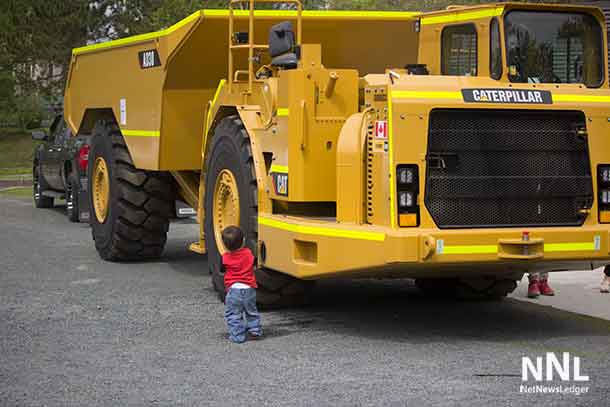
- Mining and forestry: operators and contractors may need to re-source equipment, replacement parts and supplies. Export-facing producers must also watch U.S. customer demand.
- Trucking and remote-community supply: a global oil shock can magnify tariff costs because nearly every product travels a long distance before reaching the Northwest.
- Retail and hospitality: businesses may reduce product choices, change menus or substitute suppliers before increasing prices.
- Manufacturing: integrated Canada–U.S. supply chains can be hit more than once when components cross the border during production.
Businesses should verify the Harmonized System code and origin of each imported product instead of applying a blanket increase. They should also identify substitute suppliers, separate tariff costs from freight and exchange-rate movements, and state clearly whether customer quotes include possible surcharges.
Ottawa has announced a $7.5-billion package of new and enhanced support, including an additional $1.5 billion for the Regional Tariff Response Initiative. Eligibility and delivery details will determine how much of that help reaches affected Northern firms.
International News
U.S. – Iran Shipping Attacks Push Oil Above US$100
The immediate global economic threat is the escalation around the Strait of Hormuz. Iran said it attacked 10 ships after the United States destroyed five Iranian oil tankers. Iran also launched missiles toward a base used by U.S. forces in Jordan; Jordan said most were intercepted and no casualties were reported there.
Brent crude moved above US$100 a barrel for the first time since July. Because the Strait normally carries a major share of the world’s oil, further disruption could feed into Canadian gasoline, diesel, aviation and shipping costs. That would compound, rather than replace, the inflation pressure from tariffs.
Russia’s War on Ukraine Continues Across the Moldova Border Route
Ukrainian authorities said Russian drones struck the Starokozache crossing on the Ukraine – Moldova border, killing two civilians and injuring three. Traffic through the crossing was temporarily suspended. Kyiv also came under drone attack overnight.
IAEA Flags New North Korean Uranium-Enrichment Capacity
The International Atomic Energy Agency says North Korea has built another enrichment facility at Yongbyon that could hold as many as 28 centrifuge cascades. The agency has no inspectors inside North Korea and based the assessment on satellite imagery and open-source material. It called the continued expansion a serious concern, according to the September 9 report.
National News
Ottawa Extends Federal Fuel-Tax Suspension
The federal government has extended the temporary suspension of the fuel excise tax through January 31, 2027. Ottawa says the measure removes 10 cents per litre from the federal tax on gasoline and four cents per litre on diesel. Half the regular rate is scheduled to return in February and March, with the full rate returning April 1, 2027.
The extension may cushion, ”but cannot guarantee protection from retail price increases caused by crude oil, refining margins, exchange rates or distribution costs.
VIA Rail Order Links Trade Policy to Canadian Manufacturing
Ottawa’s $4.7-billion VIA Rail renewal order calls for 313 passenger cars to be built and maintained in Canada. The vehicles are to be produced at Alstom’s Thunder Bay plant, with the program expected to support close to 700 jobs in Ontario and Quebec.
The order is national transportation news and a local economic story. It also shows how public procurement can be used to build domestic capacity during a period of unstable cross-border trade.
Regional News: Northwestern Ontario
Fifty-Five Active Fires Remain in the Northwest
Ontario’s Aviation, Forest Fire and Emergency Services reported no new Northwest Region fires by Tuesday evening. There were 55 active wildland fires: five being held, 13 under control and 37 being observed. One fire had been called out during the previous 24 hours.
The legislated fire season continues through October 31. Anyone burning outside municipal boundaries must follow Ontario’s outdoor-fire rules; residents inside a municipality should also check local restrictions. Wildland fires north of the French and Mattawa rivers can be reported at 310-FIRE (3473).
Trade Uncertainty Raises the Value of Northern Supply Chains
The tariff fight is likely to increase attention on Northern fabrication, repair, transportation and Indigenous procurement capacity. That does not mean every imported product can be replaced locally. It does mean companies with Canadian-made equipment, components or services may have a stronger sales case when they can document origin, delivery capacity and price stability.
The major risk is that uncertainty delays projects. A mining, forestry or construction company may postpone investment when it cannot confidently price machinery, steel, vehicles or replacement parts. The counterweight is domestic procurement—illustrated by the Thunder Bay rail order and federal regional assistance for firms changing suppliers or export markets.
Local News: Thunder Bay
Central Canada Resource Expo Opens Today
The Central Canada Resource Expo runs from 10 a.m. to 5 p.m. Wednesday at Fort William Gardens and the curling club, continuing Thursday from 9 a.m. to 3 p.m. The industrial equipment and services show arrives at a timely moment for mining, construction, forestry and transportation businesses looking for suppliers and alternatives to tariff-exposed inputs.
Project Support Pilot Ends; Commercial-Area Patrols Continue
Thunder Bay Police Service reported more than 9,100 engagements with businesses and members of the public during Project Support. Officers offered 343 social-service referrals, 89 of which were accepted. Police also reported 78 arrests and 74 provincial-offence notices.
The pilot began April 20 in the north and south downtown cores and expanded to the Memorial Avenue and Dawson Road areas in July. TBPS says visible patrols will continue in Thunder Bay commercial areas after the formal pilot’s conclusion.
Thunder Bay Welcomes Rail-Manufacturing Investment
The City of Thunder Bay says the VIA Rail fleet order will strengthen local advanced manufacturing, support skilled employment and create work for suppliers. City Hall called the investment an important milestone for Alstom and its Thunder Bay workforce.
What NewsHawks Should Watch Today
- Whether Ottawa publishes new exemption, remission or business-support details for the counter-tariffs.
- Whether Canadian and U.S. negotiators identify a path to talks before the September 15 tariff-list changes.
- Which exact Canadian products are covered by the U.S. import bans taking effect September 29.
- Whether Brent oil remains above US$100 and how quickly wholesale fuel prices respond.
- Any new fire starts, hazard changes or burning restrictions in Northwestern Ontario.
- Supplier, workforce and procurement announcements emerging from the Thunder Bay Resource Expo.
The Bottom Line
The tariff war will not make every Canadian price jump overnight. It will, however, make planning harder and selected goods more expensive. The businesses most exposed are exporters selling covered products into the United States, importers buying listed U.S.-origin goods and companies that depend on cross-border industrial supply chains.
For consumers, the practical response is comparison – not panic: check origin, ask about surcharges and look at the total delivered price. For businesses, the priority is to map tariff exposure product by product, secure alternative supply and avoid promising prices that cannot be honoured.
With new U.S. measures scheduled for September 15 and September 29, the next three weeks will show whether the dispute returns to the negotiating table or hardens into a longer economic confrontation.
Editorial note: Tariff war is used as a common description of escalating reciprocal trade restrictions. It does not mean military conflict. Forward-looking effects in this report are analysis based on announced measures, economic research and the structure of Northern Ontario supply chains; actual prices and business decisions will vary.