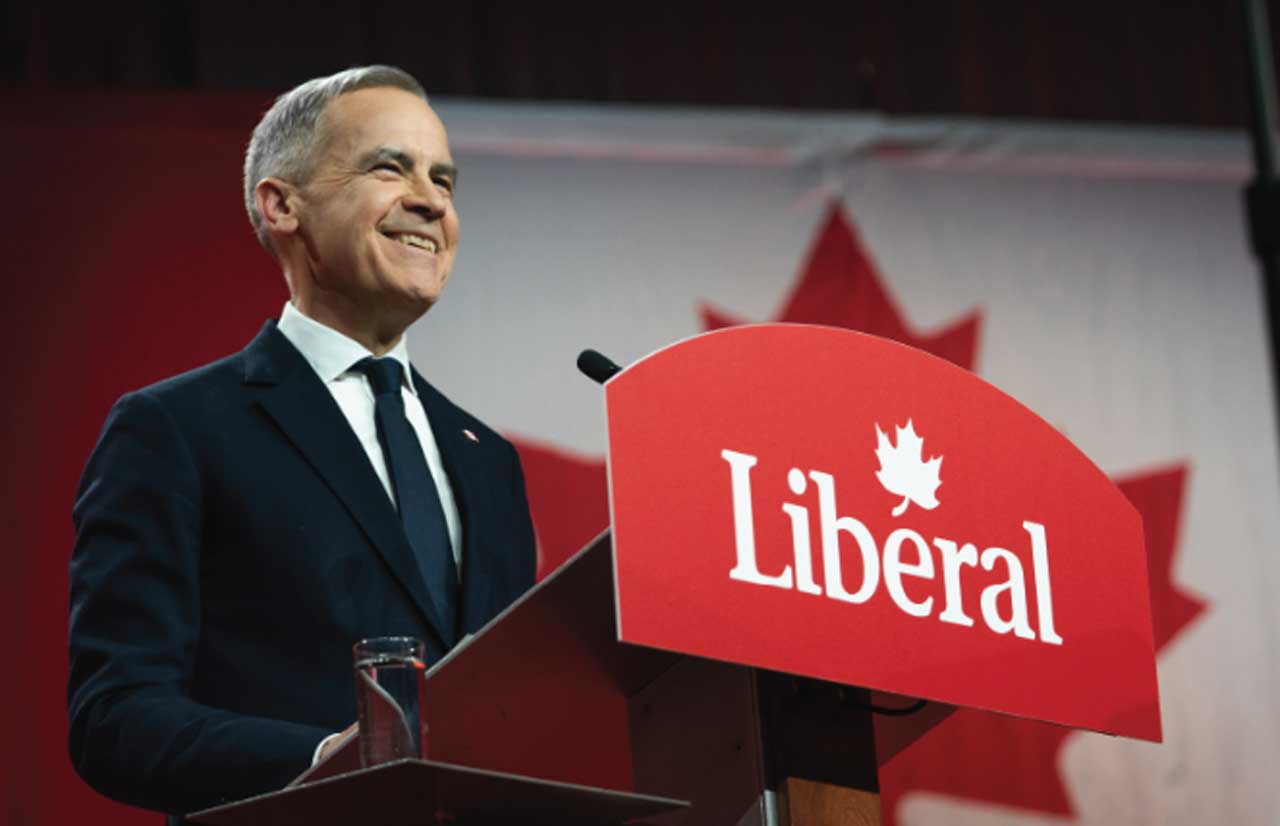
Carney announces national interest designation as Conservatives question delays. For Northern and Indigenous communities, the real measure of progress will be kilometres of highway built.
YELLOWKNIFE – NATIONAL POLITICS – For nearly seven decades, the Mackenzie Valley Highway has been discussed, studied, proposed and promised by governments in Ottawa.
On November 27, 2026, Prime Minister Mark Carney announced in Yellowknife that the proposed 800-kilometre all-season highway has officially been designated a project of national interest under the Building Canada Act.
The federal government is committing to fully fund construction and certain maintenance costs, while establishing a new project management entity to help deliver major infrastructure projects.
Conservative Shadow Minister for Arctic Affairs and Canadian Northern Economic Development Bob Zimmer responded by accusing the Liberal government of repeatedly announcing the same project without delivering the highway.
Both announcements raise an important question: Where does the Mackenzie Valley Highway actually stand, and how close are Northerners to driving on it?
For NetNewsLedger, following the truth and reporting on the journey means looking beyond political announcements, examining the history, listening to Northern and Indigenous communities, and measuring actual progress.
There is a difference between announcing a project, funding a project, approving a project and completing a project.
The Mackenzie Valley Highway has reached another significant milestone. It has not yet reached the finish line.
A Highway With Roots in the Diefenbaker Era
The Mackenzie Valley Highway is hardly a new idea. Its history stretches back to 1958 and Progressive Conservative Prime Minister John Diefenbaker’s vision of opening Canada’s North through his government’s Roads to Resources program.
Successive Liberal and Conservative governments have held office since then, yet the dream of a continuous all-season highway through the Mackenzie Valley remains unfinished.
The proposed highway would extend north from Wrigley, passing near Tulita, Norman Wells and Fort Good Hope before connecting with the Dempster Highway south of Inuvik.
For generations, Northern residents have depended on aircraft, river barges and seasonal winter roads to transport people, food, fuel and construction materials.
Climate change and increasingly unpredictable winter road seasons have added urgency to the project.
Mapping the Mackenzie Valley Highway
From 1958 to 2026: The Long Road to Construction
Records maintained by the Government of the Northwest Territories and Canada’s Major Projects Office establish a lengthy history of planning, environmental studies and funding announcements.
| Year | Project Milestone |
|---|---|
| 1958 | The Mackenzie Valley corridor is identified as a strategic transportation route under the Roads to Resources program. |
| 2013 | The highway enters formal environmental assessment during Stephen Harper’s Conservative government. |
| 2015 | Environmental assessment terms of reference are issued. |
| 2019 | Federal and territorial funding of $140 million supports highway-related planning and infrastructure. |
| 2020–2023 | Access road investments, technical studies and community engagement advance. An assessment report is submitted in October 2023. |
| March 2026 | The project is referred to Canada’s Major Projects Office. |
| June 2026 | Ottawa begins the process of considering a national interest designation, including consultations. |
| August 2026 | Formal notice is published regarding the proposed designation. |
| September 2026 | Ottawa announces $405 million to advance the highway project. |
| November 2026 | Budget 2026 proposes full federal funding for construction and certain maintenance expenses. |
| November 25, 2026 | Indigenous, federal and territorial governments sign a Leadership Governance Understanding. |
| November 27, 2026 | Carney announces the project’s formal national interest designation. |
The documented history demonstrates that responsibility for the highway’s long journey extends across several generations of governments.
Carney Government Says This Time Is Different
The Prime Minister’s Office says the designation will help coordinate federal approvals, reduce duplication and accelerate the project’s development.
Carney is also promising federal financial backing for the entire highway’s construction.
“Time and again, history has proven that the more connected we are, the stronger we are. The Mackenzie Valley Highway is the next vital link. More than a road, it will be a gateway to improving lives, unlocking new economic opportunities, and strengthening our sovereignty. A North connected year-round makes Canada strong.”
— Prime Minister Mark Carney
The federal government says the completed highway could improve transportation for more than 10,000 people, including approximately 1,900 Sahtu residents who would gain all-season road access for the first time.
Ottawa projects that the highway could generate 3,000 jobs at peak construction, improve access to mineral resources, expand tourism opportunities and strengthen Canada’s Arctic defence capabilities.
The government also estimates that the new route could reduce driving time between Yellowknife and Inuvik from approximately 38 hours to 23 hours.
These are projected benefits, however, and remain dependent on the successful completion of the project.
Conservatives: Northerners Need Roads, Not Announcements
Conservative MP Bob Zimmer is questioning whether the latest announcement represents meaningful progress toward construction.
“Today Prime Minister Mark Carney flew to Yellowknife to announce the Mackenzie Valley Highway once again. This is the sixth time this Liberal government has made an announcement on this project, and the fourth time a member of the Liberal cabinet has flown to Northwest Territories to do so,” Zimmer stated in a November 27 media release.
“Northerners have heard plenty of promises but they are still waiting for a road.”
Zimmer pointed to a series of federal announcements throughout 2026, arguing that the government has repeatedly promoted the project without delivering the completed highway.
He also challenged Carney over a March commitment that construction would begin during the summer of 2026.
“Every few months brings a new press conference or a new process. People in Wrigley, Tulita, Norman Wells and Fort Good Hope don’t need another announcement. They need shovels in the ground.”
— Bob Zimmer, Conservative Shadow Minister for Arctic Affairs and Canadian Northern Economic Development
The Conservatives say reducing bureaucratic delays would help deliver major Northern infrastructure projects.
There is substance to Zimmer’s criticism that the government has made repeated announcements. However, those announcements also represent different stages of project development.
A referral, funding commitment, Indigenous governance agreement and legal designation are not necessarily announcements of the same administrative decision.
The important distinction is whether these steps are producing measurable progress toward construction.
Fact Check: Was Construction Supposed to Start in 2026?
This is perhaps the most significant political accountability question arising from Friday’s announcement.
The official transcript of Carney’s March 12, 2026, speech in Yellowknife records the Prime Minister saying: “This summer, we will start construction.”
Carney also identified several related infrastructure projects, including bridge relocation, creek realignment and improvements to the existing Highway 1.
However, the federal government’s project documentation identifies late 2027 as a potential starting point for full corridor construction.
There is an important distinction between preliminary infrastructure improvements and construction of the entire Mackenzie Valley Highway.
Canadians deserve a clear explanation from Ottawa about what construction was completed during the summer of 2026, what remains outstanding and whether the original commitment has been met.
The Conservatives have raised a legitimate accountability question. The federal government has an opportunity to answer it with construction records, expenditure reports and completed infrastructure.
Following the Money: A $4.2-Billion Highway
The updated federal capital cost estimate for the Mackenzie Valley Highway is $4.2 billion.
Budget 2026 sets aside $3.1 billion toward the highway, while the federal government has committed to fully funding construction and certain maintenance costs.
MACKENZIE VALLEY HIGHWAY BY THE NUMBERS
Source: Federal government announcements, Budget 2026 and Major Projects Office documentation. Figures represent estimates, allocations and commitments and should not automatically be added together.
The estimated construction cost works out to roughly $5.25 million per kilometre, although actual costs will vary considerably depending on terrain, bridges, engineering requirements and permafrost conditions.
Funding announcements are important, but they are not the same as money already spent on construction. Ultimately, taxpayers will need to see how much funding has been transferred, which contracts have been awarded and what infrastructure has been delivered.
Long-term maintenance costs also remain a consideration.
Indigenous Governments Must Be at the Centre of the Project
One of the most significant developments this week occurred two days before the Prime Minister’s announcement.
On November 25, Sahtu Secretariat Incorporated, the Gwich’in Tribal Council, Pehdzéh Kı̨́ First Nation and the governments of Canada and the Northwest Territories signed a Leadership Governance Understanding.
The agreement establishes a framework for Indigenous participation in the planning, development and direction of the highway.
Northwest Territories Premier R.J. Simpson welcomed the announcement, emphasizing that generations of Northerners have worked toward making the highway a reality.
“Generations of Northerners have worked to make the Mackenzie Valley Highway a reality, and with continued commitment from Canada and our work in partnership with Indigenous governments, we have never been in a stronger position to get this done,” Simpson stated.
Grand Chief Frederick Blake Jr. of the Gwich’in Tribal Council also welcomed the designation, while emphasizing the importance of modern treaty-based review procedures and achieving free, prior and informed consent.
Chief Jesse Nekenyia-Moses of Pehdzéh Kı̨ First Nation stressed that the highway must be developed with Indigenous communities as partners.
“The highway begins in our community of Wrigley, and our people will be partners in how it is built.”
“National interest and Indigenous rights must move forward together.”
— Chief Jesse Nekenyia-Moses, Pehdzéh Kı̨ First Nation
Charles McNeely, chairman of Sahtu Secretariat Incorporated, described the importance of Indigenous participation in the project’s design and construction.
“The coming of the Mackenzie Valley Highway will bring major changes to the Sahtu Region and its people. Our involvement in the Leadership Governance Understanding will ensure that the Indigenous people along its route will be meaningfully involved in the highway’s design and construction. The highway will benefit us. It will be built with us.”
These statements demonstrate that the highway is about considerably more than a political contest between Liberals and Conservatives.
It is about Indigenous communities determining how development proceeds across their traditional territories and how their people will benefit from that development.
Support for the national interest designation should not be confused with final consent for every aspect of the project.
Environmental Assessment Is Not Simply Red Tape
The Mackenzie Valley Highway remains under environmental assessment by the Mackenzie Valley Environmental Impact Review Board.
The national interest designation does not eliminate the treaty-based environmental review process or Indigenous rights.
The highway will cross environmentally sensitive Northern terrain. Construction must address permafrost, water crossings, wildlife habitat, traditional land use and the potential social impacts of opening previously isolated communities to year-round road access.
There are practical questions about protecting wildlife, managing increased traffic and ensuring communities have adequate policing, emergency services and health care.
The territorial government is developing a community readiness strategy to address both the opportunities and challenges associated with permanent road access.
Environmental assessment, engineering and Indigenous consultation are necessary components of responsible infrastructure development. That does not mean governments should be excused for unnecessary administrative delays.
The challenge is to move efficiently without sacrificing engineering quality, environmental protection or Treaty rights.
When Will the Mackenzie Valley Highway Actually Open?
The federal Major Projects Office currently targets completion in 2032, while the Government of the Northwest Territories anticipates that major corridor construction could begin in late 2027, subject to the necessary approvals.
| Project Milestone | Current Target |
|---|---|
| Revised Environmental Assessment Report | March 2027 |
| Early Bridge and Infrastructure Work | Mid-2027 |
| Environmental Assessment Decision | 2027 |
| Regulatory Approvals and Permits | 2027 |
| Major Highway Construction | Late 2027 |
| Potential Phased Openings | During Construction |
| Federal Completion Target | 2032 |
These dates are planning targets, not guarantees. They remain subject to regulatory approvals, engineering requirements and construction progress.
The federal government is also establishing a new major projects management organization with expertise in delivering complex infrastructure projects. The Mackenzie Valley Highway will be its initial focus.
Whether that new organization accelerates construction or adds another administrative layer will be determined by its performance.
Why This Matters to Northwestern Ontario
For residents of Northwestern Ontario, particularly those living in remote First Nations, many of the challenges facing communities in the Mackenzie Valley are familiar.
High food prices, dependence on seasonal winter roads, expensive air transportation and the difficulties associated with delivering construction materials are realities across Canada’s North.
Ontario is facing similar questions surrounding transportation infrastructure into the Ring of Fire and the development of all-season road connections for remote First Nations.
The Mackenzie Valley Highway could provide important lessons about Indigenous partnerships, infrastructure financing, Northern construction, environmental assessment and community development.
If Canada can successfully deliver an 800-kilometre all-season highway through the Northwest Territories, it could help inform the development of comparable transportation infrastructure elsewhere in Northern Canada.
However, the circumstances, Indigenous rights, environmental conditions and community priorities of each project must be considered independently.
NetNewsLedger: Follow the Truth and Report on the Journey
The Mackenzie Valley Highway offers an opportunity to move beyond traditional political reporting, where one political party makes an announcement and another issues a statement criticizing it.
Instead, the project should be measured against documented progress.
Future reporting should examine the actual dollars spent, construction contracts awarded, Indigenous employment and business opportunities, bridges completed, kilometres of highway built and changes to the anticipated completion date.
The same standard should apply regardless of which political party occupies the Prime Minister’s Office.
It is equally important to measure the eventual benefits to Northern communities. Will grocery prices decline? Will access to health care improve? Will Indigenous businesses secure meaningful construction contracts? Will young people find lasting employment opportunities?
Those are the outcomes that will ultimately determine whether the project succeeds.
The Bottom Line
The Liberal government can reasonably point to the national interest designation, funding commitments and Indigenous governance agreement as meaningful progress.
The Conservatives can reasonably question repeated announcements, the age of the project and the apparent difference between earlier construction promises and the current schedule.
Neither political position changes the reality on the ground: the complete Mackenzie Valley Highway remains to be built.
After nearly 70 years of discussion, Northern residents have good reason to welcome progress while remaining cautious about political promises.
The next chapter in the highway’s history should increasingly be written through engineering reports, construction contracts, completed bridges and kilometres of all-season road.
The true measure of success will come when families in Tulita, Norman Wells and Fort Good Hope can load their vehicles and drive south, regardless of the season.
That will be the announcement worth celebrating.
Sources and Further Reading
- Government of the Northwest Territories — Mackenzie Valley Highway Project
- Government of the Northwest Territories — Environmental Assessment and Regulatory Work
- Prime Minister Carney’s March 12, 2026 Speech in Yellowknife
- Prime Minister’s Office — November 27, 2026 Announcement
- Canada’s Major Projects Office — Mackenzie Valley Highway Project Status
- Federal Budget 2026
- Canadian Press — Mackenzie Valley Highway Listed as Project of National Interest
- Conservative Shadow Minister Bob Zimmer’s November 27, 2026 media statement.
Editor’s Note: The actual extent of preliminary construction completed during summer 2026 has not been independently established through contractor records. Bob Zimmer’s claim concerning the number of cabinet visits has not been independently verified. No original interviews were conducted for this article. Construction costs, projected benefits and completion dates remain subject to change.