Sony’s Alpha A7 V full-frame camera brings faster shooting, smarter autofocus and a major video upgrade
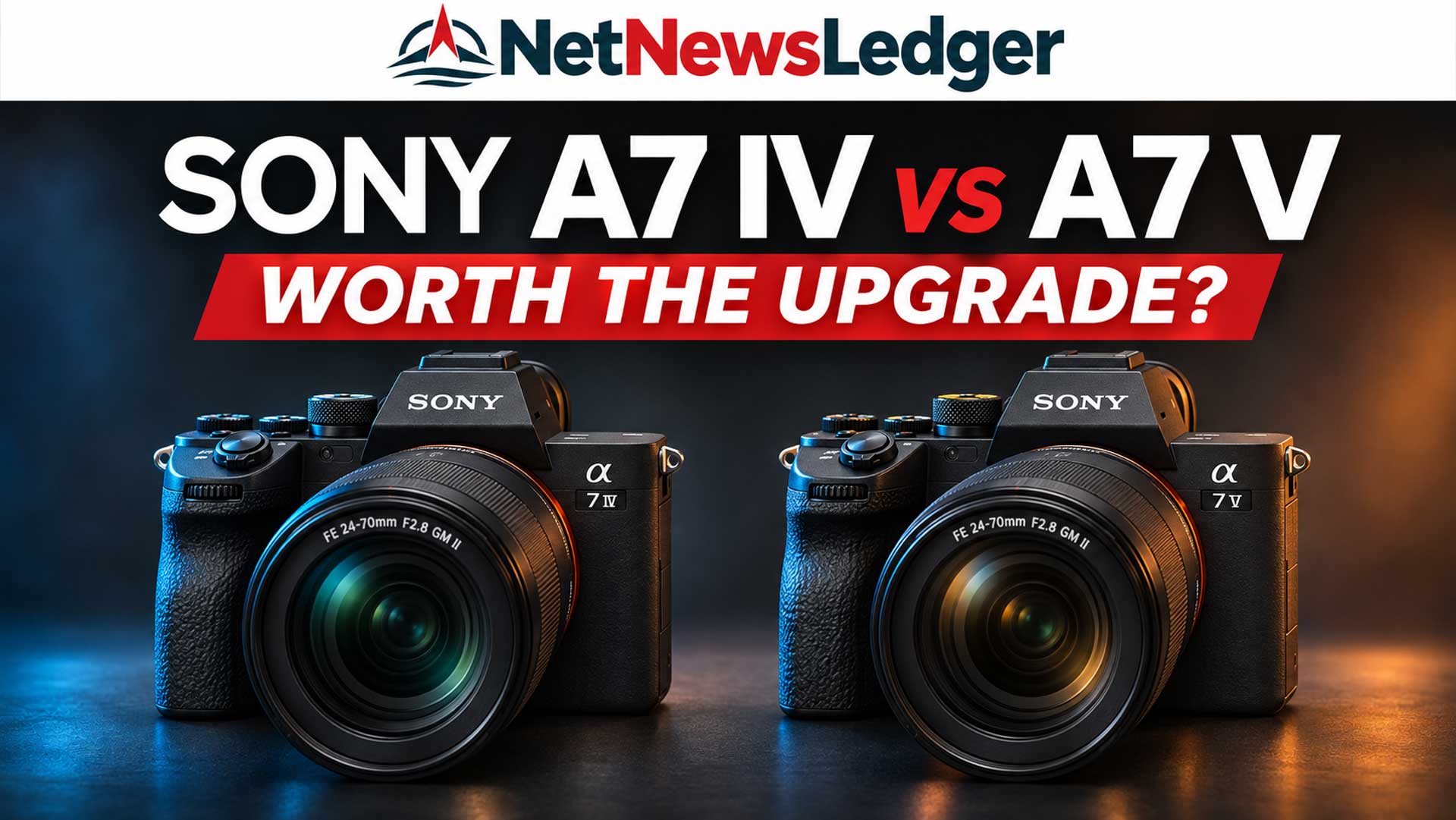
Thunder Bay ON. – Photo TECH – For photographers satisfied with the Alpha 7 IV’s image quality, the case for spending more depends on what they shoot.
The Sony Alpha 7 V is a more capable hybrid camera than the Alpha 7 IV, particularly for sports, wildlife and video. Its faster sensor enables bursts of up to 30 frames per second, improved electronic-shutter performance and full-frame 4K video at 60p. The older camera remains a strong value, however, and both models produce approximately 33-megapixel still photographs.
The short answer: upgrade if the Alpha 7 IV’s speed, autofocus or video limitations regularly cost you shots. Keep it if you mostly photograph slower subjects and are happy with your results.
The Main Differences
| Feature | Sony Alpha 7 IV | Sony Alpha 7 V |
|---|---|---|
| Sensor | Approximately 33MP full-frame CMOS | Approximately 33MP full-frame, partially stacked CMOS |
| Maximum burst | Up to 10 fps | Up to 30 fps with electronic shutter |
| 4K video at 60p | Super 35 crop | Full-frame |
| 4K video at 120p | Not available | Available with Super 35 crop |
| Autofocus | Real-time tracking and subject detection | Newer AI-assisted subject recognition and tracking |
| Stabilization | Rated up to 5.5 stops | Rated up to 7.5 stops |
| Pre-capture | Not available | Up to one second |
Specifications are manufacturer figures; actual burst rates, autofocus performance and stabilization results depend on settings, lens and conditions.
Image Quality: Similar Resolution, Faster Sensor
The Alpha 7 V is not a megapixel upgrade. Both cameras offer roughly 33MP, so photographers should not expect noticeably larger files or substantially more cropping room simply from changing bodies.
The important change is how quickly the newer sensor can be read. The Alpha 7 V’s partially stacked design helps reduce rolling-shutter distortion, which can make moving subjects or vertical lines appear skewed when using an electronic shutter or recording video.
It also helps enable faster continuous shooting. It is not a global shutter, however, so distortion and banding can still occur in challenging conditions.
For landscapes, portraits and other deliberate still photography, those speed advantages may be less valuable than a better lens, lighting or travel budget.
Autofocus and Action: The Strongest Case for Upgrading
The Alpha 7 IV already has capable tracking and eye autofocus. The Alpha 7 V adds newer AI-assisted subject recognition and faster shooting, which can make it more useful when subjects move unpredictably or briefly enter the frame.
Its maximum 30 fps electronic burst, compared with the IV’s 10 fps, can help capture decisive moments in sports and wildlife. The V also offers pre-capture: with the shutter button half-pressed, it buffers images from before the full press. That is useful when a bird takes flight or a player makes an unexpected move.
There are qualifications. The 30 fps maximum depends on the lens and shooting settings. DPReview reports that continuous autofocus with third-party lenses is limited to 15 fps or less on the Alpha 7 V. Fast bursts also create many files and can increase memory-card and storage demands.
Video: A Meaningful Step Forward
For hybrid creators, the Alpha 7 V’s video changes may justify the upgrade on their own.
The Alpha 7 IV records 4K at 60p with a Super 35 crop, narrowing the field of view. The Alpha 7 V can record full-frame 4K/60p, making it easier to retain a wide composition. It also adds 4K/120p for slow motion, although that mode uses a Super 35 crop. Faster sensor readout also reduces rolling shutter compared with the IV.
Neither camera offers internal RAW video or open-gate recording, so creators who specifically need those features should consider other models before buying.
What Does the Upgrade Cost?
As of November 27, U.S. listings show the Alpha 7 IV body around US$1,998 and the Alpha 7 V around US$2,698, a difference of approximately US$700 for someone choosing between new bodies. These are promotional prices and can change. Canadian pricing and offers differ.
In Canada the. Alpha A7 V is available at Henry’s, Vistek, Best Buy and authorized dealers. The A7 IV is about $2,698.00 for the camera body. The Sony A7 V is $3,498.00 for the camera body.
For an existing Alpha 7 IV owner, the real upgrade cost is different: subtract the amount received for the current body from the Alpha 7 V’s purchase price, then account for any taxes, selling fees or new accessories.
Existing compatible E-mount lenses can continue to be used, though owners should check whether their lenses support the burst performance they expect.
The Verdict
Choose the Alpha 7 V if you regularly photograph fast action, need pre-capture, or want full-frame 4K/60p and 4K slow motion. Its improvements address real shooting limitations, not just the specifications sheet.
Keep or buy the Alpha 7 IV if your work centres on portraits, landscapes, travel or events where 10 fps and its existing autofocus are sufficient. At the current price gap, it offers much of the same resolution for less money. For many photographers, putting the difference toward a lens will make a more visible change to their pictures than replacing a camera body that already meets their needs.