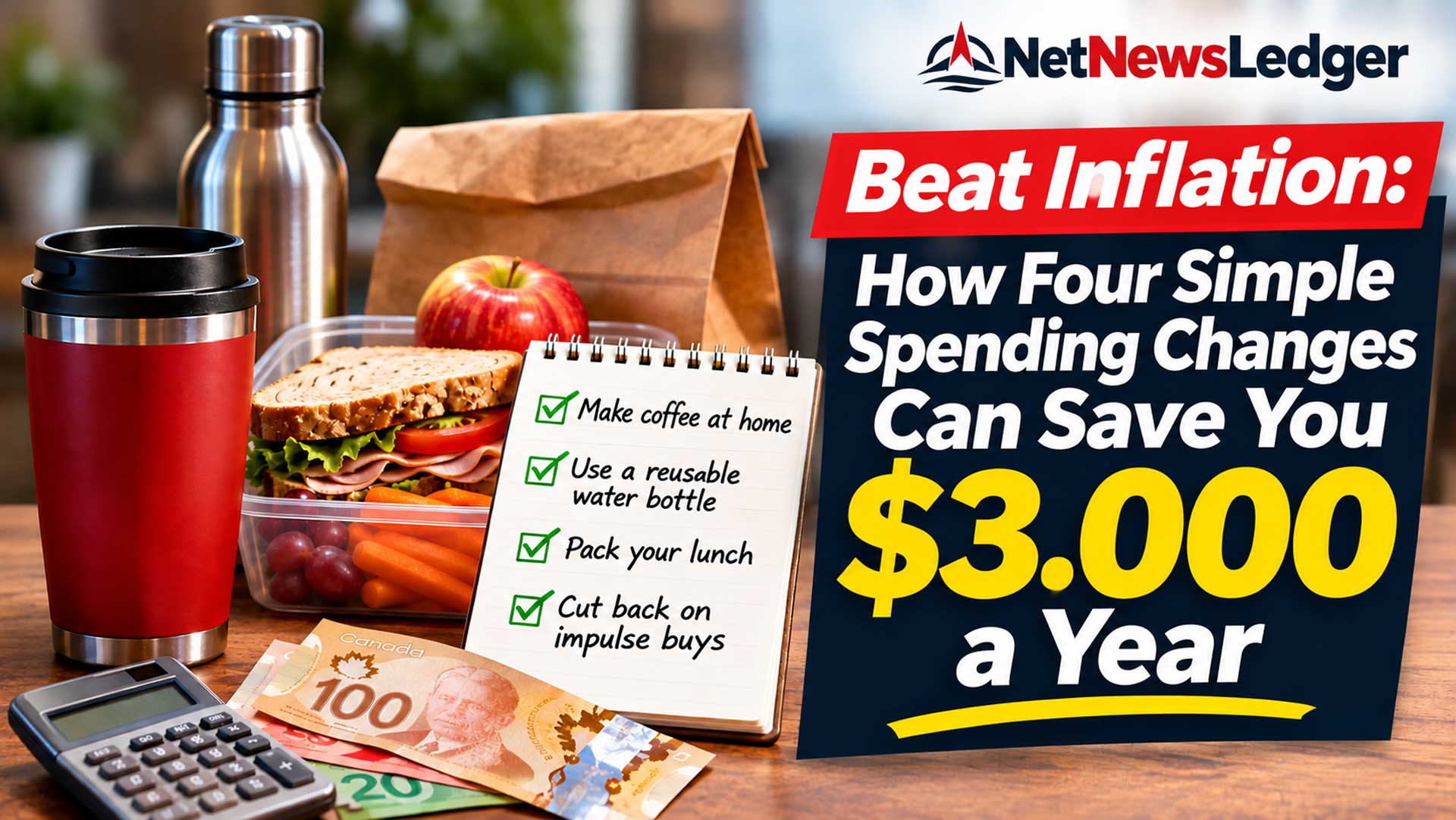
From your morning Double Double to your lunchtime burger and fries, everyday spending habits could be taking a bigger bite out of your budget than you realize.
THUNDER BAY – LIVING – Canadians are feeling the financial pinch. Between groceries, housing, insurance, electricity and the cost of keeping a vehicle on the road, there often seems to be more month left at the end of the money.
While we cannot control the price of gasoline, the cost of groceries or our property taxes, we can exercise more control over some of our everyday spending habits.
The problem is that many of those purchases seem relatively inexpensive. A couple of coffees, a bottle of water, a burger and fries for lunch, or a quick stop at the convenience store on the way home.
Individually, these purchases might not seem like much. Over the course of a year, however, they can add up to thousands of dollars.
What if you could give yourself an extra $250 a month without working a single hour of overtime?
For many working Canadians, making a few changes to their daily routines could do exactly that.
1. The Double Double: Your $1,000-a-Year Coffee Habit
Stopping for a coffee on the way to work is almost a Canadian tradition. Another coffee mid-morning or on the way home can easily become part of your daily routine.
Suppose you spend $2.25 per coffee and purchase two every workday.
- Daily cost: $4.50
- Weekly cost: $22.50
- Annual cost (50 working weeks): $1,125
Making coffee at home, including the cost of coffee, cream and sugar, might cost approximately 40 cents per cup.
A good insulated travel mug will keep your coffee warm, even on those cold Northwestern Ontario winter mornings.
| Coffee Habit | Annual Cost |
|---|---|
| Two purchased coffees per workday | $1,125 |
| Two homemade coffees per workday | $200 |
| Annual Savings | $925 |
You don’t have to give up your favourite coffee shop entirely. Make stopping for a coffee an occasional treat rather than an automatic part of your day.
2. Stop Buying Bottled Water
Buying a bottle of water might seem like a small expense. However, at $2 per bottle, purchasing one every working day adds up quickly.
In Thunder Bay, where municipal tap water is available, filling a reusable water bottle at home provides an inexpensive alternative, provided there is no drinking water advisory in effect.
| Water Consumption | Annual Cost |
|---|---|
| One purchased bottle per workday | $500 |
| Reusable bottle and refills, estimated | $25 |
| Annual Savings | $475 |
There is also an environmental benefit. You could avoid purchasing and disposing of approximately 250 plastic bottles every year.
For residents of Northern Ontario communities without reliable access to safe drinking water, however, bottled water may be a necessity rather than an optional expense.
3. Bring Your Lunch to Work
Remember when heading off to work with a lunch box and a thermos was standard practice?
Perhaps our parents and grandparents were onto something.
A burger, fries and a soft drink can easily cost $15 or more. Add an occasional upgrade or dessert, and lunch becomes a significant household expense.
Preparing sandwiches, homemade soup, chili, pasta or leftovers from the previous night’s dinner might cost approximately $5 per meal.
Let’s assume you currently purchase lunch five days a week but decide to bring lunch from home three days a week.
| Lunch Spending | Cost |
|---|---|
| Five purchased lunches per week | $75 |
| Three homemade and two purchased lunches | $45 |
| Weekly Savings | $30 |
| Annual Savings Over 50 Weeks | $1,500 |
You can still enjoy lunch out with your friends or coworkers twice a week while keeping considerably more money in your pocket.
Preparing a slightly larger dinner and packing the leftovers before going to bed makes the process even easier.
4. Cut Back on Convenience Store Purchases
A chocolate bar here, a bag of chips there, or a soft drink when stopping for gasoline. These purchases often fly under the household budgeting radar.
Eliminating just one unnecessary $3 purchase each week will save $156 over a year.
Buying snacks in larger packages at the grocery store and preparing individual portions at home can also reduce costs.
The goal isn’t to eliminate everything you enjoy. It is to stop paying extra simply because something is convenient.
Your $3,000-a-Year Savings Plan
Here is how four relatively simple lifestyle adjustments could change your financial situation over the next 12 months.
| Spending Adjustment | Annual Savings |
|---|---|
| Make your two daily coffees at home | $925 |
| Replace bottled water with tap water | $475 |
| Pack lunch three days a week | $1,500 |
| Eliminate one $3 purchase per week | $156 |
| TOTAL ANNUAL SAVINGS | $3,056 |
| Average Monthly Savings | $254.67 |
YOUR POTENTIAL ANNUAL SAVINGS
$3,056
Small Changes. Big Results.
More than $250 a month back in your pocket.
The figures are estimates, and your actual savings will depend on what you currently spend. However, the principle remains the same: small amounts multiplied by hundreds of purchases can make a substantial difference.
Make Saving Money a 30-Day Challenge
The Financial Consumer Agency of Canada recommends tracking everyday expenses, separating needs from wants and establishing regular savings contributions.
Start with a simple four-week plan.
Week One – Find Out Where Your Money Goes
Keep every receipt. Track every coffee, snack, restaurant meal and convenience store purchase. Review your debit and credit card statements.
Week Two – Bring Back the Thermos
Start making coffee at home. Fill a reusable water bottle before leaving for work. Prepare a few snacks so you are not tempted to purchase them throughout the day.
Week Three – Bring Back the Lunch Box
Plan your lunches before doing your weekly grocery shopping. Make homemade soup, sandwiches or chili and put leftovers to work.
Week Four – Pay Yourself First
Open a separate savings account and establish an automatic transfer of $250 every month, provided your budget allows it.
The Financial Consumer Agency of Canada recommends automating savings, ideally around payday, to help establish a consistent savings habit.
What Could You Do With an Extra $3,000?
For families across Northwestern Ontario, $3,000 could make a meaningful difference.
It could help pay for:
- Winter heating bills.
- Vehicle repairs and maintenance.
- A new set of winter tires.
- Children’s sports and recreational activities.
- Christmas expenses.
- A family vacation.
- Reducing credit card debt.
- Building an emergency savings fund.
Consider what happens if you maintain your $250 monthly savings habit over several years.
| Time Period | Accumulated Savings |
|---|---|
| One Year | $3,000 |
| Two Years | $6,000 |
| Three Years | $9,000 |
| Four Years | $12,000 |
| Five Years | $15,000 |
| Ten Years | $30,000 |
Over five years, that is $15,000 before earning a penny in interest. Over ten years, it becomes $30,000.
All from making relatively modest adjustments to your everyday routine.
Remember, Lower Inflation Doesn’t Mean Lower Prices
When Canadians hear that inflation is slowing, it doesn’t necessarily mean prices are coming down. It generally means prices are increasing at a slower rate.
The higher prices already built into household expenses remain a challenge.
For households already struggling to afford rent, food and other necessities, cutting out coffee or restaurant meals might not be enough. Personal budgeting cannot solve every affordability problem, and not everyone has $3,000 in optional spending available to eliminate.
However, for those who regularly purchase convenience items, there is an opportunity to take back some financial control.
The Bottom Line: Spend Smarter, Not Necessarily Less on Everything
There is nothing wrong with enjoying a Double Double, heading out for a burger and fries or treating yourself after a long week at work.
The key is making those purchases a choice rather than a habit.
Our parents and grandparents understood the value of a packed lunch, a thermos of coffee, a home-cooked meal and putting a little money away for a rainy day.
In today’s economy, some of those old-fashioned habits might be among the smartest financial decisions we can make.
The next time you reach for your debit card to make a small purchase, ask yourself one question:
Is this something I really want, or is it simply something I have become accustomed to buying?
Your answer could be worth thousands of dollars a year.
Helpful Canadian Financial Resources
- Financial Consumer Agency of Canada – Making a Budget
- Setting Up an Emergency Fund
- Financial Consumer Agency of Canada
- Statistics Canada – Canadian Economic and Inflation Information
Editor’s Note: All prices used in this article are illustrative estimates in Canadian dollars, rather than independently verified local retail prices. Calculations assume 50 working weeks and account for estimated replacement food and beverage costs. Individual savings will vary according to existing spending habits.