PM Carney announces First Nations funding as NAN and Matawa highlight Fort Severn medical-travel concerns, Marten Falls’ water crisis and Treaty commitments
Fort Severn/Wasaho Cree Nation’s medical-travel concerns and Marten Falls/Ogoki Post’s water advisory bring Northern Ontario’s needs into national discussions
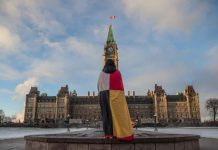
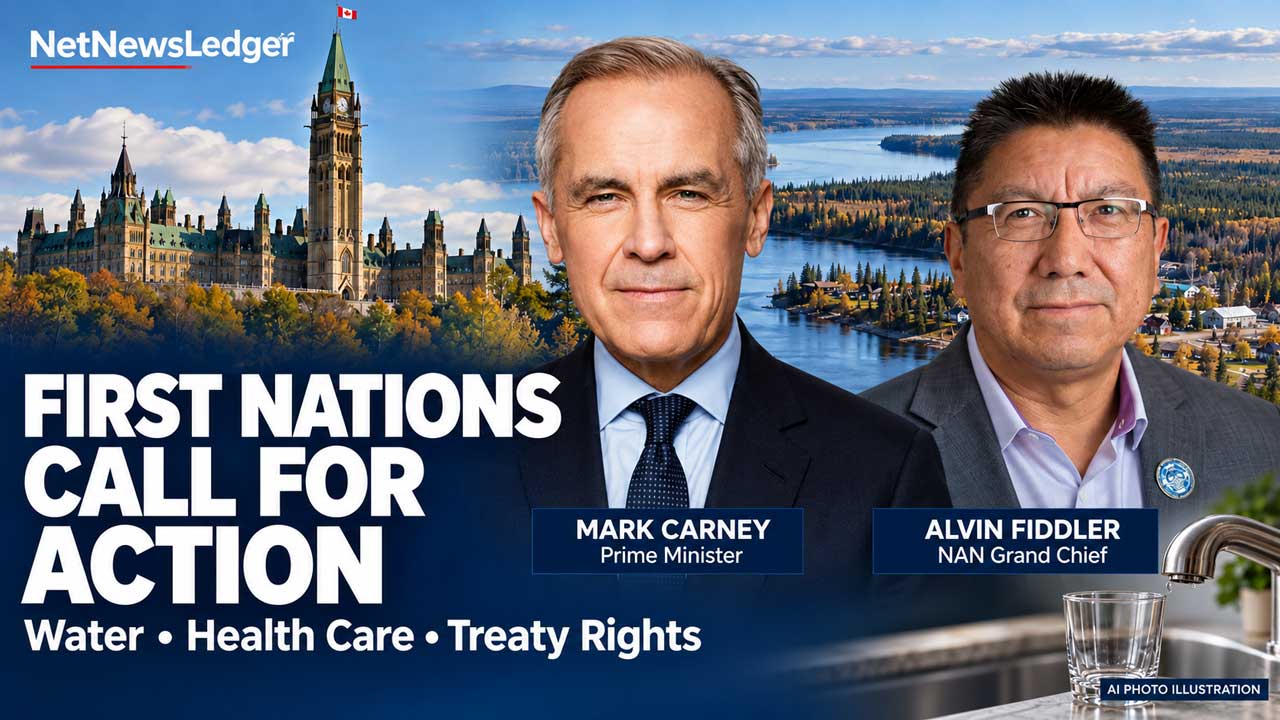
OTTAWA, UNCEDED ALGONQUIN TERRITORY — Prime Minister Mark Carney announced new funding for First Nations emergency response, policing and employment on October 26, while Northern Ontario leaders called for action on health care, safe drinking water and the Treaty relationships that must guide development.
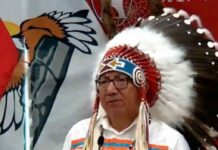
At the First Nations–First Ministers’ Meeting, Nishnawbe Aski Nation Grand Chief Alvin Fiddler highlighted the death of a young mother from Fort Severn and the continuing water crisis in Marten Falls. The Matawa Chiefs’ Council called for direct talks with Canada and Ontario to ensure Ring of Fire development respects First Nations’ rights and delivers lasting community benefits.
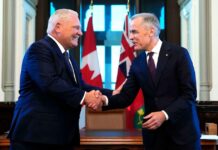
Fiddler said leaders face pressure to open their territories to resource development while managing health-care failures, addictions, youth suicide, wildfires and evacuations. He renewed his request for Carney and Ontario Premier Doug Ford to meet directly with NAN leadership.
“My message is simple: honour the Treaties, implement the Treaties,” Fiddler said.
For Fort Severn, also known as Wasaho Cree Nation, the medical-travel system was central to his concerns. Fiddler described a mother of three who underwent major heart surgery in April, missed follow-up appointments because her travel was denied, and died in September. He presented the case as an example of the harm communities face when essential services fail.
The Canadian Press has reported on the death of Miranda Mamakwa, 31, of Fort Severn, on September 8. Her mother said repeated requests for transportation did not result in travel being arranged for follow-up care in Thunder Bay.
Indigenous Services Minister Mandy Gull-Masty had requested a review of the circumstances, according to that October 20 report. Indigenous Services Canada also said it introduced a simpler travel submission process in early October and was considering improvements to its call centre. No completed review findings were included in the sources examined for this article.
The federal Non-Insured Health Benefits program, known as NIHB, provides eligible medical transportation coverage for patients who need services unavailable in their home communities.
For Marten Falls First Nation, at Ogoki Post, Fiddler questioned how a community can negotiate meaningful development agreements while struggling to secure safe drinking water.
“How can you expect a community like Marten Falls to effectively negotiate a meaningful agreement while trying to access clean water for themselves?” he asked.
Indigenous Services Canada’s records, updated October 21, list the community’s boil-water advisory as beginning in July 2005, becoming long-term in July 2006. It affects 91 homes and six community buildings, with no projected date for lifting it. sac.gc.ca
The federal department says a replacement treatment system was commissioned in June 2019 and can produce clean drinking water. However, additional work on the raw-water intake and operational support remains necessary. The community receives support through Matawa’s Centralized Water and Wastewater Hub, funded by Indigenous Services Canada.
Fiddler’s concern was the pressure on First Nations leaders to negotiate major projects while addressing these unresolved needs.
Carney said the federal government wants First Nations to participate in major projects and share in the wealth they generate.
“Canada’s strength comes from what we can build and what we achieve together,” he said.
Ottawa announced the following commitments:
| Area | Funding announced |
|---|---|
| Emergency management and fire protection | More than $2.5 billion over five years, plus nearly $450 million in ongoing funding |
| First Nations and Inuit policing | More than $630 million over four years, plus $250 million in ongoing annual funding |
| Indigenous workforce readiness | $260 million over four years |
| Crime prevention and culturally sensitive community safety initiatives | $140 million over four years |
The government said the money would support disaster response, policing, safer communities and access to jobs connected to major projects. These are national commitments; the release does not specify allocations for NAN or Matawa communities.
Carney also directed the finance minister to work with First Nations on a proposed First Nations Sovereign Wealth Fund. Ottawa plans changes to the First Nations Fiscal Management Act to expand the First Nations Finance Authority’s lending powers.
The fund remains a proposal. The release also cited an earlier commitment of more than $4.5 billion for water and wastewater infrastructure and the government’s First Nations Clean Water Act initiative.
The Matawa Chiefs’ Council said development must address economic, political and social reconciliation, along with community well-being.
“The Matawa member First Nations are not stakeholders in the Ring of Fire. We are the Inherent and Treaty rights holders where applicable,” the council said.
The chiefs want a dedicated Crown–Matawa leadership table that respects First Nation-led processes. They said resource wealth from their territories must create lasting benefits while helping address gaps in housing, energy, infrastructure and social services.
The council stressed that its nine member First Nations are distinct, sovereign and autonomous nations. It said respect for their governance and protocols must also apply to other proposed developments, including the Northern Shield Energy Corridor, wherever their territories are affected.
Its statement includes a “without prejudice” notice concerning Long Lake No. 58 First Nation’s positions on Treaty status, Aboriginal rights and title; members’ positions on whether they are parties to a Treaty; and existing or future legal challenges.
Ottawa said it would uphold consultation obligations, Treaty and self-government commitments, and commitments under the United Nations Declaration on the Rights of Indigenous Peoples Act.
The meeting also included discussion of reforming or abolishing the Indian Act. Carney committed to developing a path with First Nations. Manitoba Premier Wab Kinew called for abolition, while Assembly of First Nations National Chief Cindy Woodhouse Nepinak stressed that First Nations must decide how to proceed and noted that the act contains protections.
The federal announcement does not confirm a Crown–Matawa leadership table, a date for the direct meetings requested by Fiddler, or community-specific funding allocations. Those details remain important to assessing how the national commitments will address the needs raised in Fort Severn, Marten Falls and other northern communities.