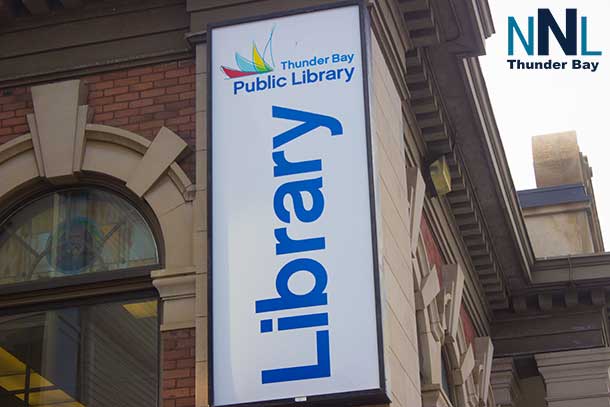
Thunder Bay’s library strike ends as CUPE members and the Library Board ratify new agreements details are still unknown
THUNDER BAY – LOCAL NEWS — The Thunder Bay Public Library strike is over, with the Library Board and workers represented by CUPE locals 3120 and 87-18 ratifying new collective agreements and employees preparing to return to work.
The settlement ends a labour dispute that began Oct. 15 and involved more than 70 library employees.
Mary J.L. Black Library, County Park Library and Brodie Library will return to normal operating hours on Thursday, Nov. 12.
Waverley Library will remain closed as preparations begin for a major renovation scheduled to start in January 2027.
Workers Returning After Nearly Four Weeks on Strike
CUPE Local 3120 represents more than 60 Thunder Bay Public Library employees, including library assistants and technicians, custodial and maintenance workers, information technology staff, community facilitators and finance employees.
CUPE Local 87-18 represents the library’s full-time professional librarians.
The workers had been without new collective agreements for more than a year before going on strike Oct. 15. CUPE said at the beginning of the walkout that members were fighting proposed concessions to working conditions and benefits.
The Library Board, meanwhile, maintained during the dispute that it was trying to negotiate an agreement that provided wage and benefit improvements while remaining within its financial means.
With ratification now completed by both sides, the return-to-work process formally begins.
What Was CUPE Fighting For?
While complete details of the newly ratified agreements had not been publicly released by CUPE at the time of publication, the union’s position throughout the dispute provides important context for understanding the settlement.
Before the strike, CUPE said management was seeking changes involving sick leave, parental leave, vacation entitlements and health benefits.
Once workers were on the picket line, CUPE characterized the dispute primarily as a fight against concessions.
Margaret Demillo, president of CUPE 3120, said when the strike began that workers were defending both their jobs and working conditions as well as the public services they provide.
CUPE 87 President Deryk Fournier similarly argued that employees should not be required to roll back provisions in their existing collective agreements.
That is an important distinction.
The dispute was not presented by the union simply as a wage strike. Much of the public disagreement centred on whether existing benefits and leave provisions should be reduced or changed.
Library Management Argued Existing Costs Needed Attention
Library management presented a different view.
CEO Richard Togman said during the dispute that the employer’s offer included wage increases, continuation of the OMERS pension plan, health coverage and improved short-term disability benefits.
Management argued that some existing benefit provisions had become financially difficult to sustain and that any settlement had to balance employee compensation against the library’s available budget.
The disagreement became increasingly public as the strike continued, with CUPE challenging management’s presentation of employee compensation.
CUPE argued that management had focused on employees at the highest end of the wage scale in a way the union said created a misleading picture of what most library workers earn.
Retiree Benefits Became a Major Flashpoint
Benefits became an especially contentious issue during the final stages of the dispute.
CUPE alleged on Nov. 3 that employee benefits had been terminated around the start of the strike and that retired former employees were also affected.
The union said retirees were not involved in the labour dispute and should never have lost access to their coverage.
Library management disputed CUPE’s description of what happened.
Togman told NetNewsLedger that the library notified its benefits provider after the strike began and said the disruption involving early retirees resulted from an insurance-provider error that was subsequently corrected.
The two sides therefore offered substantially different accounts of the benefits controversy.
No labour board ruling cited by either side established that the Library Board had violated Ontario labour law.
What Did Workers Actually Gain?
That remains the major unanswered question following ratification.
The fact that CUPE members voted to approve the agreements indicates the bargaining committees were ultimately able to recommend terms acceptable to their memberships.
However, without the final memorandum of settlement or a detailed CUPE summary, it would be premature to state that every proposed employer concession was withdrawn.
The key details still to be disclosed include:
- wage increases and the term of the agreements;
- whether vacation provisions changed;
- what happened to sick and parental leave language;
- the final structure of employee health benefits;
- retiree benefit provisions;
- any changes connected with staffing during the Waverley renovation; and
- whether there are new scheduling or reassignment provisions affecting library operations.
Those details matter because they will show where the compromise ultimately landed after almost four weeks of strike action.
NetNewsLedger will update the story when the full settlement terms or union summaries become available.
Waverley Staff Return — But Branch Stays Closed
The end of the strike does not mean all four library branches reopen Thursday.
Waverley Library will remain closed while employees prepare the building for its major renovation.
Regular Waverley employees are expected to report for work Thursday to pack materials and prepare the branch for construction scheduled to begin in January.
The renovation is expected to address major building issues including water infiltration, foundation concerns, accessibility, electrical and HVAC systems and the aging elevator. Plans also include a larger children’s area, accessible washrooms, a redesigned entrance, coworking space and an Indigenous Knowledge Centre.
Before the strike, the Library had planned to close Waverley to the public Nov. 23.
The labour disruption effectively moved that closure forward.
Staffing During Waverley Renovation Remains Important
One issue to watch following the settlement is what happens to Waverley employees while the branch undergoes an expected year-long renovation.
Before the strike, the Library said all employees were expected to work their regular shifts through the end of 2026.
Management said it hoped to extend hours at other branches and reassign most Waverley staff, although it acknowledged there could be temporary layoffs for some employees who could not be reassigned.
The Library also stated there would be no permanent layoffs or lost positions as a result of the renovation.
Whether the new collective agreements establish firmer protections or procedures around those reassignments will be worth watching when the terms become public.
A Difficult Labour Dispute Comes to an End
The strike became more than a dispute over wages and benefits.
It also generated public debate about Library Board governance, senior management, employee compensation and the future direction of Thunder Bay’s library system.
Former Library Board member Trevor Giertuga resigned during the dispute, citing concerns involving bargaining and governance. While the Library Board responded thanking Giertuga for his service, the Board did not dispute his viewpoint.
From the viewpoint of some, this labour dispute was not necessary and could likely have been resolved had the Library Board taken a more active role in the negotiations.
For library patrons, however, the immediate impact is straightforward.
The picket lines are coming down and most normal library services are returning.
Mary J.L. Black, County Park and Brodie libraries are scheduled to resume regular operating hours Thursday, Nov. 12.
Waverley staff will also return to work, but their focus will be on preparing the 75-year-old branch for one of the largest renovations in its history.
The next chapter will be determining exactly what both sides agreed to — and whether the new contracts can help rebuild the working relationship after a difficult and very public dispute.