Ottawa extends mineral exploration tax credits to 2032, with major implications for Northwestern Ontario
THUNDER BAY — MINING News – Canada’s mineral exploration sector is getting a longer financial runway after the federal government proposed five-year extensions to two key exploration tax credits, along with hundreds of millions of dollars for critical-mineral geoscience and research.
For Northwestern Ontario — where exploration continues for lithium, copper, nickel, platinum-group metals, rare earth elements, antimony and gold — the measures could make it easier for junior mining companies to raise money and plan drilling programs over several field seasons rather than working against short-term tax-credit expiry dates.
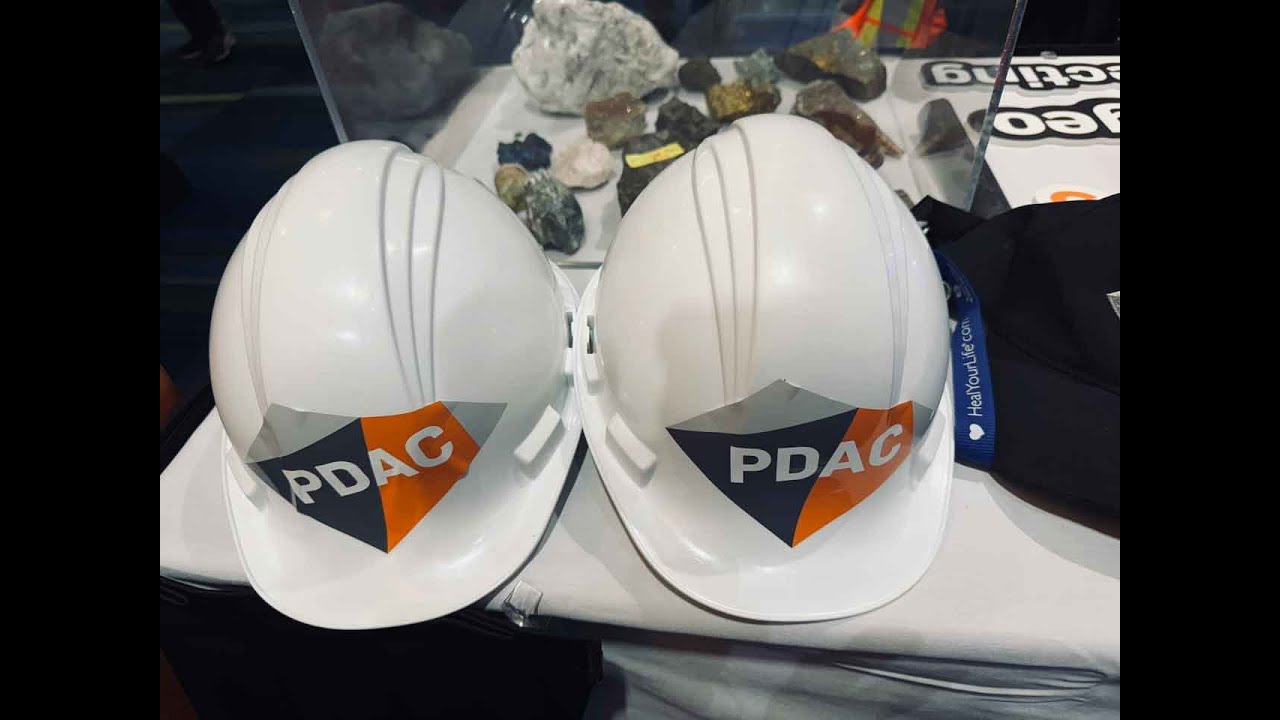
The Prospectors & Developers Association of Canada welcomed the measures following the release of Budget 2026 on Nov. 5.
Why Ottawa’s Exploration Tax Credits Matter to Northwestern Ontario
Budget 2026 proposes extending both the Mineral Exploration Tax Credit and Critical Mineral Exploration Tax Credit until March 31, 2032.
The federal budget estimates the extensions will provide approximately $956 million in support for mineral exploration investment over five years.
The METC provides investors with a 15 per cent federal tax credit on eligible exploration expenses passed through using flow-through shares.
The CMETC provides a more generous 30 per cent credit for eligible exploration targeting specified critical minerals. Budget 2026 also proposes adding antimony to the list of minerals eligible for the CMETC.
That addition has particular relevance in Northwestern Ontario.
Ontario Geological Survey records show 2026 exploration activity at the Howells Lake project in the Thunder Bay North district targeting antimony and gold, along with extensive regional activity involving lithium, copper, nickel, niobium, rare earth elements and platinum-group metals.
PDAC Says Five-Year Extension Gives Explorers Greater Certainty
PDAC President Karen Rees said the budget recognizes the importance of exploration to Canada’s longer-term mineral strategy.
“Exploration is where new mineral discoveries begin,” Rees said.
“By supporting Canadian explorers, the government is helping to strengthen secure supply chains and create long-term economic opportunities across the country.”
PDAC had advocated for longer-term certainty surrounding the credits.
Its pre-budget submission actually called for the METC and CMETC to be made permanent or extended for at least 10 years, arguing that exploration companies need predictability because discoveries and project development occur over long timeframes.
Ottawa did not go that far.
The five-year extension nevertheless provides substantially more certainty than a short renewal immediately before a credit expires.
Both credits had been scheduled to expire March 31, 2027.
Why Flow-Through Shares Are So Important to Junior Mining Companies
The importance of the credits becomes clearer when considering how mineral exploration is financed.
Most junior exploration companies do not operate producing mines.
They may have promising geological properties, drill results and exploration targets, but little or no operating revenue.
Their business depends on raising investor capital to pay geologists, prospectors, drilling contractors, helicopter and aircraft operators, laboratories and environmental and Indigenous consultation costs.
Canada’s flow-through share system allows eligible exploration expenditures to effectively be transferred — or “flowed through” — from the exploration company to investors.
The investor can then claim qualifying deductions and, where applicable, the METC or CMETC.
That tax advantage can make investors more willing to finance high-risk exploration.
PDAC says its analysis shows the flow-through share system has generated more than two-thirds of early-stage domestic mineral exploration activity during the past decade.
For Northwestern Ontario, that financing can translate directly into field activity.
Money raised in Toronto or elsewhere can ultimately pay for drilling near Thunder Bay, Red Lake, Pickle Lake, Marathon, Nipigon and communities farther north.
Northwestern Ontario Already Seeing Broad Exploration Activity
The federal announcement arrives during an active period for exploration across the Northwest.
Ontario Geological Survey records for the Thunder Bay North district show 2026 work involving a wide range of commodities.
Those include lithium projects around the Crescent Lake area, rare earth and niobium exploration, copper-nickel-platinum group projects and continued activity in the Ring of Fire.
The Thunder Bay South district has also seen exploration and development activity involving gold, lithium, copper, nickel, palladium, platinum, cobalt, graphite and rare earth elements.
Among the projects listed during 2026 are the Thunder Bay North Critical Minerals Project northeast of the city, lithium projects throughout the region, Generation Mining’s Marathon copper-palladium project and multiple gold exploration programs.
Thunder Bay itself increasingly functions as a service centre for that activity.
Exploration companies working hundreds of kilometres away can still rely on Thunder Bay for engineering, geological expertise, drilling supplies, laboratories, transportation, aviation, accommodation, legal and financial services.
That means exploration spending can have an economic effect well before a mine is ever built.
$424 Million for Critical Minerals Strategy Includes Geoscience
Budget 2026 also proposes $424.4 million over four years beginning in 2027-28 to renew the Canadian Critical Minerals Strategy.
Ottawa says the funding will expand geoscience and research capacity, support technology needed to mine and process critical minerals and provide targeted funding for priority projects.
For prospectors and junior exploration companies, public geoscience can be one of government’s most valuable contributions to exploration.
Geological maps, geophysical surveys, geochemical data and mineral-potential modelling can help companies determine where to invest private exploration dollars.
In a region the size of Northwestern Ontario, better geological information can narrow enormous search areas and help companies identify targets before committing millions of dollars to drilling.
PDAC Senior Director of Policy and Programs Jeff Killeen said sustained investment in geoscience has been a long-standing industry priority.
“Together, the five-year tax credit extensions and renewed investment in the Canadian Critical Minerals Strategy, including expanded public geoscience capacity, represent nearly $1.5 billion in support for Canada’s mineral sector,” Killeen said.
The specific Budget 2026 figures for the exploration tax-credit extensions and Critical Minerals Strategy renewal total approximately $1.38 billion — $956 million associated with the tax measures and $424.4 million for the strategy renewal.
Government Data Can Reduce Exploration Risk — But Cannot Eliminate It
Mineral exploration remains inherently risky.
Most exploration properties never become operating mines.
Even a significant discovery may require years of additional drilling, environmental assessment, engineering, Indigenous consultation, financing and permitting before a construction decision is possible.
That means government incentives do not guarantee discoveries.
Nor do discoveries guarantee mines.
What the measures can do is lower some of the financial barriers involved in searching.
That distinction matters in Northwestern Ontario, where mineral potential is significant but geography, limited infrastructure and the cost of operating in remote areas can make exploration particularly expensive.
A helicopter-supported drill program hundreds of kilometres from a highway has very different economics from exploration beside an established road and power grid.
Tax incentives can help attract capital, but roads, electricity, telecommunications and transportation infrastructure remain major factors determining whether a discovery eventually becomes economically viable.
Ring of Fire Opportunity Comes With Indigenous Partnership Requirement
The federal critical-minerals push will inevitably bring attention back to the Ring of Fire.
The mineral-rich region north of Thunder Bay contains known deposits and exploration targets involving chromite, nickel, copper and platinum-group metals.
But developing the region is not simply a geological or financing question.
The Ring of Fire lies within the traditional territories of First Nations, and future projects will depend heavily on Indigenous consultation, consent processes, environmental assessment, infrastructure agreements and meaningful opportunities for First Nation ownership and participation.
Budget 2026 acknowledges the importance of Indigenous participation in critical-mineral development.
The federal government’s impact assessment of the renewed Critical Minerals Strategy says funding is expected to benefit Indigenous people and rural and remote communities and includes Indigenous capacity-building and community-readiness measures.
For Northwestern Ontario, that may ultimately be as important as the exploration tax incentives themselves.
A mineral discovery can create potential value.
Turning that discovery into sustainable regional prosperity requires relationships, infrastructure and agreements with the communities closest to the resource.
The Challenge Is Moving From Discovery to Production
There is another important limitation to the federal measures.
Canada does not suffer from a shortage of mineral potential.
The larger challenge is converting discoveries into operating mines and processing capacity quickly enough to meet increasing demand for secure critical-mineral supplies.
Finance Minister François-Philippe Champagne acknowledged that issue in presenting Budget 2026, saying Canada has lagged in bringing its mineral resources “from mine to market.”
Exploration tax credits address the beginning of that pipeline.
They encourage investors to finance the search for deposits.
But after a discovery, companies still face the much larger costs associated with feasibility studies, environmental approvals, Indigenous agreements, roads, power infrastructure, mine construction and processing facilities.
That gap was also identified in PDAC’s own Budget 2026 recommendations.
The association had asked Ottawa to broaden flow-through eligibility to include technical studies needed to establish mineral reserves and make mine-development decisions.
That request was not the centrepiece of the exploration measures announced in the budget.
What This Could Mean for Thunder Bay
For Thunder Bay, the immediate opportunity is not dependent on waiting for another mine to open.
An increase in exploration spending can support regional drilling contractors, geological consultants, environmental firms, aviation companies, equipment suppliers and other mining-service businesses.
The city also has an opportunity to expand its role as the professional and logistical centre for mineral development across Northwestern Ontario.
One example of the evolving regional value chain is Frontier Lithium’s proposed lithium conversion facility in the Thunder Bay area, which appears in Ontario Geological Survey activity records for 2026.
Projects such as that highlight the larger economic objective facing the region: capturing more value from Northwestern Ontario minerals instead of simply extracting material and shipping it elsewhere for processing.
Exploration credits can help locate deposits.
The bigger economic prize for Thunder Bay and the Northwest would come from combining discoveries with mining, processing, transportation, Indigenous partnerships and local supply-chain development.
Five Years of Certainty — But Exploration Still Has to Deliver
The federal announcement gives exploration companies something they routinely tell governments they need: predictability.
Instead of wondering each year whether important tax incentives will disappear, companies can now plan financing around a proposed extension through March 2032.
That matters when exploration programs can require several years of mapping, geophysics and drilling before a company can determine whether a mineral system warrants further investment.
But tax policy alone will not create mines.
The ultimate test of Budget 2026 will be whether the incentives help Canada generate new discoveries, move viable deposits toward development and build domestic supply chains around minerals considered increasingly important to energy, defence and advanced manufacturing.
For Northwestern Ontario, where much of the geology remains underexplored and infrastructure remains one of the biggest constraints on development, the opportunity is substantial.
The question now is how much private investment the federal incentives will unlock — and how much of that capital will find its way into the ground across the Northwest.