Federal financing is intended to double production of De Havilland Canada’s DHC-515 and create aircraft slots from 2030
Thunder Bay – National News — The federal government is offering up to $2.5 billion in financing to expand Canadian water-bomber production, a move aimed at shortening aircraft delivery times as severe wildfire seasons strain fleets in Canada and abroad.
The financing would be delivered through Export Development Canada to De Havilland Aircraft of Canada. Budget 2026 says the money will expand production capacity at the company’s Alberta facilities.
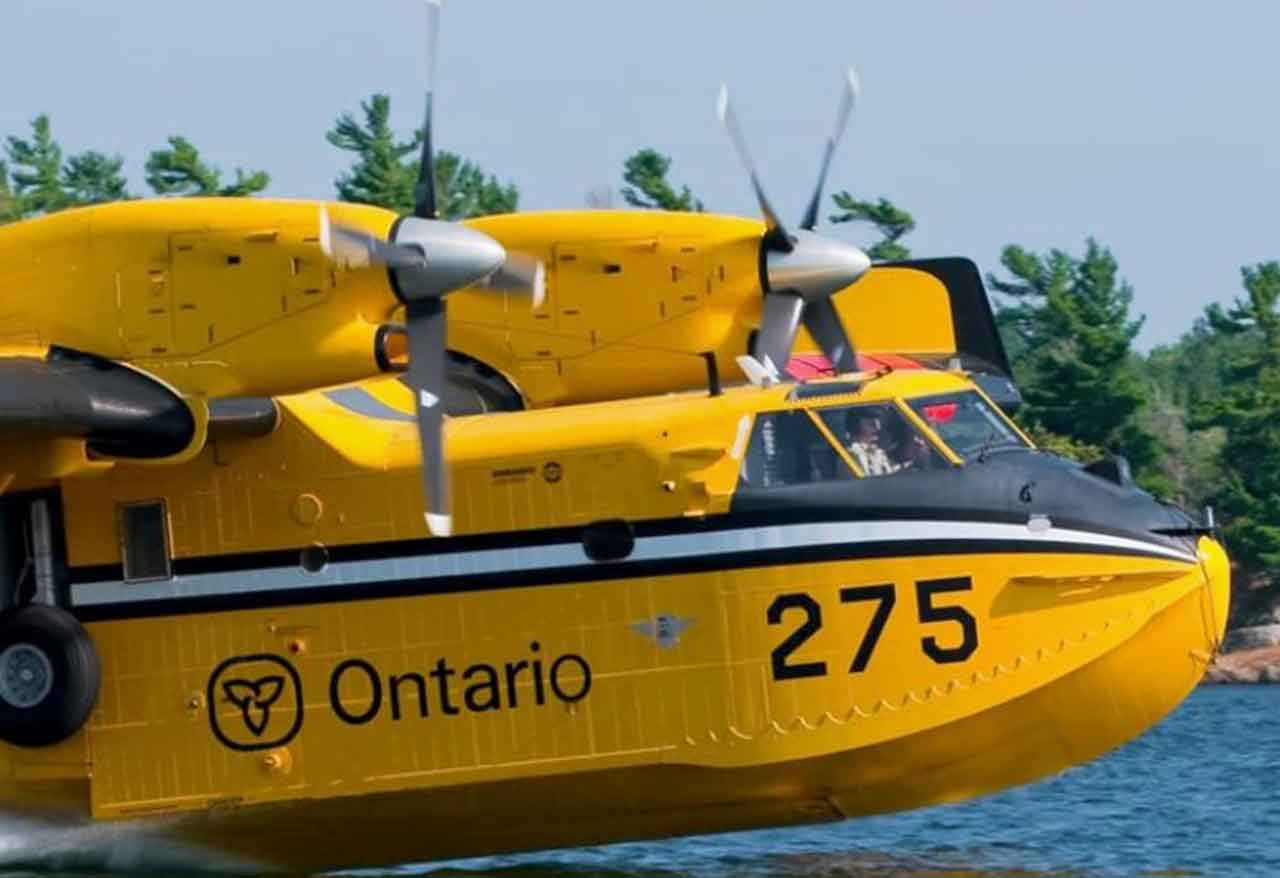
De Havilland says the agreement will allow it to double production of the DHC-515, a purpose-built aircraft that scoops water while moving across a lake and drops it on a fire. The company expects new delivery positions to become available starting in 2030, with output rising over time.
The transaction is expected to close in the first quarter of 2027. That means the financing is a commitment with conditions still to be completed, not an immediate transfer of the full amount.
The company says it will hire staff and add capacity at sites in Victoria, Calgary, Toronto, Kitchener and Fort Erie, with suppliers across the country. It has not released a site-by-site job count in the material reviewed for this report.
The DHC-515 is the new-generation successor to the CL-215 and CL-415 aircraft used by wildfire agencies around the world. Purpose-built water bombers can refill without returning to an airport when a suitable body of water is available, allowing repeated drops during an operation.
The investment does not by itself add aircraft to provincial or territorial fleets. Governments and other buyers must still place orders, train crews, build maintenance capacity and decide where aircraft will be based. Delivery timelines also mean the expansion will not change Canada’s readiness for the 2027 fire season.
The measure follows another destructive Canadian wildfire year and comes as communities, including First Nations, seek stronger prevention, evacuation and emergency-management capacity. Budget 2026 separately proposes funding for emergency readiness in First Nations communities.
The next points to watch are the financing terms, the transaction’s expected closing, confirmed production schedules and any Canadian purchase commitments. Those details will show how much of the expanded capacity will be available to domestic agencies and how much will serve export orders.