The first agreement commits more than $1 billion to Manitoba, but the national plan depends on provincial funding for services and parliamentary approval
OTTAWA — National NEWS – The federal government has set a 10-year goal to end homelessness in Canada, backing it with nearly $30 billion for supportive housing, rent assistance, community programs and mental-health and addictions facilities.
The plan, detailed in Budget 2026 and promoted by Prime Minister Mark Carney in Winnipeg on Friday, would provide $11.2 billion over four years beginning in 2027-28 and another $17.8 billion in later years.
New Democratic Party Leader Avi Lewis called the homelessness spending welcome but criticized the wider budget for failing to provide enough immediate help with rent, groceries and other household costs.
Conservative Leader Pierre Poilievre did not address the homelessness package directly in the public budget response reviewed for this article.
Poilievre opposes Budget 2026 as a whole, arguing its borrowing and spending would make housing and other necessities more expensive.
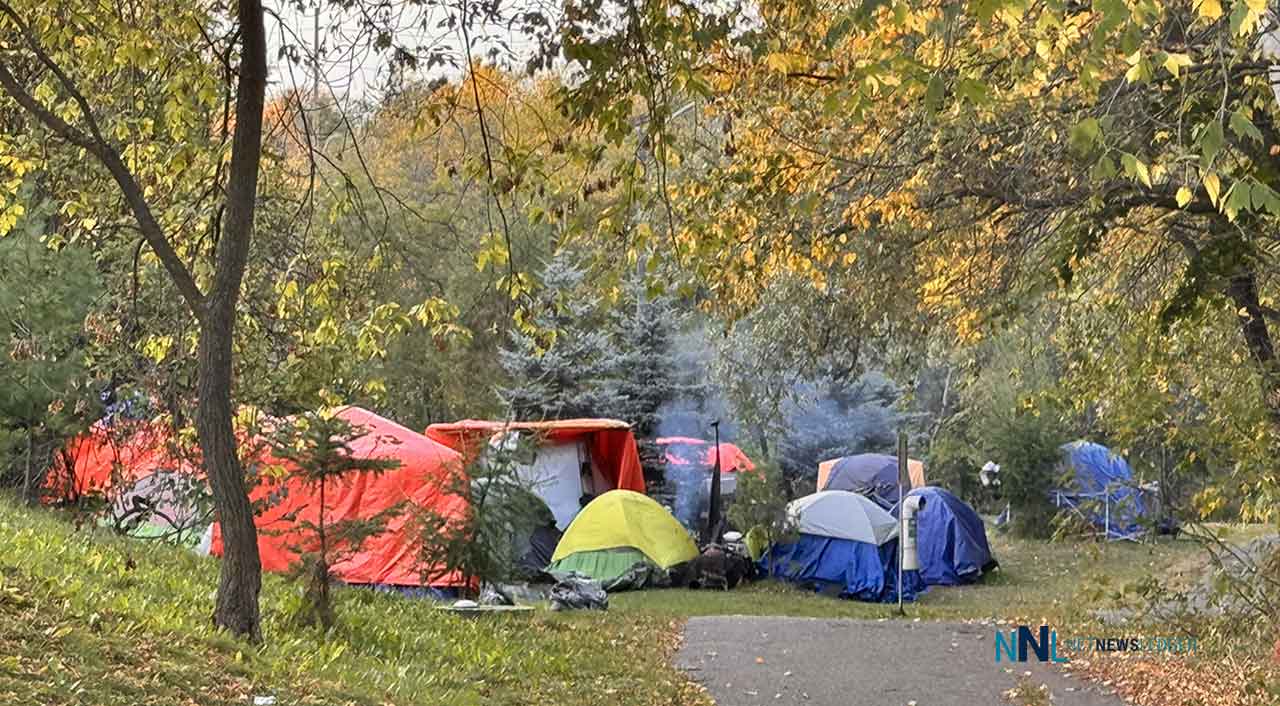
Ottawa says about 65,000 people experienced homelessness in 2025, nearly twice the number recorded in 2018. National counts can miss people staying temporarily with others or avoiding shelters.
This is an issue in all Canadian major cities, and it is drawing increased frustration from many Canadians who see this issue as one that really became apparent under the Liberal watch of former Prime Minister Trudeau, and has continued under Prime Minister Carney’s watch.
Housing paired with care
The federal plan would direct $10 billion through Build Canada Homes toward approximately 25,000 supportive and transitional homes.
Another $5 billion would establish an Integrated Supports Fund, intended to combine housing with health care, addictions treatment and social services. The budget also proposes $2 billion for community mental-health and addictions facilities.
Ottawa would renew the Reaching Home and Veterans Homelessness programs for 10 years, at a stated cost of $6.5 billion. A further $5.5 billion would renew the Canada Housing Benefit, which provides rent assistance to lower-income households.
Carney said homelessness cannot be addressed through construction alone.
“No government can solve it alone,” he said in the federal announcement. “We are bringing help, housing, and health care together.”
First agreement in Manitoba
The first agreement provides more than $1 billion in federal money for Manitoba.
Up to $800 million would support more than 2,000 supportive and transitional homes. The province and City of Winnipeg would identify public land, while Manitoba would operate the homes and provide support services.
More than $200 million in federal funding would go toward a new Winnipeg Centre for Mental Health and Addictions. Manitoba would cover half the construction cost, operate the centre and provide employment and income supports. Ottawa says the facility could be operating within three years.
The Assembly of Manitoba Chiefs welcomed the investment but said First Nations leaders had not been included in developing the plan.
Grand Chief Kyra Wilson said the high number of First Nations citizens experiencing homelessness means First Nations governments must help determine how the money is used.
“Our people deserve more than a place in someone else’s plan,” Wilson said.
Federal figures indicate about four out of five people identified as homeless during Winnipeg’s latest one-night count were Indigenous.
Opposition parties question the wider budget
Conservative leader Poilievre calls Budget 2026 a “costly credit card budget” and said Conservatives would vote against it.
However with the Liberals having gained a majority in the House of Commons there is little if any risk of to the Carney Liberals.
Poilievre argues that the government’s projected borrowing, including transactions outside the main budget balance, will increase inflation, interest costs and future taxes. The Conservative leader said Ottawa should reduce spending and focus on lowering household costs.
Those remarks concerned the full budget rather than the design or effectiveness of the homelessness program. No separate Conservative response to the nearly $30-billion package was found in the public statements from the Conservatives as reviewed by NetNewsLedger.
Lewis approached the budget from a different direction. The NDP leader described the homelessness funding as welcome, but said the government was offering more help to major corporations and investors than to households struggling with rent and other costs.
He said the budget “Talks a lot about affordability but does little to actually lower your costs.”
NDP housing critic Jenny Kwan questioned whether the homelessness funding was large enough to meet the government’s goal.
“The budget talks about the ambition of ending homelessness, yet the investment does not match that ambition,” Kwan said in the House of Commons.
The delivery test
The federal government would cover much of the construction, but provinces and territories would be expected to pay for ongoing operations and services.
That division will be a major test of the plan. Supportive housing requires staff, health care, security and stable operating money long after construction is complete.
The Association of Municipalities of Ontario welcomed the long-term federal investment as a response to municipal advocacy. It cautioned that provincial operating money will be critical and called for the Reaching Home program to be available in every Ontario community facing a homelessness crisis.
The budget says communities receiving Reaching Home funding will face stronger and more timely data-reporting requirements. Details are expected in early 2027.
Parliament must still approve the spending. Ottawa must also negotiate agreements with provinces, territories, Indigenous partners and municipalities before much of the money can flow.
The government will need to show not only how many homes are constructed, but whether fewer people enter homelessness and whether those who receive housing are able to remain housed.