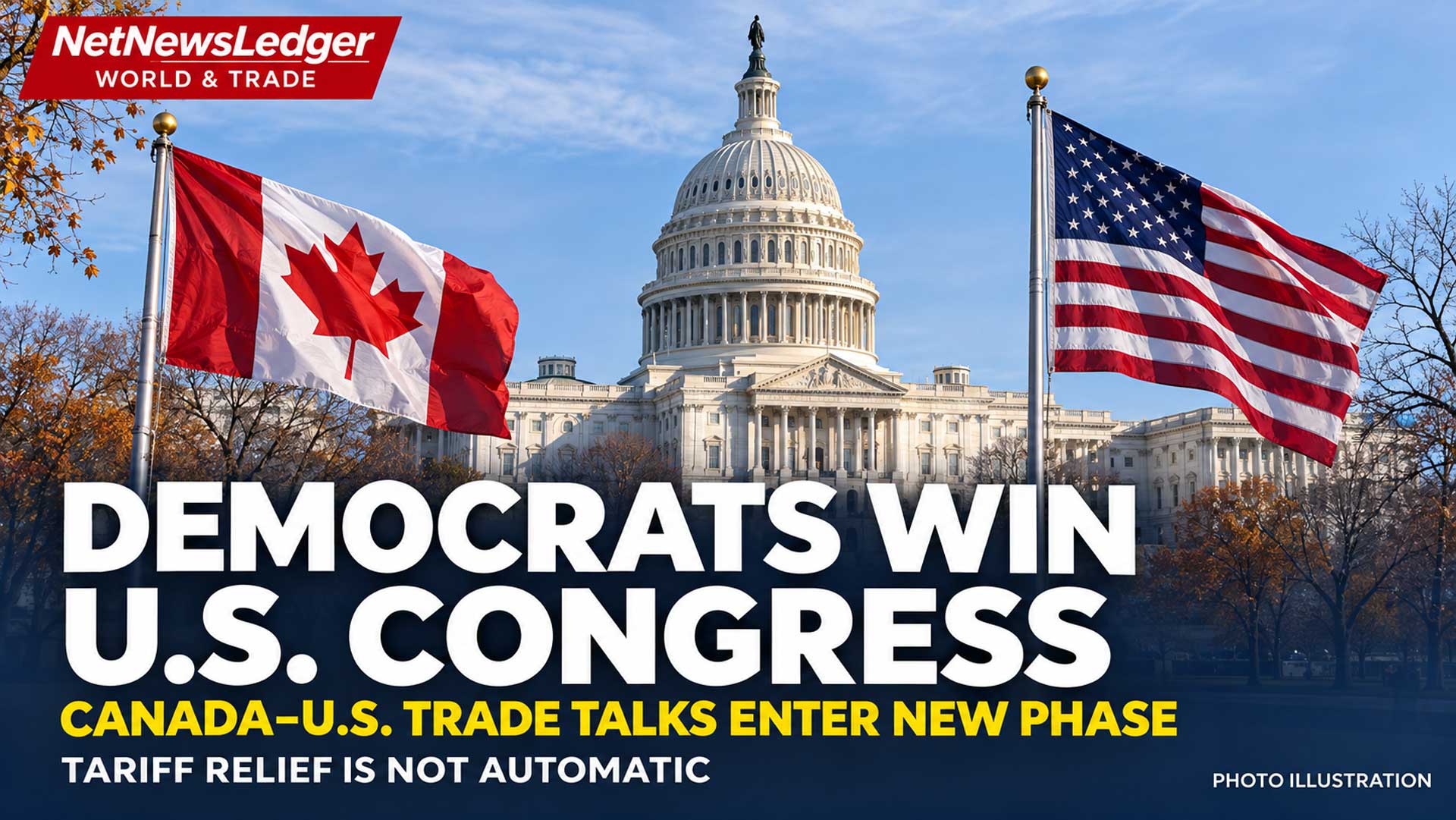
Democrats win the U.S. House and Senate, reshaping Washington as Canada and the Trump administration intensify trade talks
The result changes the political balance in Washington, but it does not automatically remove tariffs on Canadian goods
OTTAWA — Democrats have won control of both chambers of the United States Congress, according to race calls by The Associated Press and major U.S. networks, creating a new check on President Donald Trump as Canada and the United States try to revive trade negotiations.
The shift is nationally important for Canada because the U.S. is its largest trading partner and the Trump administration has imposed steep tariffs on a range of Canadian products.
A Democratic House and Senate could constrain new legislation, scrutinize the administration through committee hearings and influence appointments. It does not, by itself, cancel tariffs imposed through presidential trade powers.
The new Congress is due to take office on Jan. 3, 2027. Vote counting was still underway in some states early Wednesday, and the reported seat totals remained subject to change. The control calls are projections based on results reported by state and local election authorities, not final certification.
A broad turnover in Washington
The Democrats flipped at least seven Senate seats, including Republican-held seats in Kansas, Iowa, Texas, Ohio, Maine, North Carolina and South Carolina. They also held battleground seats in Georgia and Michigan.
In the House of Representatives, Democrats flipped more than two dozen districts, including some that Trump carried by double digits in 2024. That will give the Democrats control of the chamber that writes spending bills and has broad investigative powers.
The outcome leaves Trump in office for two more years, but with an opposition Congress able to block much of his legislative agenda. The Senate will also have authority over many presidential nominations. Foreign and trade policy will remain divided between powers held by Congress and powers exercised by the president. It is likely that any changes to Trump’s cabinet will see nominees face a far more hostile fact-checking confirmation. It is also likely that the House of Representatives and the Senate may initiate investigations on the Epstein files, the Trump family, and some of the corruption.
What it means for Canada
Prime Minister Mark Carney said Tuesday that more intensive Canada-U.S. trade talks had begun after a weekend call with Trump. Carney said Washington had removed some earlier demands, including proposed limits on Canada’s ability to negotiate trade agreements with other countries and protections touching language and culture.
Carney said the U.S. was asking less and offering more, but cautioned that the two sides had not finished a deal. Trump separately said an agreement was close. No joint text or timetable had been released by the research cutoff.
The Democratic wins may give Canadian officials new congressional partners, particularly in border states where tariffs have affected manufacturers, farmers and consumers. They may also make the administration more eager to reach an agreement before the new Congress begins. Both are possibilities, not confirmed outcomes.
Canada’s immediate task remains the same: negotiate tariff relief while protecting access to the U.S. market and preserving its ability to make independent trade policy. Until a deal is signed or the U.S. changes its tariff orders, Canadian exporters continue to face the measures now in force.