NIPIGON — Nipigon OPP are reporting four separate traffic enforcement incidents over five days in the Nipigon and Red Rock area, resulting in two stunt-driving charges and two impaired-driving investigations.
The incidents, between Sept. 14 and Sept. 18, occurred along Highway 11/17 and in Nipigon. They highlight the mix of local, commercial and long-distance traffic using a highway corridor where excessive speed or impairment can have serious consequences for residents, First Nations travellers, transport drivers and visitors moving through Northwestern Ontario.
Four incidents over five days
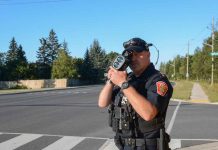
The first incident was reported on Sept. 14, when an Ontario Provincial Police officer was conducting lidar speed enforcement on Highway 11/17 in the Township of Red Rock at about 7 p.m.
Police say a white car was observed travelling at a high rate of speed. Lidar measured the vehicle at 150 km/h in a posted 90 km/h zone, or 60 km/h above the limit.
MD Sajjad Khan, 25, of Toronto was issued a court summons for stunt driving under s. 172(1) of Ontario’s Highway Traffic Act.
Police imposed an immediate 30-day driver’s licence suspension and impounded the 2012 Honda for 14 days. Khan is scheduled to appear in Nipigon court in October.
Ontario regulations define driving at least 50 km/h above the speed limit as stunt driving where the posted limit is 80 km/h or higher. Driving at 150 km/h or more is also specifically included in the regulation.
Cellphone crash alert leads to impaired-driving arrest in Nipigon
Two days later, on Sept. 16, Nipigon OPP responded to what police described as a cellphone crash notification at the Nipigon Marina at about 10 p.m.
Officers reported finding a cellphone on the ground near a vehicle and speaking with the male driver. Police allege he showed signs of impairment.
An approved screening device was administered and registered a “Fail,” according to the OPP. The driver was arrested and taken to the Nipigon detachment for further testing.
James Clark, 27, from Gull Bay First Nation, was charged with:
- operation while impaired — alcohol and drugs;
- operation while impaired — blood alcohol concentration of 80 mg or more;
- failure to comply with a release order;
- having care or control of a motor vehicle with an open container of liquor; and
- novice driver — blood alcohol concentration above zero.
Clark was held in custody for a bail hearing.
The Criminal Code impaired-operation allegations correspond to s. 320.14(1). Paragraph (a) prohibits operating a conveyance when a person’s ability to do so is impaired to any degree by alcohol, a drug or both. Paragraph (b) deals with having a blood-alcohol concentration of at least 80 mg of alcohol in 100 mL of blood within two hours of driving.
Failure to comply with a release-order condition is addressed under s. 145(5) of the Criminal Code. The offence is hybrid: if prosecuted by indictment it carries a maximum sentence of two years’ imprisonment. Where an offence proceeds summarily and no other punishment is specified, the Criminal Code’s general summary-conviction maximum is a $5,000 fine, imprisonment for up to two years less a day, or both.
The open-liquor allegation is provincial rather than a Criminal Code impaired-driving offence. Ontario’s Liquor Licence and Control Act generally prohibits driving or having care or control of a motor vehicle containing liquor unless it is unopened and sealed or packed so it is not readily available. The Ontario Court of Justice set-fine schedule lists $175 for having care or control of a motor vehicle with an open container of liquor when dealt with by a set-fine ticket.
Ontario’s Highway Traffic Act also requires novice drivers to maintain a zero blood-alcohol concentration while driving. A novice driver convicted of violating that condition faces a fine ranging from $60 to $500, and the Registrar may suspend, cancel or change the driver’s licence in accordance with the regulations.
Driver found behind wheel near Camp 81 Road
A second impaired-driving investigation occurred early Sept. 18 on Highway 17 near Camp 81 Road.
At about 5 a.m., Nipigon OPP officers on patrol noticed a Chevrolet Blazer parked in what police described as a poor location.
Police say the female driver appeared to be passed out behind the wheel.
Officers conducted standardized field sobriety testing and said the results provided grounds to believe the driver was impaired. She was taken to hospital to provide blood samples.
Shayleen Doggett, 30, of Thunder Bay was charged under the Criminal Code with operation while impaired by alcohol or drugs.
Police said at the time of the release that they were still awaiting the results of the blood testing.
Doggett was released and is scheduled to appear in Nipigon court at a later date.
An impaired-operation charge under s. 320.14(1)(a) does not depend on proving a blood-alcohol concentration above 80 mg. The provision concerns whether a person’s ability to operate a vehicle was impaired to any degree by alcohol, drugs or a combination of both.
Second stunt-driving charge laid in Red Rock
Later on Sept. 18, at about 3 p.m., an officer conducting lidar enforcement on Highway 11/17 in Red Rock observed a grey car travelling westbound.
Police say lidar measured the vehicle at 146 km/h in a posted 90 km/h zone, 56 km/h above the speed limit.
Jaskaran Singh, 26, of Dartmouth, N.S., was charged with stunt driving under s. 172(1) of the Highway Traffic Act.
Singh received an immediate 30-day driver’s licence suspension and the 2026 Volkswagen Jetta was impounded for 14 days. He is scheduled to appear in Nipigon court in November.
Ontario’s stunt-driving rules apply when a driver is travelling at least 50 km/h above the limit on a road posted at 80 km/h or higher.
What are the penalties for stunt driving?
The roadside licence suspensions and vehicle impoundments imposed in the Red Rock cases are administrative measures and do not amount to convictions.
For a conviction under s. 172 of the Highway Traffic Act, a court can impose a fine ranging from $2,000 to $10,000, imprisonment for up to six months, or both. A first conviction also carries a court-ordered driver’s licence suspension of between one and three years. Ontario also lists six demerit points and a mandatory driver-improvement course among the consequences of conviction.
The immediate roadside sanctions include a 30-day licence suspension and 14-day vehicle impoundment, regardless of whether the driver ultimately owns the vehicle.
What are the potential Criminal Code penalties for impaired driving?
For impaired operation or operating with a blood-alcohol concentration at or above 80 mg under s. 320.14(1), sentencing depends on whether the Crown proceeds summarily or by indictment, as well as the person’s prior record and the circumstances of the offence.
For a first offence, the Criminal Code generally sets a minimum $1,000 fine. A second offence carries a minimum 30 days in jail, while subsequent offences carry a minimum 120 days. If prosecuted by indictment, the maximum term of imprisonment for the basic impaired-driving offence is 10 years. On summary conviction, the maximum is a $5,000 fine, imprisonment for up to two years less a day, or both.
For a first offence involving a blood-alcohol concentration of at least 120 mg but below 160 mg per 100 mL of blood, the minimum fine rises to $1,500. At 160 mg or more, the minimum is $2,000. No blood-alcohol reading was provided in the Nipigon OPP release concerning Clark, so it cannot be determined from the information released which minimum fine provision could apply if there were a conviction.
A conviction for impaired operation also normally requires a driving prohibition. For a first offence, the Criminal Code provides for a prohibition of between one and three years, in addition to any period of imprisonment. Longer minimum prohibitions apply for subsequent offences.
Those are statutory sentencing ranges, not predictions of what any individual accused person would receive. Sentences are determined by the court after considering the facts proved, criminal record if any, aggravating and mitigating circumstances, and other applicable sentencing principles.
Highway 11/17 safety has regional implications
Highway 11/17 is a key transportation route through Nipigon and Red Rock, carrying local residents alongside commercial vehicles and travellers moving between Thunder Bay and communities to the east and north.
That mix of traffic makes speed and impairment enforcement particularly significant in Northwestern Ontario. Long distances between communities, changing weather, wildlife, darkness and stretches with limited opportunities for drivers to stop can magnify the consequences when a vehicle is travelling substantially above the posted limit or a driver is impaired.
The four incidents also show that enforcement can begin in different ways — from dedicated lidar patrols to routine patrol observations and technology-generated alerts.
Safer choices if alcohol or drugs are involved
Drivers should make transportation plans before consuming alcohol, cannabis or any other substance that could affect driving.
Options include arranging a designated driver, calling a sober friend or family member, using a taxi or ride-hailing service such as Uride where available, taking public transit where service exists, or staying overnight rather than driving.
A person who believes another driver is impaired or driving dangerously should call 911 when there is an immediate threat to public safety. The OPP can also be reached at 1-888-310-1122 for non-emergency complaints involving impaired, aggressive or careless driving.
Charges remain allegations
None of the charges reported by the OPP have been proven in court.
All accused individuals are presumed innocent unless and until proven guilty in a court of law.