THUNDER BAY – NEWSHAWK DESK – Wednesday, September 23, 2026 – The international news cycle is being driven by war, diplomacy and trade. At the United Nations, the United States is applying new pressure on Iran while leaving a narrow opening for talks. Chinese President Xi Jinping begins a state visit to the United States today, setting up a high-stakes meeting with President Donald Trump.
In Canada, Ottawa says major trade negotiations with the Philippines and the Association of Southeast Asian Nations are more than 90 per cent complete. In Northwestern Ontario, new forestry investment, a major Thunder Bay waterfront project and the Port of Thunder Bay’s strong shipping year are among the stories Newshawks should follow.
This briefing reflects information available early Wednesday morning. Breaking stories, market prices, police investigations and weather alerts can change during the day.
International: Pressure and Diplomacy Collide at the United Nations
United States President Donald Trump used his address to the United Nations General Assembly on Tuesday to defend the war against Iran and demand the country’s economic isolation. He also said he believes a settlement can eventually be reached.
Iran, meanwhile, has signalled that the Strait of Hormuz could reopen if the United States reduces military pressure and eases its blockade. The strait is one of the world’s most important routes for oil and natural-gas shipments.
The mixed messages matter. A diplomatic opening could reduce the risk to commercial shipping and energy supplies. A failure to reach an agreement could keep oil prices elevated and add costs for transportation, food and manufactured goods around the world.
The key fact for readers is that no final peace or shipping agreement had been announced early Wednesday. Statements from Washington and Tehran show that channels remain open, but the public positions of the two governments remain far apart.
International: Xi Arrives for High-Stakes Talks With Trump
Chinese President Xi Jinping is scheduled to visit the United States from September 23 to 25. His meeting with Trump is expected to focus on trade, critical minerals, artificial intelligence, Taiwan and the future of the current tariff truce.
The most realistic near-term outcome may be stability rather than a sweeping agreement. Both governments have reasons to avoid a renewed trade fight, but neither side is likely to surrender its position on technology, national security or Taiwan.
For Canada, the meeting is important because Canadian exporters, manufacturers and resource companies operate inside supply chains shaped by decisions in Washington and Beijing. Any agreement involving tariffs, rare-earth minerals, energy or advanced technology could have indirect effects on Canadian business.
International: Guterres Uses Final UN Address to Warn About War and AI
United Nations Secretary-General Antonio Guterres used his final General Assembly address to call for an end to expanding wars, stronger international oversight of artificial intelligence, renewed climate action and reform of global institutions.
His second term ends on December 31. Guterres warned that many international institutions still reflect an earlier balance of power and are struggling to respond to today’s conflicts and technologies.
The speech does not create new law. It does, however, frame the major policy battles facing the next UN secretary-general: how to manage AI risks, how to finance the organization and how to act when major powers bypass or block multilateral institutions.
National: Canada Says Two Asia-Pacific Trade Deals Are More Than 90 Per Cent Complete
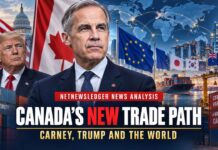
International Trade Minister Maninder Sidhu says Canada’s separate free-trade negotiations with the Philippines and ASEAN are more than 90 per cent complete. Ottawa hopes to have both agreements ready when Prime Minister Mark Carney visits Manila in November.
The talks are part of Canada’s effort to reduce its dependence on the United States and build stronger supply chains across the Indo-Pacific. Sidhu identified Canadian energy, including liquefied natural gas, as a major part of the offer to Southeast Asian economies.
An agreement would not guarantee immediate sales or investment. Businesses would still have to compete, finance projects and meet regulatory requirements. However, lower trade barriers and clearer rules could improve access for Canadian energy, agriculture, mining services, technology and professional expertise.
This matters to Northern Ontario because the region produces minerals, forest products and industrial services that can feed larger Canadian export strategies. The federal government’s next test will be whether the agreements contain practical market access and whether Northern businesses can use it.
National: Belleville Synagogue Shooting Keeps Security and Hate Crime in Focus
Prime Minister Carney and Ontario Premier Doug Ford have condemned the shooting outside the Sons of Jacob Synagogue in Belleville during Yom Kippur services on Sunday evening.
A police officer was wounded. The Ontario Special Investigations Unit said the officer was in critical but stable condition and that the 29-year-old shooter was in life-threatening condition when the information was released. Toronto police increased patrols near synagogues and other places of worship as a precaution.
The investigation must determine the facts and motive. It would be premature to assign a motive before police and the SIU complete that work. The broader public-policy issue is already clear: people must be able to worship without fear, and governments and police services are under pressure to respond to rising concerns about antisemitism and threats against faith communities.
National: Carney’s Diversification Strategy Is Becoming More Concrete
The Asia-Pacific trade talks follow Carney’s recent push for closer Canadian ties with Europe and France. Taken together, these moves point to a long-term strategy: keep access to the United States where possible, while building more options in Europe and Asia.
That is not a quick replacement for the United States, which remains Canada’s largest trading partner. Ports, rail lines, pipelines, electricity networks and factories have been built around the continental economy over many decades. Diversification will take years and will require infrastructure, competitive pricing and reliable delivery.
The direction is nevertheless significant. The policy question is shifting from whether Canada should diversify to how quickly projects and agreements can produce real exports, investment and jobs.
Regional: Ontario Backs Forestry Projects in Thunder Bay and Northwestern Ontario
The Ontario government is investing more than $2.5 million in three forestry projects centred on Northwestern Ontario. The largest share, more than $2.4 million, supports planning for boiler and chemical-plant upgrades at Thunder Bay Pulp and Paper.
The province says the proposed work could raise daily kraft-pulp production by 11 per cent and create a market for more than 130,000 tonnes of forest biomass each year. Smaller investments support a production-line study at Weyerhaeuser in Kenora and another regional biomass initiative.
The important distinction is that this funding supports planning and upgrades; it is not the same as a guarantee that every projected job, production increase or biomass purchase will occur. Still, the investment could strengthen an anchor mill and create demand for harvesting, hauling and forest by-products that might otherwise have limited value.
For regional leaders, the next questions are whether the projects proceed on schedule, how much private capital follows the public funding and how many long-term jobs are created or protected. Ontario announced the funding and project details.
Regional: Pickering Refurbishment Shows the Scale of Ontario’s Power Strategy
Ontario has started construction on the refurbishment of Pickering Nuclear Generating Station’s B units. Although the work is in Southern Ontario, it matters across the province because electricity supply, industrial growth and major mining projects depend on long-term generating capacity.
The province says the refurbishment could extend the four units’ operating life by up to 38 years. Its economic and employment figures are projections and should be presented that way. The project will face continuing tests on cost control, schedule, nuclear safety and value for ratepayers.
Northern communities should watch how the province connects large new sources of electricity with transmission investment. Power generation alone will not unlock mines, processing plants or community growth if the grid cannot deliver electricity to the places where it is needed. Ontario’s project announcement outlines the government’s timetable and projections.
Regional Weather and Travel: Frost, Fog and Gusty Winds
Early Wednesday, frost advisories remained an important concern in parts of Northwestern Ontario. Drivers may also encounter morning fog, while stronger winds could affect exposed highways and large inland lakes later in the forecast period.
Residents should check the latest conditions before travel. Gardeners should protect sensitive plants where temperatures are expected to approach freezing. Boaters should remember that conditions on open water can be rougher than those at a sheltered dock.
Local: Marina Park Revitalization Moves Into a Visible Construction Phase
Phase one of the revitalization of Marina Park’s festival area is expected to be completed this fall. The project will change one of Thunder Bay’s most visible public spaces and will be watched closely for access, cost, construction impacts and the quality of the completed work.
The larger question is whether the redesign improves the waterfront for year-round residents while supporting concerts, festivals and tourism. Newshawks should watch for updated construction timelines, temporary access changes and any revisions to the project budget.
Local: Potash Is Driving a Strong Year at the Port of Thunder Bay
The Port of Thunder Bay is on pace for a strong shipping year, with potash playing a major role. That is important because the port links Prairie production and Western Canadian commodities to the Great Lakes-St. Lawrence Seaway and global markets.
A strong cargo year supports marine, rail, trucking, maintenance and logistics work in Thunder Bay. It also reinforces the city’s role in Canada’s effort to build more trade routes beyond the United States.
Final annual tonnage will depend on shipping conditions, commodity demand and the remaining Seaway season. The early trend is encouraging, but it should not be treated as a final record until the Port releases complete year-end numbers.
Local: Municipal Election Forums Move From Personalities to Policy
Thunder Bay voters are beginning to hear directly from ward candidates ahead of the October 26 municipal election. Recent forums have included candidates in Neebing and Westfort, with more public events expected as the campaign develops.
The useful questions go beyond who is running. Voters should press candidates for specific positions on taxes, policing, housing, roads, transit, homelessness, infrastructure debt, Indigenous relations and economic development. Candidates should also explain what they would stop, delay or fund differently.
NetNewsLedger Newshawks should watch for costed promises, conflicts between citywide and ward priorities, and clear explanations of how candidates would work with the next council.
What Newshawks Should Watch Today
- Any confirmed meeting or breakthrough between the United States and Iran at the United Nations;
- Xi Jinping’s arrival and signals about trade, rare-earth minerals, Taiwan and artificial intelligence before Thursday’s summit;
- New details on the Canada-Philippines and Canada-ASEAN trade negotiations;
- Updates from the Belleville shooting investigation and the condition of the wounded officer;
- Implementation details for Thunder Bay Pulp and Paper and other regional forestry projects;
- Construction and access updates at Marina Park and on city streets;
- Municipal election forums and concrete policy commitments from candidates; and
- Changes to frost advisories, fog and wind conditions across Northwestern Ontario.
The Bottom Line
Wednesday’s news is about risk and realignment. The United States is trying to pressure Iran while keeping diplomacy alive. Washington and Beijing are preparing for talks that could shape trade and technology policy well beyond their borders. Canada is responding by building more trade options in Asia and Europe.
In Northwestern Ontario, those global shifts connect directly to local decisions about forestry, mining, energy, ports and transportation. The region’s opportunity is real, but announcements become results only when projects are financed, built and operated.