THUNDER BAY — INDIGENOUS NEWS — Monday, September 14, 2026 — Questions about who controls Indigenous lands, services and economic development are driving major stories in Canada and around the world.
In Guatemala, criminal proceedings against four Indigenous authorities have been closed. In Bolivia, Indigenous communities are raising concerns about carbon-credit agreements covering vast areas of the Amazon. In Canada, an Innu law governing child and family services takes effect while Indigenous leaders challenge the federal government’s major-project investment campaign.
Closer to home, Neskantaga First Nation is warning Ring of Fire investors that development lacks its consent. Northern leaders are also demanding answers following the death of a Fort Severn woman whose medical travel was reportedly not arranged.
Here are the leading Indigenous stories NetNewsLedger readers should know.
International: Guatemala Ends Proceedings Against Four Indigenous Authorities
A Guatemalan court has closed criminal proceedings against four Indigenous authorities prosecuted after participating in peaceful demonstrations during the country’s October 2023 national strike.
The ruling involves Luis Pacheco, Héctor Chaclán and Basilio Puac of the 48 Cantones of Totonicapán, along with Esteban Toc of the Indigenous Mayor’s Office of Sololá.
The allegations included unlawful association, terrorism, obstruction of justice and sedition.
Amnesty International welcomed the September 14 decision. The organization had designated Pacheco and Chaclán as prisoners of conscience after they spent more than 15 months in pretrial detention.
Amnesty maintains that the prosecutions were unfounded and used to punish Indigenous leaders for defending human rights and participating in peaceful protest. It is calling for reparations and an investigation into whether the justice system was misused.
Why it matters: Indigenous authorities in Guatemala play important roles in community governance. The case raises international concerns about governments using criminal charges to weaken Indigenous political organization and protest movements.
International: Bolivian Communities Warn About “Carbon Fever”
Indigenous leaders in Bolivia’s northern Amazon are warning that poorly understood carbon-credit agreements could weaken their authority over collectively owned land.
A September 14 investigation reports that leaders from the Tacana, Ese Ejja and Cavineña Nations are questioning agreements involving the Multi-ethnic Indigenous Territory II in the Pando region.
One disputed agreement reportedly granted a foundation extensive authority over carbon-credit audits and sales across approximately 440,000 hectares for 30 years.
Some community representatives say they did not receive a clear explanation of the agreement. The foundation denies misleading communities and says its proposal includes conservation and community-development benefits.
Why it matters: Carbon credits are promoted as a way to finance forest protection. However, agreements can create risks when communities do not control the contracts, carbon rights, monitoring or distribution of revenue. The Bolivian dispute carries lessons for Indigenous communities considering carbon-offset and conservation-financing proposals elsewhere.
International: Australian Leaders Condemn Remarks About First Peoples
Politicians from across Australia’s political spectrum have condemned resurfaced remarks made by One Nation Senator Pauline Hanson about Aboriginal and Torres Strait Islander peoples.
Hanson made the comments during a 2025 podcast while criticizing the teaching of Indigenous history and culture. Indigenous Affairs Minister Malarndirri McCarthy described the remarks as racist and divisive. Opposition Indigenous affairs spokesperson Jacinta Nampijinpa Price also condemned them, while independent Senator Lidia Thorpe called for stronger government action against racism.
Hanson responded that the remarks were old and encouraged people to listen to the recording themselves.
Why it matters: The dispute is not simply about one politician’s language. It has renewed debate about racism, Indigenous education and the responsibility of elected representatives to avoid spreading harmful stereotypes.
National: Innu Nation Takes Control of Child and Family Services
A major change in Indigenous jurisdiction took effect in Quebec on September 14.
The Tshisheuatishitau Act gives Innu Takuaikan Uashat mak Mani-utenam responsibility for delivering child and family services according to Innu culture, law, language and community priorities.
The agreement involving ITUM, Canada and Quebec is the first tripartite child-welfare coordination agreement of its kind in the province under the federal Act respecting First Nations, Inuit and Métis children, youth and families.
More than 2,000 people—including Elders, parents, youth, foster families and frontline workers—contributed to the development of the Innu system, according to Indigenous Services Canada.
The approach places greater emphasis on prevention, cultural continuity and family participation. Family Circles will help guide decisions affecting children.
Why it matters: Indigenous children have historically been removed from their families and cultures at greatly disproportionate rates. The new law moves decision-making authority from a provincial system to the Innu community.
National: Investment Summit Faces Indigenous Opposition—and Calls for Ownership
Prime Minister Mark Carney’s Canada Investment Summit opened in Toronto amid Indigenous concerns about resource projects and infrastructure development.
The federal government says the September 14–15 summit is intended to help generate $1 trillion in public and private investment over five years. Mining, critical minerals, energy, transportation and other major projects are being presented to international investors.
Indigenous leaders and civil-society organizations protested outside the summit. Wet’suwet’en Hereditary Chief Na’Moks warned that projects cannot be pushed ahead without support from affected communities.
Assembly of First Nations National Chief Cindy Woodhouse Nepinak took a different but related message directly to investors: First Nations must be owners, suppliers and decision-makers—not simply workers brought in after major decisions have been made.
The federal government says it is working in partnership with Indigenous communities. The debate is over what partnership means when some communities support development while others reject projects affecting their lands.
Read more about the Canada Investment Summit.
National: Ottawa Ends NunatuKavut Rights-Recognition Process
The federal government has ended its Recognition of Indigenous Rights and Self-Determination process with the NunatuKavut Community Council.
Ottawa says the evidence submitted by NunatuKavut did not meet court-established tests for Indigenous rights and title. The decision also terminates a 2019 memorandum of understanding.
NunatuKavut, which says it represents approximately 6,000 people in southern and central Labrador, disputes the decision. Its leadership says Ottawa did not provide a meaningful explanation and argues that its research supports the community’s claim to Inuit rights.
The Nunatsiavut Government, Nunavut Tunngavik Incorporated and Inuit Tapiriit Kanatami welcomed Ottawa’s decision. They have long maintained that NunatuKavut is not recognized by Inuit rights-holding organizations.
NunatuKavut has published its response, while the Nunatsiavut Government explains why it supports the federal decision.
Why it matters: The dispute has implications for Indigenous identity, constitutional recognition, federal funding and who has authority to represent Inuit rights in Labrador.
Regional: Neskantaga Warns Ring of Fire Investors
Neskantaga First Nation used the opening of the Canada Investment Summit to warn governments and investors that its homelands in Treaty No. 9 are not available for development without its consent.
The First Nation says Canada is promoting Juno Corp.’s mineral exploration program while Ontario advances a network of roads that could provide year-round industrial access to the Ring of Fire.
Neskantaga respects the right of neighbouring First Nations to pursue all-season roads. However, it argues that the Marten Falls Community Access Road, Webequie Supply Road and proposed Northern Road Link must also be understood as parts of a larger mining corridor.
Ontario and Marten Falls First Nation began work on the 184-kilometre Marten Falls road on August 31. The federal government approved the project with legally binding conditions after determining that some adverse effects would likely be significant but justified in the public interest.
The proposed Northern Road Link has not received final approval, and Neskantaga has not consented to it.
Why it matters: Mineral claims and road approvals do not guarantee that mines will be built. Indigenous consent, environmental effects, financing and legal challenges remain major sources of uncertainty.
Regional: Leaders Demand Investigation After Fort Severn Woman’s Death
The Sioux Lookout First Nations Health Authority and Nishnawbe Aski Nation are demanding an independent investigation following the death of Miranda Mamakwa, a mother of three from Fort Severn First Nation.
Mamakwa underwent open-heart surgery on April 23. SLFNHA and NAN allege that the federal Non-Insured Health Benefits program subsequently failed to arrange travel and accommodations for four follow-up appointments.
She was later transported to Thunder Bay Regional Health Sciences Centre, where her family made the decision to remove her from life support.
The organizations are demanding a public accounting from Indigenous Services Canada, a meeting with the federal minister and immediate changes to the medical-travel system.
The allegations concerning the missed travel arrangements come from SLFNHA and NAN’s joint statement. An independent investigation has not yet reported its findings.
Why it matters: For fly-in communities, medical travel is part of the health-care system—not an optional transportation service. A delayed or missed flight can mean delayed diagnosis, treatment or follow-up care.
Regional: Ginoogaming Says It Has Spent $1 Million on Community Safety
Ginoogaming First Nation says it has spent approximately $1 million of its own money on checkpoints, guardians, surveillance and other safety measures while dealing with drugs, weapons and violence.
The First Nation declared a state of emergency with Long Lake No. 58 First Nation in May.
Between June 22 and August 13, Ginoogaming reports that its community-funded checkpoints processed 22,226 vehicles and recorded 27 drug-related seizure incidents, 13 alcohol-related incidents and one weapon transfer to the Ontario Provincial Police.
Chief Sheri Taylor says current policing arrangements have not provided the community with adequate enforcement or financial support.
Nishnawbe Aski Nation is calling for better airport and community-entry screening, community-led policing, mental-health services, addiction treatment and aftercare. NAN plans to hold a broader justice and policing meeting in October.
The statistics and allegations are contained in statements issued by Ginoogaming and NAN. The cited statement does not include a response from the OPP or either level of government.
Local: Wake the Giant Celebrates Indigenous Youth but Confronts Closing-Act Controversy
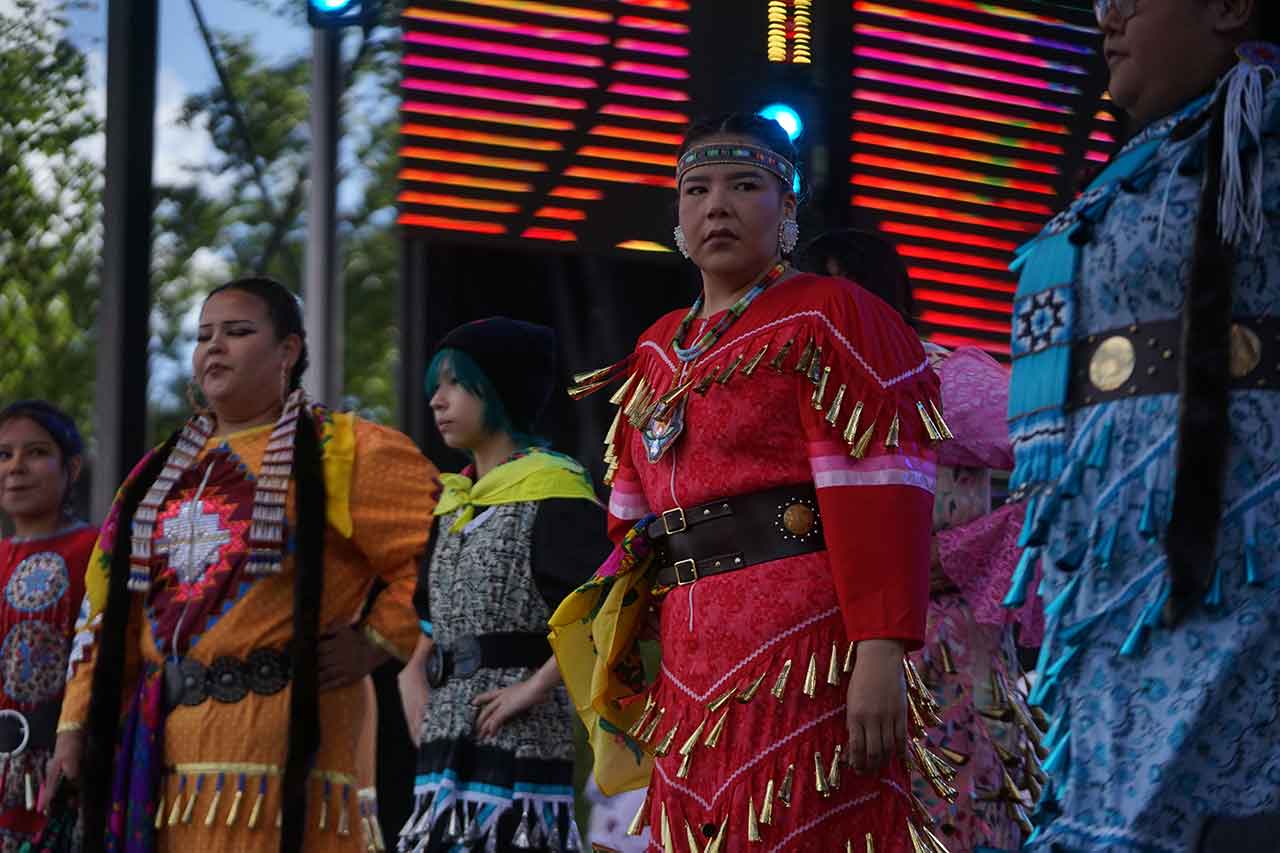
Thousands of people gathered at Thunder Bay’s waterfront on September 12 for Wake the Giant, a music and cultural festival created to welcome Indigenous students who move to the city for high school.
The event included Indigenous performers, dancers, artisans, food vendors and cultural activities. It was organized by Northern Nishnawbe Education Council and built around the goal of making Thunder Bay safer and more welcoming for Indigenous youth.
The festival’s team later apologized following Flo Rida’s closing performance. Organizers said unapproved props were used despite their instructions that Wake the Giant was a sober event and alcohol was not permitted onstage.
The team accepted responsibility for booking the artist and promised to put the festival’s values at the centre of future artist selections.
One disputed performance should not erase the work completed by students, volunteers, artists and organizers. However, the response now places responsibility on the festival to strengthen contracts, approve props in advance and establish clear consequences when performers disregard event rules.
Read NetNewsLedger’s full report on the festival’s response.
Local: Survivors’ Flag Raised at Lakehead University
Residential school survivors, Indigenous leaders, students and community members gathered at Lakehead University on September 11 for a Survivors’ Flag ceremony.
The flag honours residential school survivors, their families and the children who did not return home. Its symbols were selected through consultation with survivors from across Canada.
Survivors Bob Baxter and Mike Metatawabin spoke about trauma, healing and the damage caused when residential-school experiences are denied.
Lakehead says approximately 14 per cent of its students identify as Indigenous. That makes truth, culturally safe student services and meaningful reconciliation central responsibilities for the university—not ceremonial additions.
Lakehead is continuing Indigenous programming throughout September, including cultural events leading toward the National Day for Truth and Reconciliation.
The Common Thread: Indigenous Decisions Must Carry Authority
The day’s leading stories are different, but the central issue is consistent.
Indigenous peoples are demanding the authority to make decisions about their children, lands, cultures, safety and economic futures.
The Innu child-welfare law demonstrates what transferring real jurisdiction can look like. The disputes over carbon credits, investment projects, medical travel and policing show what happens when Indigenous communities believe decisions are being made around them instead of with them.
For governments and businesses, consultation alone will not always create trust or certainty. The harder—and more important—work involves sharing authority, ownership, information and accountability.