Top News for July 23, 2026: Wildfire Evacuations, U.S. Trade Pressure and Rising Oil Prices Lead the Day
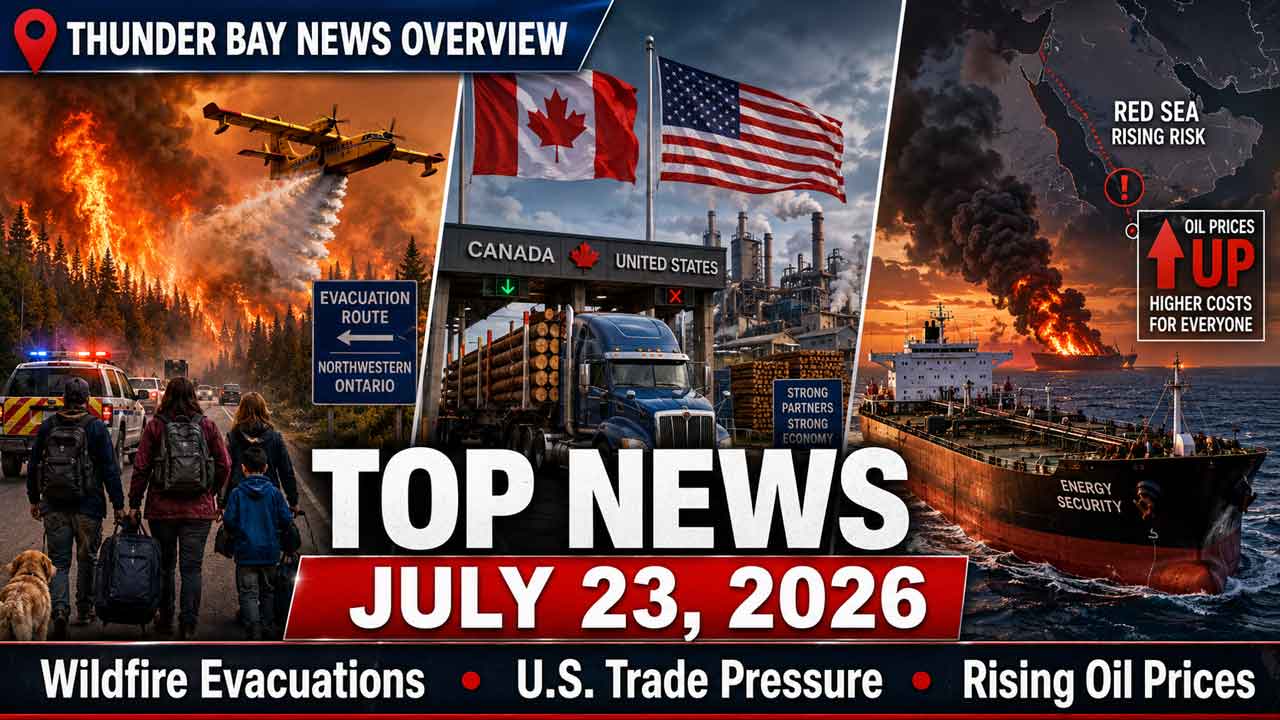
THUNDER BAY — Northwestern Ontario’s wildfire emergency remains the leading regional story Thursday as thousands of evacuees remain away from home and governments prepare for continued fire activity.
Internationally, attacks on oil tankers in the Red Sea are pushing crude prices toward US$100 a barrel.
Nationally, Canada faces prolonged uncertainty over continental trade, while new crime data and an urgent appeal for blood donors carry direct implications for Thunder Bay residents.
What NetNewsLedger Readers Need to Know Today
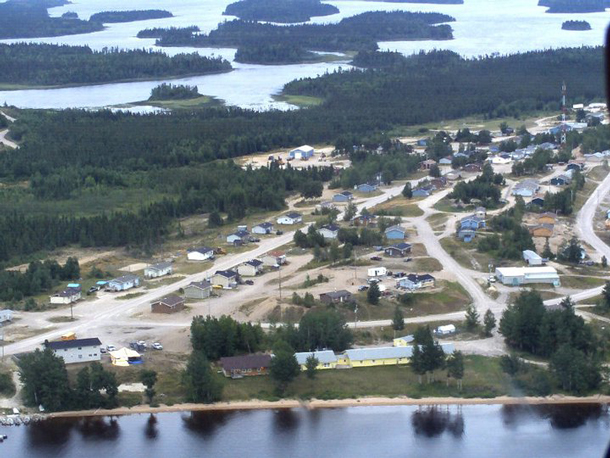
The most immediate regional concern remains the safety and well-being of residents evacuated from remote First Nations.
Thunder Bay has moved from active emergency co-ordination to enhanced monitoring, but the city continues supporting the regional response.
The largest economic risks come from rising oil prices and unresolved Canada-U.S. trade disputes. Those developments could affect fuel costs, forestry, mining, commercial transportation and the cost of supplying remote communities.
This report reflects information available Thursday morning. Wildfire conditions, evacuation instructions, trade negotiations and international military developments remain fluid.
Regional: Northwestern Ontario Has 145 Active Wildfires
Ontario’s online wildfire update available Thursday morning listed 145 active wildland fires in the Northwest Fire Region.
Of those fires, 41 were not under control and five were being held. The total was down slightly from the 146 active fires reported in the previous update, but the number of uncontrolled fires remained significant.
Major fires continue to burn near First Nations, transportation routes and resource-sector operations across the region.
The Restricted Fire Zone remains an important public-safety measure. Residents and visitors should not start campfires or conduct open-air burning in areas covered by the restriction.
The provincial fire count can change several times during the day as new fires are discovered, existing fires are extinguished and more accurate mapping becomes available.
More Than 3,000 People Affected by Northwestern Ontario Evacuations
Prime Minister Mark Carney convened the federal Incident Response Group Wednesday as the number of people evacuated from more than 12 Northwestern Ontario communities surpassed 3,000.
The federal response has included four Royal Canadian Air Force CC-130 Hercules aircraft used for 13 evacuation flights from Eabametoong First Nation, also known as Fort Hope.
Federal officials said nearly 300 water bombers, helicopters, reconnaissance aircraft and evacuation aircraft were supporting wildfire operations across Canada. Mexico has committed to sending as many as 200 firefighters.
Aircraft are particularly important in remote First Nations without all-season road access. Smoke, thunderstorms, visibility and competition for available planes can complicate evacuation operations.
For Thunder Bay, prolonged evacuations mean continued pressure on hotels, temporary accommodations, food services, health providers, transportation systems and community organizations.
Cat Lake First Nation Brings Health Services to Toronto
Cat Lake First Nation is using mobile virtual-diagnostic equipment to provide continuity of care to 542 community members evacuated to Toronto.
The First Nation’s health team transported TytoCare units with evacuees, allowing nurses and community health workers to conduct examinations and connect patients with providers familiar with their medical histories.
The technology was originally introduced to reduce the need for residents to fly from Cat Lake to regional medical centres for routine assessments. During the evacuation, it has allowed part of the community’s health clinic to operate approximately 1,300 kilometres from home.
The approach may offer lessons for other remote communities preparing for wildfire, flood or infrastructure-related evacuations. Continuity of care is especially important for Elders, children, pregnant residents and people managing chronic illnesses or the effects of wildfire smoke.
Thunder Bay Moves to Enhanced Wildfire Monitoring
The City of Thunder Bay has moved from an active emergency co-ordination phase to enhanced monitoring. City officials say Northwestern Ontario’s wildfire situation remains serious but comparatively stable. Thunder Bay continues working with emergency-management partners and remains prepared to increase its response if regional conditions worsen.
Municipal services are operating normally as local air quality has improved. The City continues directing residents seeking wildfire-related support to call or text 211.
The change does not signal an end to the emergency. Evacuated communities may require support for weeks or months, particularly where homes, power systems or other infrastructure have been damaged.
Local: Thunder Bay Crime Severity Index Rises
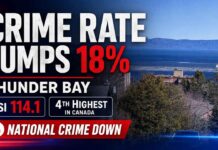
New Statistics Canada data show Thunder Bay’s overall Crime Severity Index reached 114.1 in 2025, an increase of three per cent from 2024.
The police-reported crime rate in the Thunder Bay census metropolitan area rose 18 per cent to 8,373 incidents for every 100,000 residents.
Nationally, the Crime Severity Index declined approximately five per cent to 75.0, while Canada’s police-reported crime rate fell two per cent. The number and rate of homicides both declined substantially in 2025.
The Crime Severity Index measures both the number and relative seriousness of police-reported offences. It does not measure every crime occurring in a community because some offences are never reported to police.
Thunder Bay’s increase will place renewed attention on violent crime, addictions, homelessness, police resources, bail supervision and access to mental-health and social services.
The statistics require further examination to determine which offences were primarily responsible for the local increase.
Thunder Bay Forecast Includes Gusty Winds, Smoke and Thunderstorms
Thunder Bay is forecast to reach 28 C Thursday, with a humidex of 33.
Environment and Climate Change Canada is calling for west winds of 30 kilometres per hour, gusting to 50, along with a 60 per cent chance of showers and a risk of an afternoon thunderstorm. Local wildfire smoke may also return.
Friday is forecast to remain warm, with a high near 28 C and southwest winds gusting to 40 kilometres per hour.
Wind is particularly important during the wildfire emergency because it can influence smoke movement, fire behaviour and aviation conditions. Residents should continue monitoring air-quality and weather information before planning strenuous outdoor activity.
National: U.S. Trade Chief Signals CUSMA Talks Could Extend Into 2027
U.S. Trade Representative Jamieson Greer says Washington hopes to reach separate interim agreements with Canada and Mexico by the end of 2026.
More difficult issues involving automotive rules of origin, labour provisions and environmental regulations are expected to continue into 2027. That means a full renewal or revision of the Canada-United States-Mexico Agreement is unlikely this year.
The United States chose not to extend the agreement during its July 1 review. Annual reviews will now continue unless the three countries agree to renew the pact.
The negotiations are taking place alongside a new American threat to impose 50 per cent tariffs on approximately US$20 billion in Canadian goods beginning Aug. 19.
For Northwestern Ontario, prolonged uncertainty could affect forestry producers, mining suppliers, manufacturers, trucking companies and businesses purchasing American machinery or components.
Regional forest products already face American softwood-lumber duties and other trade barriers. Additional tariffs could reduce orders, delay investment and increase costs on both sides of the border.
Canada’s Blood Supply Falls Nearly 20 Per Cent
Canadian Blood Services is urging eligible donors to make appointments after the national blood supply declined by nearly 20 per cent since June 1.
The organization requires approximately 18,000 appointments each week to meet hospital demand. Weekly bookings have recently fallen short by between 1,500 and 2,500 appointments.
Blood products are required for surgeries, cancer treatment, trauma care and other medical procedures.
The decline matters in Northwestern Ontario because hospitals operate across a large geographic area and depend on reliable transportation and national inventory management. Severe weather, wildfire smoke and highway interruptions can make replenishing regional supplies more complicated.
People who are eligible to donate should check for available appointments through Canadian Blood Services.
Regional Economy: Kenora Agri-Food Hub Receives Federal Support
FedNor is investing $499,780 in a regional agri-food hub based at Seven Generations Education Institute in Kenora.
The three-year Food Enterprises Advancement and SME Transformation project — known as FEAST — is expected to provide direct assistance to nearly 20 small and medium-sized businesses.
The project could help businesses develop products, improve food-processing capacity and strengthen regional supply chains.
Expanding food production in Northwestern Ontario has broader implications for food security. Many northern and remote communities face high transportation costs and limited access to locally produced goods.
International: Red Sea Tanker Attacks Push Oil Toward US$100
Iran-aligned Houthi forces in Yemen say they attacked two Saudi oil tankers as part of a declared blockade targeting Saudi Arabia. Saudi authorities confirmed that one tanker, the Encelia, was struck near Jizan and caught fire. The crew was reported safe. The reported attack on the second tanker had not initially been independently confirmed.
The attacks threaten shipping through the Bab el-Mandeb Strait, which connects the Red Sea with the Gulf of Aden. That route has become increasingly important because the war involving the United States and Iran has also disrupted traffic through the Strait of Hormuz.
Brent crude rose for a fifth consecutive day Thursday, reaching approximately US$98.59 a barrel. West Texas Intermediate crude climbed above US$90.
A prolonged increase in oil prices would eventually affect gasoline, diesel, aviation fuel and commercial transportation costs.
International Diplomats Meet as Middle East and Asian Tensions Rise
Foreign ministers and senior officials from Asia, Europe and North America are meeting at the ASEAN Regional Forum in Manila. The conflict involving Iran, the blockade of the Strait of Hormuz and the new threat to Red Sea shipping are dominating the discussions.
U.S. Secretary of State Marco Rubio also met Russian Foreign Minister Sergei Lavrov to discuss the war in Ukraine and relations between Washington and Moscow. The meeting produced no announced breakthrough.
Tensions in the South China Sea are also rising following confrontations between Chinese and Philippine vessels. China began two days of live-fire exercises near the Taiwan Strait on Thursday.
The developments matter to Canada because conflict affecting Asian and Middle Eastern shipping routes can raise freight, insurance, energy and consumer-goods costs.
European Union Agrees on New Russia Sanctions
European Union representatives have agreed on a 21st sanctions package targeting Russia’s financial system and oil revenues.
The measures include restrictions involving 94 financial institutions, Moscow’s stock exchange, cryptocurrency platforms, oil traders and vessels associated with Russia’s so-called shadow fleet.
The sanctions are intended to reduce Moscow’s ability to finance its war against Ukraine.
For Northwestern Ontario, the war continues to have indirect effects through energy,
What to Watch Through Thursday
Regional residents should monitor wildfire counts, evacuation orders, air-quality information and instructions from First Nation leadership and emergency officials.
Businesses will be watching for details about the threatened Aug. 19 U.S. tariffs and Canada’s response to Washington’s plan for separate interim trade agreements.
Internationally, the leading indicators will be tanker traffic through the Red Sea and Strait of Hormuz, further U.S.-Iran military action and whether Brent crude moves above US$100 a barrel.