THUNDER BAY — A Thunder Bay-based Indigenous consultancy is hosting a national webinar aimed at helping First Nations, economic development corporations and corporate partners rethink how major project benefits are structured.
Waawoono Consultancy will present “Waawoono Lunch & Learn: Beyond the IBA Volume II — Architecting Indigenous Sovereign Wealth” on Wednesday, May 27, from noon to 1 p.m. The online session will focus on the shift from traditional Impact Benefit Agreements to Indigenous Sovereign Wealth Funds, equity ownership and long-term economic self-determination.
Moving beyond fixed-payment agreements
Waawoono says the webinar is designed for Indigenous Nations and communities navigating major liquidity events, including specific-claim settlements, class-action settlements and revenue opportunities connected to resource, energy and infrastructure projects.
The discussion will examine how communities can move beyond passive royalty or fixed-payment agreements and toward direct equity ownership in projects. Organizers say that approach can help First Nations capture more long-term value, reduce exposure to inflation and build wealth that can be reinvested across generations.
For Northwestern Ontario, the issue is especially relevant. Mining, transmission, transportation, clean energy and critical-minerals development are central to the region’s economic future.
First Nations are increasingly seeking structures that provide decision-making power, environmental protection and equity participation, rather than limited one-time payments.
Focus on Indigenous Sovereign Wealth Funds
The webinar will explore how Indigenous Sovereign Wealth Funds can be used to manage major settlements and project revenues while protecting a Nation’s core treasury.
Topics will include direct equity ownership, capital stacking, access to global capital markets, and the role of economic development corporations in separating commercial risk from community governance and treaty responsibilities.
Waawoono says the session will also look at the legal and financial use of limited partnerships, where an economic development corporation can act as a general partner while helping shield a Nation from certain financial and environmental liabilities.
FPIC, environmental authority and the ‘Golden Share’ model
A key theme will be the institutionalization of Free, Prior and Informed Consent, often referred to as FPIC.
The panel will discuss how minority equity positions can leave Indigenous communities with limited influence over major project decisions. One model to be examined is the use of a “Golden Share,” a specialized governance tool designed to give Indigenous rights holders defined authority over environmental or consent-related matters.
For First Nations in the Ring of Fire, along transmission corridors and across Northern Ontario’s resource economy, those questions are not theoretical. They are directly tied to land stewardship, revenue sharing, community safety, infrastructure, housing and long-term governance.
Case studies include Wataynikaneyap Power, Oneida Energy and Ring of Fire utility models
The session will use several major projects as case studies.
Wataynikaneyap Power will be examined as an example of a large-scale Indigenous-led infrastructure project and a model for understanding liquidity, ownership and long-term wealth planning.
The Oneida Energy Storage Project will be discussed as an example of Indigenous participation in high-tech, grid-scale renewable energy assets.
The panel will also look at the Ring of Fire utility model and how First Nations could participate in new infrastructure and service models connected to mining, transportation, energy and regional development.
Waawoono panel features Thunder Bay and First Nations expertise
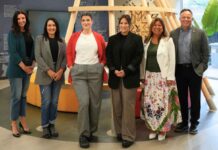
The session will feature members of the Waawoono team, including keynote presenter Jason Rasevych of Ginoogaming First Nation, whose work focuses on executive advisory and wealth structuring.
Blake Hawkins will moderate the session. Panelists include Landen Jourdain, who brings expertise in renewable energy and strategic communications; Ron Marano of North Caribou Lake First Nation, whose work focuses on corporate modernization and community engagement; and Maite Fink, who specializes in financial auditing, risk management and compliance.
Why this matters for Indigenous business in Northwestern Ontario
The move from IBAs to sovereign wealth planning reflects a broader change in Indigenous economic development. Communities are seeking structures that do more than compensate for project impacts. They are looking to build ownership, generate recurring revenue, protect lands and waters, and create capital for housing, education, health, language, infrastructure and future business development.
Thunder Bay’s role as a regional business, legal, financial and transportation centre makes it a natural location for this conversation. Many of the projects expected to shape Northern Ontario’s future will require Indigenous consent, Indigenous partnership and Indigenous financial leadership.
The webinar will be held online. Registration is available at:
https://us06web.zoom.us/webinar/register/WN_ss3zfS8FRqygLWa-QJR7nQ