THUNDER BAY – Wildfire Update – Aviation, Forest Fire and Emergency Services reports no new wildland fires were confirmed in the Northwest Region by the early evening of July 2, 2026.
At the time of this update, there are 73 active wildland fires burning across the region. Of these fires, 20 are not under control, four are being held, six are under control, and 43 are being observed. Two fires were called out over the past 24 hours.
Northwest Region Fire Summary
Current active fire status:
73 active wildland fires
20 not under control
4 being held
6 under control
43 being observed
2 fires called out in the past 24 hours
Fires of Note
Kasabonika Lake First Nation Complex
The Kasabonika weather station recorded 25.4 millimetres of rainfall over the previous 24 hours. The wet weather has helped reduce fire behaviour in the area, with observed fire activity remaining low.
Firefighting resources assigned to the Kasabonika Lake First Nation cluster include:
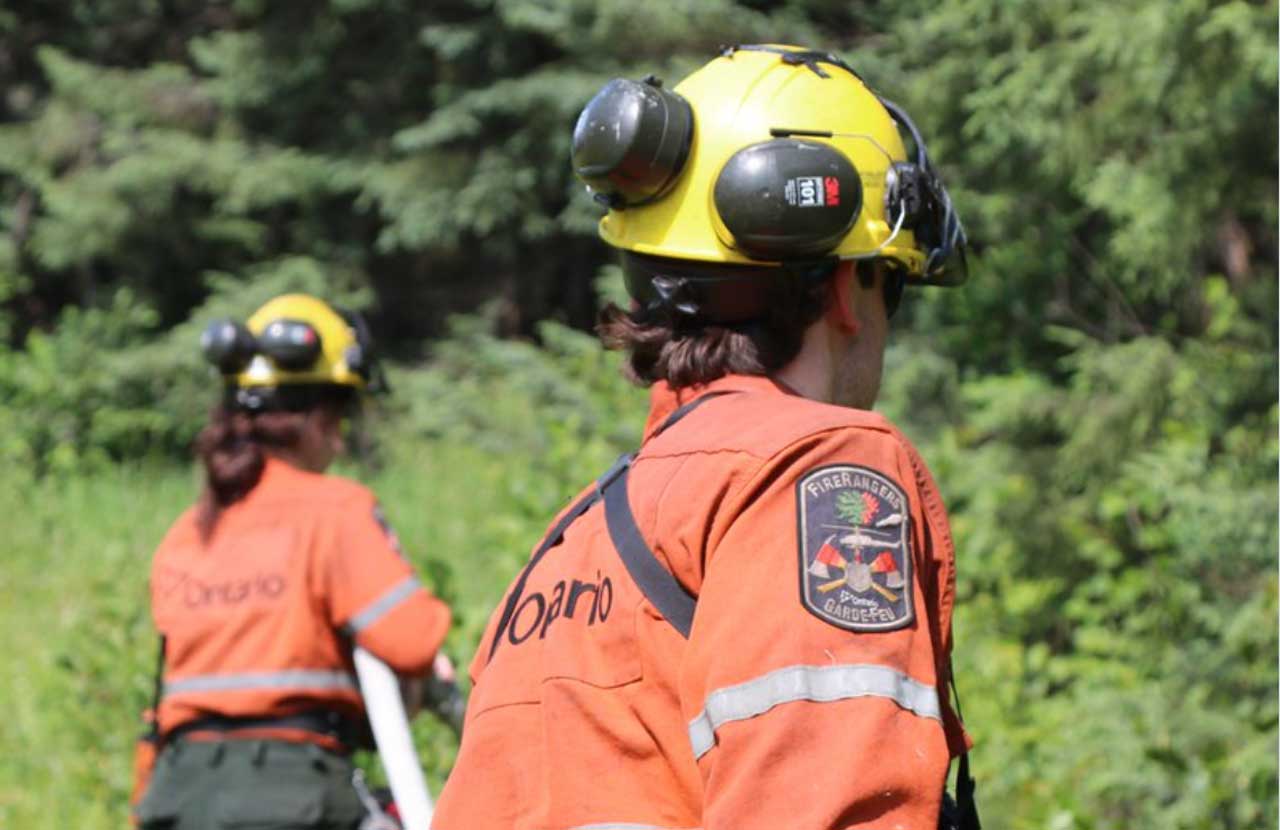
9 FireRanger crews
8 fire management personnel
4 helicopters
1 fixed-wing aircraft
Additional FireRanger crews are expected to join the firefighting effort in the coming days.
Nipigon 16 — NIP016 remains not under control and is listed at 1,474.2 hectares.
Nipigon 12 — NIP012 is located approximately 20 kilometres west of Kasabonika Lake First Nation and is currently estimated at 965 hectares.
There are three additional active fires in the area surrounding Kasabonika Lake First Nation:
Nipigon 13 — NIP013 is not under control and has been remapped to 298.0 hectares.
Nipigon 14 — NIP014 is not under control at 2.0 hectares.
Nipigon 15 — NIP015 is not under control at 0.1 hectares.
Aviation Notice: NOTAM at Nipigon 16
A NOTAM is currently in effect in the area of wildland fire Nipigon 16 near Kasabonika Lake First Nation.
This is in addition to standard airspace restrictions under Section 601.15 of the Canadian Aviation Regulations, which restrict airspace around all active forest fires to forest fire suppression aircraft only. The restricted area includes airspace within five nautical miles of an active fire, up to 3,000 feet above ground level.
Pilots are reminded to check NOTAMs related to forest fires through NavCanada’s Collaborative Flight Planning Services under the Weather and NOTAM tab when flight planning.
Fort Frances 14
Fort Frances 14 — FOR014 is located approximately 35 kilometres southwest of Upsala, near Byers Lake.
Low fire behaviour continued throughout the day. FireRangers are getting established on the fire line, and additional crews are expected to be added over the next few days.
Sioux Lookout 21 — Wunnumin Lake First Nation
Rain gauges in the Sioux Lookout 21 fire area recorded 2 to 5 millimetres of rainfall today, in addition to rainfall received over the previous 24 hours.
Crews have established hose line along most of the fire’s northern perimeter.
Sioux Lookout 21 — SLK021 remains 357 hectares in size and is not under control. The fire is located approximately 9 kilometres south of the Wunnumin Lake First Nation Airport.
Resources assigned to SLK021 include:
6 FireRanger crews
3 helicopters
Aviation Notice: NOTAM at Sioux Lookout 21
A NOTAM is currently in effect in the area of wildland fire Sioux Lookout 21 near Wunnumin Lake First Nation.
This notice is in addition to the standard Canadian Aviation Regulations airspace restriction around active forest fires. Airspace within five nautical miles of active fires, up to 3,000 feet above ground level, is restricted to forest fire suppression aircraft only.
Pilots should consult NavCanada’s Collaborative Flight Planning Services for current forest fire NOTAMs before flying.
Regional Wildland Fire Hazard
Residents can check current forest fire danger ratings using Ontario’s interactive fire map.
The map provides fire danger ratings calculated from more than 130 weather stations across Ontario’s Fire Region and updates throughout the day as weather conditions change.
As of July 2, 2026, at 17:59 CDT, Ontario’s forest fire danger ratings across the Northwest Region were shown using colour-coded hazard levels: blue for low, green for moderate, yellow for high, and red for extreme.
Follow Ontario’s Outdoor Fire Rules
Aviation, Forest Fire and Emergency Services reminds the public that outdoor fire rules remain in effect during Ontario’s legislated fire season, which runs from April 1 to October 31.
Residents are encouraged to use alternatives to burning yard waste and woody debris, such as composting or using a local landfill.
If burning is necessary, use caution and follow Ontario’s Wildland Fire Management regulation. Outdoor fires must be started no sooner than two hours before sunset and fully extinguished no later than two hours after sunrise.
Always have enough tools and water available to contain the fire at the site.
Residents within municipal boundaries must also check with their local fire department for burning restrictions or permit requirements before burning.
Report a Wildland Fire
To report a wildland fire north of the French and Mattawa rivers, call:
310-FIRE — 310-3473
To report a wildland fire south of the French or Mattawa rivers, call:
9-1-1
For wildfire prevention tips and current fire information, follow Ontario forest fire updates on Facebook, Instagram, and X at @ONforestfires and @ONfeudeforet, or visit Ontario.ca/FireUpdates.