Two people face cocaine trafficking charges after a NAPS search in Webequie First Nation
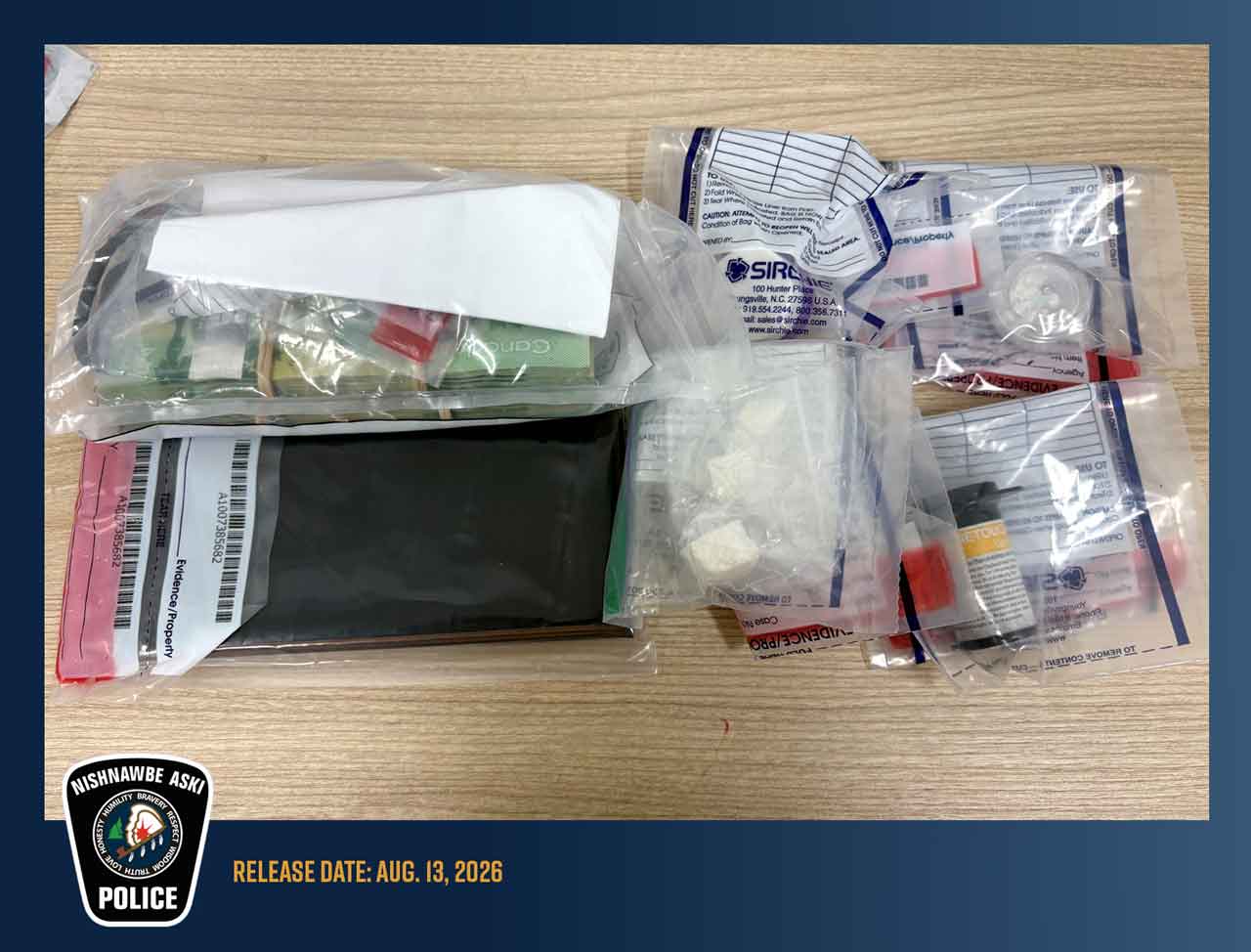
WEBEQUIE FIRST NATION, Ont. — Two Webequie First Nation residents are facing drug-trafficking charges after Nishnawbe Aski Police Service officers searched a home and seized suspected crack cocaine, cash and items police say were consistent with drug trafficking.
The arrests stem from a July investigation into suspected drug trafficking in the community. Police have not disclosed the quantity or estimated street value of the drugs seized.
Search warrant executed at Webequie residence
NAPS says members of its Intelligence Unit executed a search warrant at a residence in Webequie First Nation on Friday, July 24.
The operation included support from the NAPS K9 Unit, Provincial Guns and Gangs Task Force and frontline officers from the Webequie detachment.
Police say the warrant was obtained as part of an ongoing investigation into drug-trafficking activity in the community.
During the search, officers reported finding suspected crack cocaine, cash and paraphernalia consistent with drug trafficking.
Caitlin Erika Wabasse, 36, of Webequie First Nation, is charged with:
- possession of cocaine for the purpose of trafficking; and
- possession of proceeds of property obtained by crime under $5,000.
Frances Wabasse, 33, also of Webequie First Nation, is charged with:
- possession of cocaine for the purpose of trafficking.
Both accused have been released from custody with conditions and are expected to appear in court at a later date, according to NAPS. The investigation remains ongoing.
What does possession for the purpose of trafficking mean?
Possession of a controlled substance for the purpose of trafficking is prohibited under section 5(2) of the Controlled Drugs and Substances Act.
Cocaine is listed as a Schedule I controlled substance under federal law.
For a Schedule I substance, a conviction for trafficking or possession for the purpose of trafficking is an indictable offence carrying a maximum sentence of life imprisonment. Section 5(3)(a) does not set a mandatory minimum sentence for the offence.
That maximum does not mean a life sentence would necessarily be imposed following a conviction. Sentences depend on the circumstances of an individual case, including the quantity of drugs, the accused person’s role, prior criminal record, aggravating or mitigating factors and the degree of responsibility established before the court.
Canadian sentencing law requires a sentence to be proportionate to both the gravity of the offence and the offender’s degree of responsibility.
Proceeds of crime charge explained
The proceeds-of-crime allegation against Caitlin Erika Wabasse falls under section 354 of the Criminal Code, which makes it an offence to possess property or proceeds while knowing that all or part of it was obtained directly or indirectly through an indictable offence.
Where the value is $5,000 or less, section 355 allows the Crown to proceed either by indictment or summary conviction.
If prosecuted by indictment, the maximum sentence is two years imprisonment. If prosecuted summarily, the Criminal Code’s general penalty is a fine of up to $5,000, imprisonment for up to two years less a day, or both, unless another penalty is specifically provided.
As with the drug-trafficking allegations, the eventual sentence — if there is a conviction — would depend on the evidence, circumstances and applicable sentencing principles.
Drug investigations remain a regional concern
Drug trafficking investigations in Northwestern Ontario First Nations can have consequences extending beyond individual arrests. Police services across the region continue to focus resources on disrupting the movement and sale of controlled substances in communities where access to policing, health care, treatment and other supports can be constrained by geography.
In this investigation, NAPS has not disclosed the amount of suspected crack cocaine seized, its estimated value or additional details about the alleged trafficking activity.
None of the charges have been proven in court. Caitlin Erika Wabasse and Frances Wabasse are presumed innocent unless and until proven guilty beyond a reasonable doubt in a court of law.