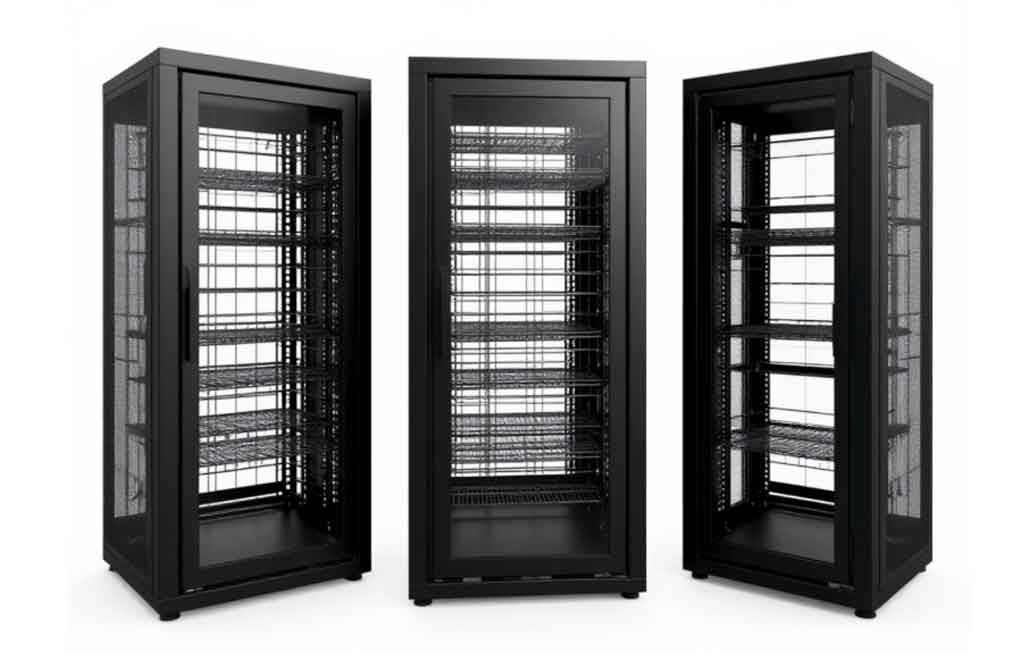
If you are new to server racks, you have probably seen terms like “1U switch” or “2U server” and wondered: what does the U mean in server racks? The answer is simple. A rack unit (often shortened to U or RU) is a standard measurement for the height of equipment that mounts in a server rack. One rack unit equals 1.75 inches or 44.45 millimeters.Today, the rack unit definition is universal. Any device labeled as 1U will fit into any standard 19-inch rack, regardless of the brand.
How Rack Units Work
The rack unit definition is based on height only. Width and depth can vary, but the height follows the 1.75-inch rule. A 1U server is 1.75 inches tall. A 2U server is 3.5 inches tall. A 4U server is 7 inches tall. You simply multiply the number of rack units by 1.75 inches to get the total height.
The mounting holes on rack rails follow a three-hole pattern per rack unit. The top hole of one U and the bottom hole of the next U are spaced 1.75 inches apart. This makes it easy to align and mount equipment from different manufacturers without measuring each time.
Common Rack Unit Sizes and Examples
Most IT equipment comes in standard rack unit heights. Network switches and patch panels are typically 1U. Many servers are 1U or 2U. Larger storage arrays, blade server chassis, or high-performance servers often use 4U racks, 6U data rack, or even 10U. UPS batteries and some large workstations can take 3U or 4U.
For example, if you have a 42U rack, you could fill it with forty-two 1U servers. Or you could use twenty-one 2U servers. Or ten 4U devices with some space left for switches and power distribution units. This flexibility is what makes the rack unit standard so useful.
What Does U Mean in Server Racks for Planning?

When planning your rack layout, you need to add up the U height of every device. A typical setup might include:
- Two 2U servers (4U total)
- One 1U network switch (1U)
- One 1U patch panel (1U)
- One 2U UPS (2U)
That is 8U total. If your rack has 24U, you have 16U left for future expansion. Always leave some empty space — about 10 to 20 percent of your rack capacity. Empty spaces improve airflow and make it easier to add equipment later without reorganizing everything.
Heavier equipment should go at the bottom of the rack. Servers and UPS batteries are heavy. Switches and patch panels are light. Placing heavy items low keeps the rack stable and prevents tipping.
Rack Width and Depth Considerations
While the rack unit definition covers height, you also need to think about width and depth. Standard racks are 19 inches wide. This is the distance between the two front mounting rails. Some telecom racks use 23 inches, but 19 inches is most common for IT equipment.
Depth is more variable. Server racks come in depths from 600 mm to 1200 mm (about 24 to 48 inches). Shallow racks around 600 mm work well for network switches. Deep racks around 1000 mm or more are needed for long servers. Always check the depth rating of both your rack and your equipment before buying.
Common Mistakes to Avoid
One common mistake is assuming that all 1U equipment is exactly 1.75 inches tall. The front panel is usually slightly shorter to allow clearance for installation. But the mounting holes still follow the 1.75-inch spacing.
Another mistake is forgetting to account for cable management. Cables take up space and can block airflow if not organized properly. Use cable management arms and vertical organizers to keep things neat.
Some people also overload their racks. Every rack has a maximum weight capacity, usually between 800 and 1500 pounds. Check the manufacturer’s rating before filling the rack completely.
Why the Rack Unit Standard Matters
The rack unit definition saves time and prevents compatibility problems. You can buy a server from Dell, a switch from Cisco, and a patch panel from a generic brand, and they will all mount in the same rack without modification. This standardization is one of the reasons data centers can scale efficiently.
For home labs and small businesses, understanding what does U mean in server racks helps you choose the right cabinet. A 9U or 12U wall-mount rack might be perfect for a small office. A 22U or 27U rolling rack works for a growing business. A 42U or 48U rack is standard for data centers.
When planning your rack, add up the U height of all devices, leave room for expansion, put heavy equipment at the bottom, and always check depth compatibility.