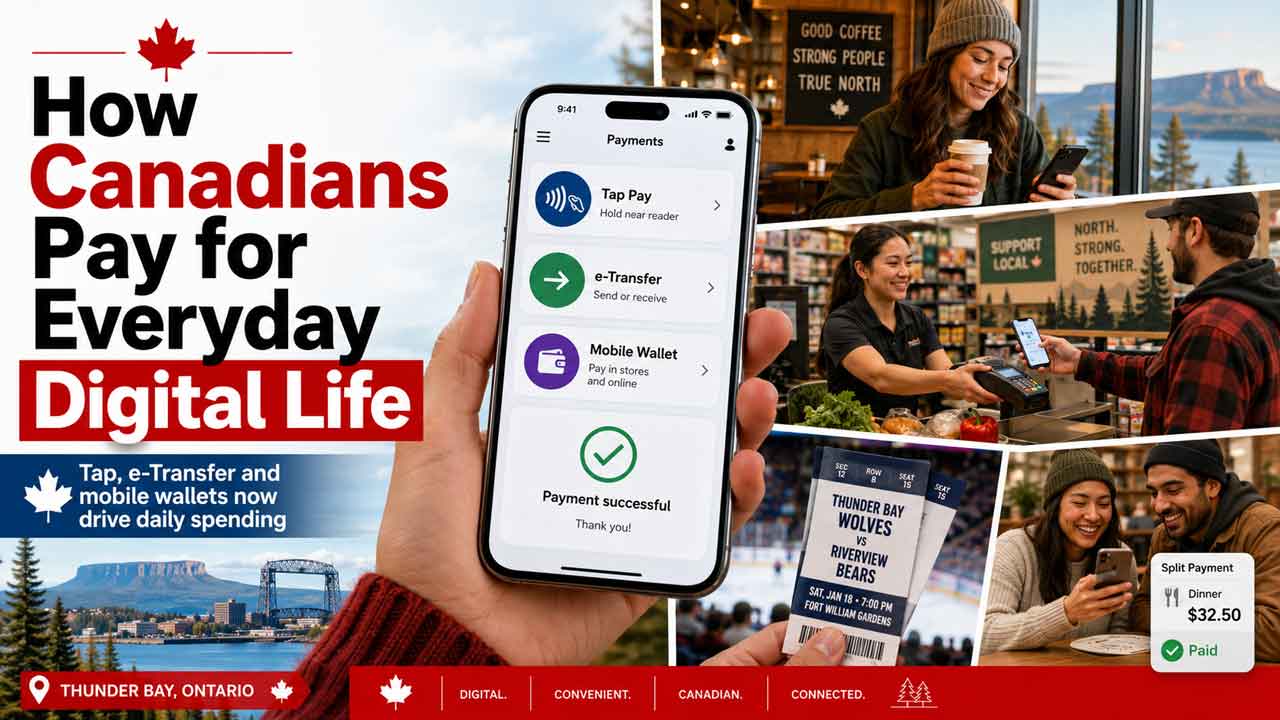
Convenience has quietly become the currency of modern living in Northern Ontario. Whether someone in Thunder Bay is splitting a bill after a Sleeping Giant hike, buying tickets to a Lakehead Thunderwolves game, or covering a grocery run at the tail end of a long shift, the way people move money has shifted dramatically. Cash still has its place, especially in smaller communities, but the tap of a phone or a quick Interac e-Transfer now handles most of the load. That single guiding idea — that speed and simplicity now drive how Canadians spend — runs through nearly every corner of digital life today.
Nowhere is that shift more visible than in the entertainment sector, where consumers expect their money to move as fast as their attention does. A curated, expert-reviewed guide to the best real-money online casino options for Canadian players shows just how central payment convenience has become to the whole experience. Such resources walk readers through licensing standards, account security, game selection, and, crucially, which payment methods are supported — with Interac and e-wallets front and centre. For anyone weighing where to spend leisure dollars safely, understanding those payment options and responsible-play features has turned into a core part of the decision, not an afterthought.
Why Interac Became the Default in Canada
Interac occupies a spot in Canadian life that few foreign observers fully grasp. It is not just a card network; it is woven into how people bank, split costs, and send money to family across the province. The e-Transfer feature in particular took off because it solved a very Canadian problem — moving money between people and businesses quickly, without handing over card numbers or waiting days for a cheque to clear.
For residents of remote Northern Ontario communities, where a physical bank branch might be hours away, that reliability matters even more. An e-Transfer works the same whether someone is in downtown Thunder Bay or a fly-in First Nation. That guiding idea of convenience shows up again here: the tool that requires the least friction tends to win, and Interac earned its place by asking almost nothing of the user beyond an email address and a few taps.
The Rise of the Digital Wallet
If Interac represents the trusted backbone, e-wallets represent the newer layer stacked on top. Apple Pay, Google Wallet, and PayPal have moved from novelty to routine, letting people leave the physical card at home entirely. The pandemic accelerated the habit, and it never really reversed. Tapping a phone at the checkout of a Northern grocery chain or paying for parking at a regional hospital now feels ordinary rather than futuristic.
Businesses noticed the demand and adjusted. Statistics Canada’s look at what payments businesses accept captured how widely contactless and mobile options spread across Canadian merchants, even smaller regional operators that once relied heavily on cash. The same convenience principle applies: a coffee shop that accepts a tap keeps the line moving, and a customer who can pay in two seconds is a customer who comes back.
Mobile Phones Doing the Heavy Lifting
None of this works without the device in nearly every pocket. The smartphone has become the wallet, the bank, and the receipt drawer all at once. Research from the Bank of Canada on mobile device ownership and mobile payments highlights just how tightly phone access and payment behaviour are linked — the more comfortable people grow with their devices, the more they lean on them for spending.
That comfort has real consequences for how entertainment and everyday services are designed. When someone streams a Toronto Maple Leafs game, orders takeout during a wildfire smoke advisory that keeps them indoors, or tops up a transit pass, they expect the payment step to disappear into the background. The technology that fades away is the technology people trust. Once again the guiding idea holds: friction is the enemy, and the phone removes most of it.
Security and Trust in a Tap-First World
Speed only counts when people feel safe using it. The flip side of instant payments is the very reasonable worry about fraud and data privacy. Interac built its reputation partly on encryption and the fact that transfers do not expose banking details to the recipient. E-wallets lean on tokenization and biometric locks — a fingerprint or face scan standing between a stranger and someone’s money.
Consumer awareness has grown alongside the technology. The industry overview in the report on Canadian payment methods and trendstracks how Canadians balance convenience against security, and how digital methods keep gaining ground precisely because the safeguards improved. For entertainment spending in particular, that trust is decisive: people will only park their money somewhere that treats security seriously, and reputable services now advertise their protections as openly as their features.
What the Shift Means for Everyday Spending
Step back and a clear picture emerges. The average Canadian now juggles several payment options and picks whichever suits the moment — Interac to reimburse a neighbour, a tap to grab lunch, an e-wallet for online purchases. The guiding idea that opened this story ties it all together: convenience shapes behaviour, and behaviour reshapes the tools.
For readers in Thunder Bay and across Northern Ontario, the practical takeaway is simple. Knowing which methods are widely accepted, understanding how each protects a transaction, and choosing services that make security visible all lead to smoother, safer spending. Whether the goal is paying bills, supporting local businesses, or enjoying a bit of digital entertainment after hours, the smart move is treating payment choice as part of the experience rather than a box to check at the very end.