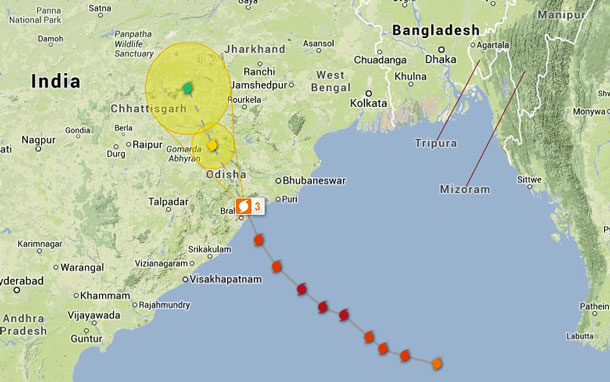
Landslide searches and damage assessments continue in eastern India as another system may strengthen and approach Andhra Pradesh by Monday
Recovery continues as another system organizes
NEW DELHI – Rescue crews searched for 12 people missing after a landslide in Odisha on Saturday as eastern India continued to recover from Cyclone Arnab, which damaged homes, farms, roads and electricity infrastructure after striking Andhra Pradesh early Wednesday.
India’s government broadcaster reported four deaths from rain-related incidents in Odisha and said a seven-member federal team had arrived in Andhra Pradesh to assess damage. Preliminary state estimates put losses across 12 Andhra Pradesh districts at 47.64 billion rupees. Those figures remain preliminary and may change as field reports are checked.
The disaster remains a public-safety concern because heavy rain continued in southern Odisha and a new weather system was developing over the Bay of Bengal. The India Meteorological Department issued yellow heavy-rain warnings for 14 Odisha districts on Saturday, according to the government report.
Arnab’s landfall and reported impacts
Arnab crossed the Andhra Pradesh coast as a very severe cyclonic storm, with winds reaching 135 km/h, before weakening inland. At least three deaths in Andhra Pradesh, crop damage over about 32,000 hectares, disrupted electricity and flooding in low-lying parts of Visakhapatnam.
At least 180,000 people were evacuated from low-lying and flood-prone areas in Andhra Pradesh before landfall. Rail services were cancelled or altered, fishing boats were secured and medical teams were deployed.
Reported death totals differ by state, incident and reporting time; the figures should not be combined without an official consolidated toll.
New Bay of Bengal threat may approach Monday
At 1:59 p.m. India Standard Time Saturday, the India Meteorological Department said a well-marked low over the southeast Bay of Bengal and nearby Andaman waters was likely to become a depression within six hours, strengthen into a cyclonic storm during the following 24 hours and reach the west-central Bay near the Andhra Pradesh coast around Monday evening.
The agency described moderate to rough seas, occasionally very rough, in the southeast Bay, with cyclonic winds of 20 to 25 knots gusting to 30 knots and isolated heavy rain. Its marine bulletin carried no basin-wide warning at that issue time, but the forecast intensification means coastal authorities, mariners and residents should follow later bulletins and local orders.
Weather trivia
Tropical cyclones are powered by heat and moisture from warm ocean water. They usually weaken after landfall because their circulation loses that moisture source and encounters greater surface friction, although their remnants can still produce destructive inland rain and flooding.