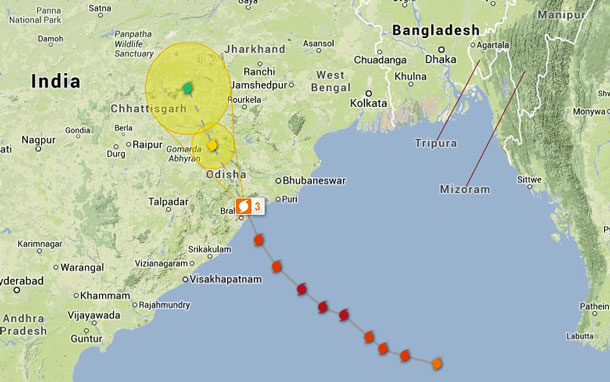
Severe Cyclone Murasu approaches Andhra Pradesh with 120 km/h gusts, extreme rain and a dangerous coastal surge
The storm is forecast to cross near Ongole overnight with destructive winds, extreme rain and a dangerous coastal surge
NEW DELHI, Nov. 2, 2026 — Severe Cyclonic Storm Murasu was approaching India’s Andhra Pradesh coast Monday, with landfall forecast between 11:30 p.m. India Standard Time and 4 a.m. Tuesday.
The India Meteorological Department maintained a red-message cyclone warning for Andhra Pradesh and adjoining northern Tamil Nadu.
Landfall forecast near Ongole
Information based on India Meteorological Department bulletins valid at 04:30 UTC, or 10 a.m. India Standard Time, placed Murasu about 210 kilometres east-southeast of Nellore and 260 kilometres southeast of Ongole.
Maximum sustained winds were near 93 km/h, with gusts near 111 km/h. The storm was moving west-northwest at about 25 km/h.
The meteorological department forecast a crossing between Nellore and Narsapur, close to Ongole, with sustained winds of 100 to 110 km/h and gusts to 120 km/h.
Extreme rain and coastal flooding threat
Isolated extremely heavy rain is forecast in coastal Andhra Pradesh on Monday and Tuesday. Heavy to very heavy rain is also expected in parts of Tamil Nadu, Rayalaseema, southern Odisha and southern Chhattisgarh. Telangana faces an isolated extreme-rain risk Tuesday.
A storm surge of roughly one to 1.5 metres above the astronomical tide could inundate low-lying coastal areas. Bapatla, Krishna and Prakasam districts face the greatest surge threat.
High to very high seas are expected near the coast. The India Meteorological Department has advised fishers to remain out of the west-central Bay of Bengal until Wednesday afternoon.
Public-safety response
The Andhra Pradesh State Disaster Management Authority was displaying severe cyclone alerts and directing residents to follow district evacuation and shelter orders. Its published population figures are planning estimates for potential exposure, not confirmed evacuation totals.
Residents in surge zones should move when directed and should not wait for visible flooding. Falling trees, damaged roofs, power failures and blocked roads are possible near the crossing point.
Protective clothing: People moving to shelters should wear sturdy closed footwear, long trousers and a waterproof outer layer. Carry dry socks and essential medication in a sealed bag. Avoid loose rain ponchos in destructive winds and never enter floodwater.
Sources: India Meteorological Department cyclone bulletins, India Meteorological Department cyclone information, Andhra Pradesh State Disaster Management Authority cyclone system, Weathernews storm analysis