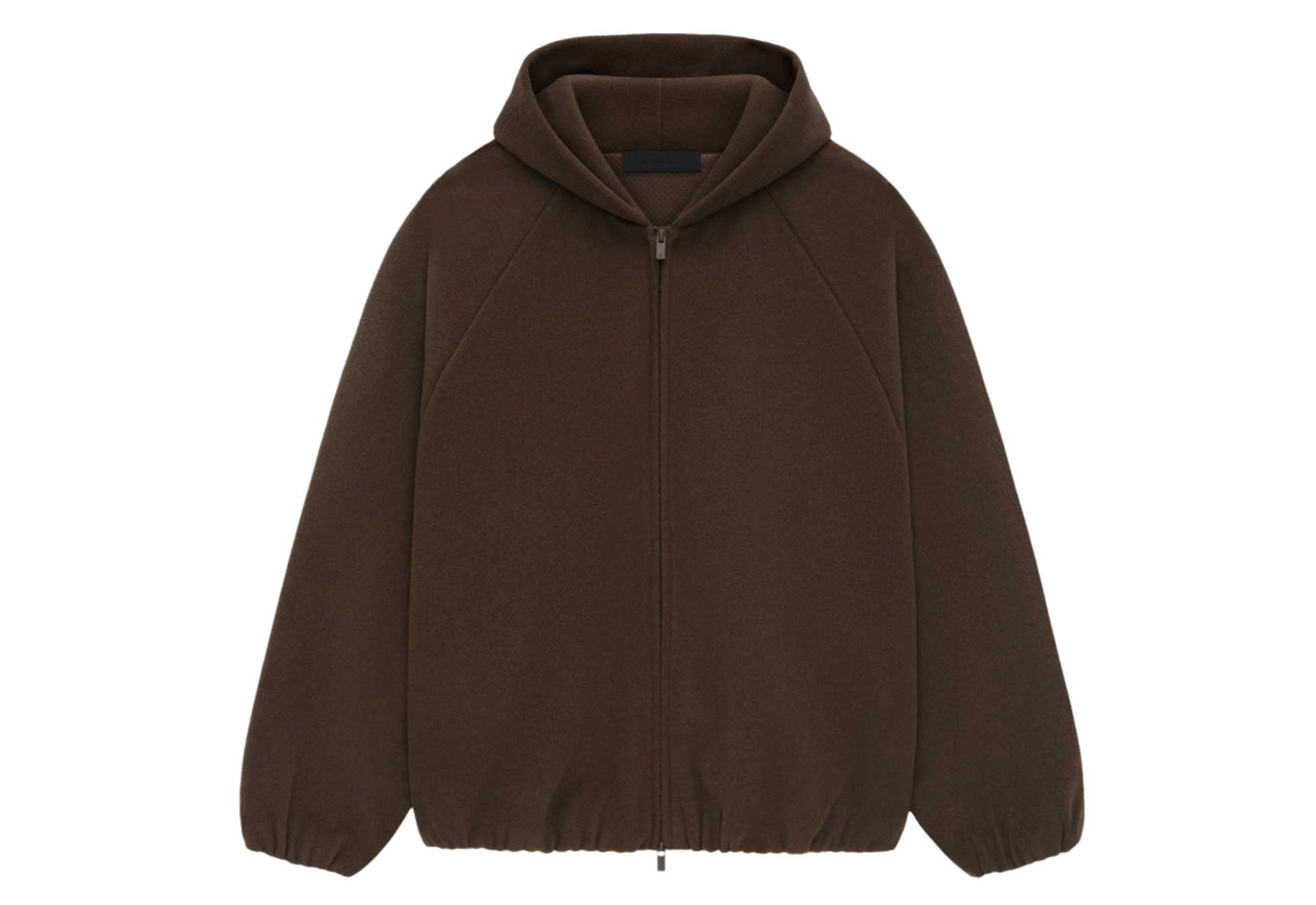
January in Minneapolis tests every coat you own, with average highs stuck in the low 20s °F and mornings that slide toward zero. Wearing a hoodie underneath is the obvious answer, and if you’re browsing the Essentials Hoodie rail for that job, how it sits under the coat matters more than anything printed on the tag. Get it wrong, and you walk around stiff-armed, zipped too tight, and sweating the second you step into a warm store.
So what is the hoodie doing in there?
Think of a winter outfit as three jobs. A tee sits against your skin, the hoodie holds a pocket of warm air around your body, and the coat stops wind and snow from stealing that air. None of them has to be huge.
People tend to forget that last part. When the mid-layer is too thick, it fights the coat for space, and you lose warmth instead of gaining it (more on that below). A hoodie that lies close, with sleeves that slide in easily, usually beats a chunkier one.
A light shell and a puffy parka want different hoodies
The coat you already own should decide the hoodie you buy, not the other way around.
Under a thin shell
With a shell, the hoodie carries most of the warmth, so you can afford a slightly roomier fit. Denver is a good example of where this pays off. A January morning there can sit around 17°F and still climb into the mid-40s by the afternoon, under that bright, dry Colorado sun. Shell plus hoodie lets you peel the shell off at lunch. A heavy parka never allows that.
Under a puffy parka
A down or synthetic parka already does the insulating, and it only works when its filling has room to puff up. Squash it from the inside with a thick, oversized hoodie and the loft flattens, and flattened insulation holds less heat. So under a parka, go for a closer fit and skip the oversized cuts. On a really bitter Minneapolis day, when the wind chill drops well below zero, the parka is the hero and the hoodie is just backup.
Sizing a hoodie that has to fit under something
All 113 hoodies come in sizes S to XXXL, and most add a 4XL, so your size is almost always listed. The harder call is whether to stay at your usual size or go up one.
My take? Size by the coat. If your coat already fits close through the shoulders and arms, stay at your normal size, because a bigger hoodie just bunches at the elbows and rides up your lower back when you reach for something. If the coat is roomy, you’ve got space to play with and one size up can feel cozier. Fit varies from one style to the next, so open the product page and read whatever sizing details it gives before you order.
Then test it at home with the coat you’ll actually wear:
- Reach both arms straight out in front of you with the coat zipped and see if anything pulls across your back.
- Check that the hoodie cuffs stop at or just inside the coat cuffs, so they don’t poke out and get wet.
- Look at the hem, since a hoodie that hangs below a short jacket can look sloppy and catch the cold.
Two hoods, one neck
Nobody mentions this until there’s a lump of fabric wedged under your chin at a bus stop.
In real wind, wear the hoodie’s hood up and pull the coat’s hood over the top. It looks a little bulky, but it seals your ears and neck far better than either hood alone. On calmer days, lay the hoodie’s hood flat down your back inside the coat. Or pull it out and drape it over the coat collar, which honestly looks neat with a low-collared shell and pretty awkward with a tall parka collar.
| Pro Tip: Before you zip up, smooth the hoodie’s hood flat against your back and pull the coat collar up over it. It stops the bunching at your neck, and you can still flip the hood up later if the wind picks up. |
And tuck the drawstrings inside. Loose cords flap around, catch in coat zippers and get soaked by snow.
Pullover or zip under a coat?
A pullover sits flatter, because there’s no zipper running down the front to stack against the coat’s own zip. That’s why most layering advice leans pullover for under a parka. On this shop, six hoodie names say pullover and just one mentions a zip, so the choice mostly makes itself.
But a zip has one real perk. You can open it on a crowded train or in a heated office without taking anything off. A handful of names also mention fleece, though the listing doesn’t break down the fabric, so check the product page if that matters to you.
What a full winter stack costs here
This is how the shop’s layers line up from lightest to warmest, with the lowest and median price on each rail. The last column shows how much more each one costs at its floor than the cheapest tee.
| Layer (light to warm) | Lowest price | Median price | Floor gap over the cheapest tee |
| T-shirt | $93.50 | $101.50 | — |
| Sweatshirt (no hood) | $104.00 | $104.00 | +$10.50 |
| Hoodie | $121.00 | $121.00 | +$27.50 |
| Tracksuit (full set) | $154.00 | $154.00 | +$60.50 |
For the hoodie, the median and the lowest price are the same number, because 69 of the 113 hoodies sit at $121. So a base tee plus a hoodie at their floor prices comes to $214.50. A few hoodies cost more, topping out at one piece for $209. Nothing on the listing explains that gap, so open those pages side by side if one catches your eye. The tracksuit row buys a matched top and bottom, so part of that price is pants.
Small habits that keep you warm all day
Sweat is the quiet enemy of layering. A damp hoodie under a zipped coat cools you fast once you step back outside, so open the coat as soon as you walk into a store, a bus or a lobby. Thirty seconds of venting saves you a cold walk home. Brush snow off at the door, too, before it soaks through.
Start with the coat you already have, pick a hoodie that fits under it without a fight, and sort out the hood before you head out the door. That covers most of a cold-city winter. Browse the hoodies with your coat on hand, and size for the layer it actually has to slide under.