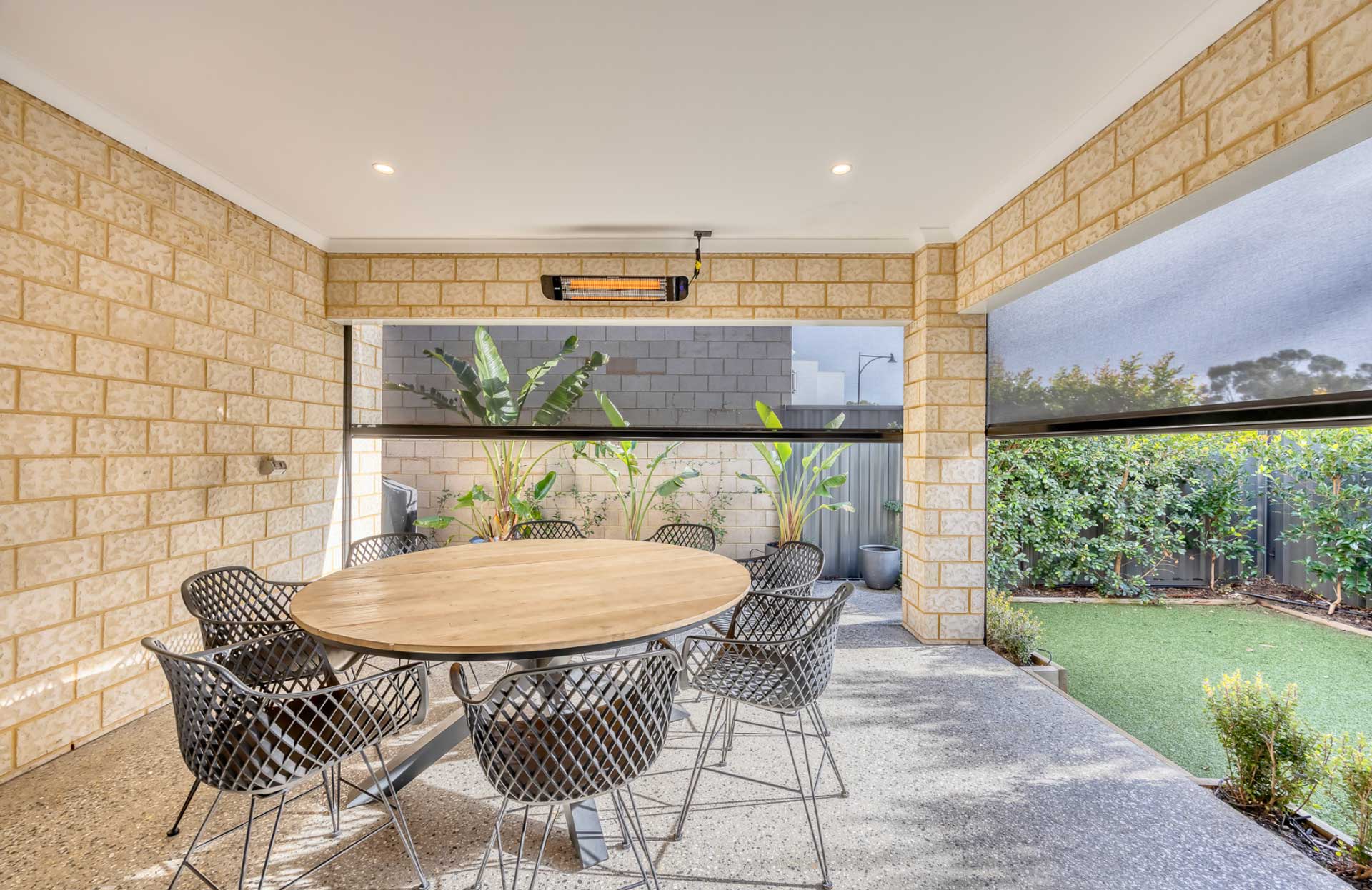
An alfresco can look inviting in a photograph and still be awkward to use at the times that matter. A table might receive direct afternoon sun, a favourite seat may feel exposed, or the route from the kitchen may disappear once guests arrive. A useful improvement starts with those everyday experiences.
Start with the hours you actually spend outside
Visit the space at breakfast, around the time you return home and when you would normally serve dinner outside. Notice where the light falls and which seats feel comfortable. A design decision based on a brief lunchtime inspection may miss the problem that keeps the family indoors in the evening.
Write a short list of the activities the area needs to support. Outdoor dining needs room to move chairs and carry food. A quiet sitting area might need a different outlook or level of privacy. Decide which use takes priority before trying to make the same space accommodate everything.
Test the furniture layout before changing the building
Move the table and chairs into their likely positions, including the space needed when someone is seated. Walk from the house to the garden and imagine carrying a tray along that route. Keep doors and clear walking paths usable. This simple exercise can reveal a circulation problem that new screening alone would not solve.
Try smaller, reversible changes first. Moving a table, removing an oversized storage box or changing where drinks are served can make the space more practical. Once those changes are tested, it becomes easier to identify the issues that need a fitted product or a more substantial alteration.
Match outdoor screening to a defined problem
If direct light or exposure remains an issue, discuss the particular opening with a supplier. Explain the time of day, the position of the furniture and the view you want to retain. For Perth homeowners researching the category, outdoor blinds from Smarter Outdoors provide a starting point for comparing the available systems.
Ask how the proposed material balances shading, visibility and privacy. View a sample in light similar to the intended setting, and discuss what changes when the blind is raised or lowered. Outdoor screening needs to suit the building and its exposure; a product name alone does not establish suitability for every opening.
Consider operation as part of the layout
Think about who will use the blinds and where that person will stand to operate them. A control that is easy to reach in an empty space may become inconvenient once a dining setting is installed. Check that tracks, handles and access for cleaning fit the final furniture arrangement.
Ask for the operating limits and maintenance instructions for the exact system being quoted. In particular, establish what to do when weather conditions change. Keep the route back into the house clear and check any ventilation or appliance requirements before changing how enclosed the alfresco feels.
Finish with a brief that describes daily life
A useful brief can fit on a single page: the activities, busiest times, difficult light, furniture positions and views to keep. Add photographs that show both the whole alfresco and the individual openings. The supplier can then assess the proposed solution against a practical requirement rather than a general wish for a better outdoor area.
After installation, keep the controls and care instructions accessible to everyone who uses the space. Revisit the furniture arrangement once the product is in place. The aim is an outdoor area that is straightforward to use on an ordinary day, with enough flexibility for the occasional larger gathering.