Porch Ceiling Materials, Reviewed: What I’d Pick Again and What I Wouldn’t
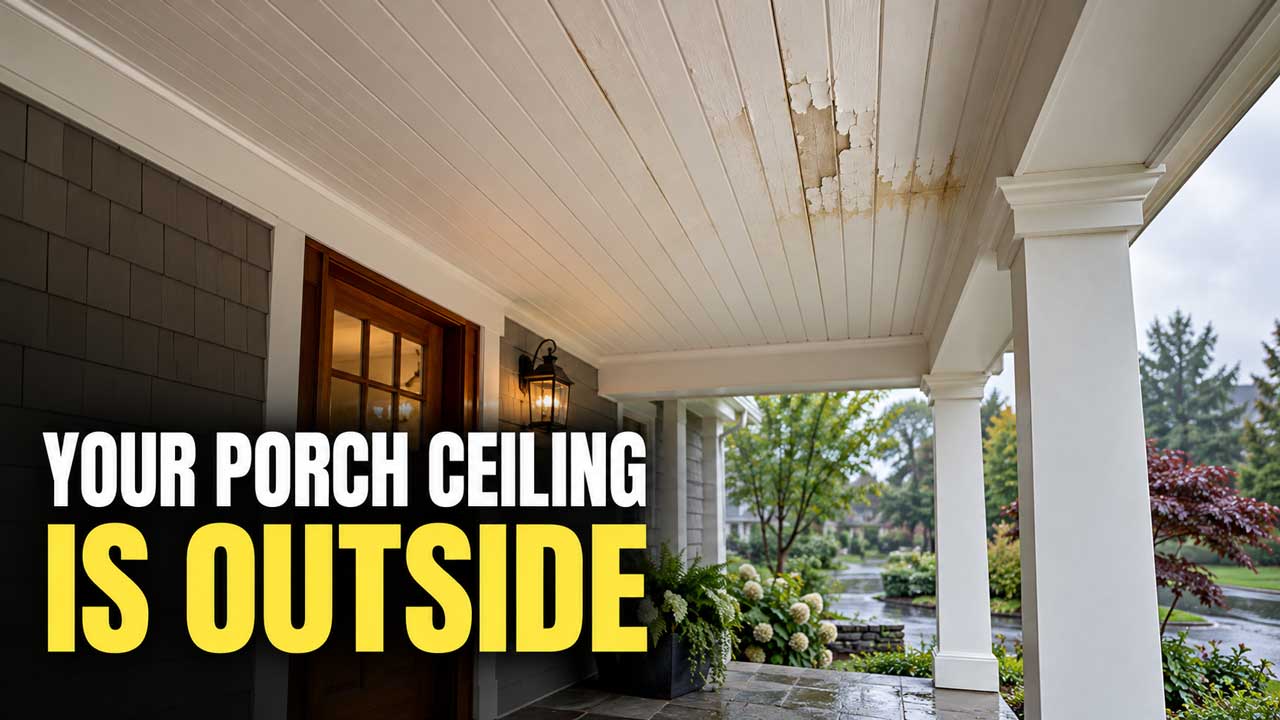
I’ll be upfront. I didn’t care about my porch ceiling until it started peeling over my head. Little white flakes on the chair cushions every morning, all summer. That’s when I started reading about what porch ceilings are made of and why some of them fall apart so fast.
Below is my honest take on the main options. I’ve lived with two of them and helped a neighbor pick a third, so some of this is opinion. I’ll tell you where.
Why Porch Ceilings Fail in the First Place
A porch ceiling lives in a strange spot. It’s outside, but it rarely gets hit by rain, so people treat it like an indoor surface. Meanwhile, humid air rolls in all summer, temperatures swing hard between day and night, and water from a small roof leak can sneak in from above. Paint that would last fifteen years in a hallway can start lifting in three.
So the question isn’t really “what looks nice.” It’s “what looks nice after five humid summers.”
Painted Wood Beadboard
What I liked: it looks exactly like the porches I grew up around. Narrow beads, white paint, a little old-fashioned in a good way.
What bugged me: mine was cheap plywood beadboard sheets, and the edges started swelling after two summers. The paint went next. That was the flaking.
My verdict: real wood planks, primed on every side before they go up, can last a long time. Plywood sheets on an exposed porch? I’d skip them.
Cellular PVC Planks
This is what I replaced mine with, and I’d do it again. Cellular PVC planks come in beadboard, V-groove, and nickel gap profiles, and they soak up almost no water. They don’t rot, and termites don’t care about them. A lot of brands sell 16- or 18-foot lengths, so there are fewer seams across the ceiling.
The downsides are real, though. PVC grows and shrinks with temperature, so the crew has to leave room at the ends. Long planks are floppy, and most installers need two people on the ladders. If you want a dark color, you need a vinyl-safe paint, or the boards can warp when they heat up.
My verdict: the best pick for most climates, especially anywhere muggy.
Natural Tongue-and-Groove Wood
My neighbor went with clear-stained cedar tongue-and-groove, and I’ll admit it’s the nicest ceiling on our street. Warm color, real grain, and it smells great on hot afternoons.
She also recoats it every couple of years, which means a ladder, a lot of painter’s tape, and a stiff neck for a day or two. If that sounds fine to you, go for it. If it sounds like a chore you’ll keep putting off, the finish will gray out and get blotchy, and that look isn’t charming.
Wood-Look PVC
There’s a newer middle ground: PVC with a wood-grain finish, either hand-stained or factory-laminated. From the ground, the good ones are honestly hard to tell apart from real wood. They cost more than plain white PVC, but you get the warm look without the recoating. If my budget had stretched further, this is probably where I’d have landed.
Vinyl and Aluminum Soffit Panels
These are the budget pick. Wide panels go up fast, many have built-in vents, and you basically never touch them again.
The problem is looks. They read as “soffit,” not “ceiling,” and they can feel a bit cheap on a porch where you actually sit and look up. On a modern house in a neutral color, though, they can work just fine.
Bead, V-Groove, or Nickel Gap?
Once you pick a material, you still have to choose a profile. This part is pure taste:
- Beadboard has a small rounded bead between boards. It’s the traditional porch look.
- V-groove has a simple V-shaped seam. Slightly more modern, still classic.
- Nickel gap has a flat, even gap, about the width of a nickel. Very clean and current.
A tip I picked up from a trim supplier: wider boards with wider spacing look better on big ceilings, and narrow boards suit small porches and curved ceilings.
The Color Question (Yes, Haint Blue)
If you’ve spent time in the South, you’ve seen pale blue porch ceilings. It’s called haint blue, and the folklore says it keeps spirits away. Some people swear it keeps wasps off too. I painted mine a soft blue-green and saw just as many wasps as before, so I’d treat that part as a nice story.
Light colors still make a lot of sense. White and pale blue bounce light around and make a porch feel taller. Dark ceilings look great at night with warm bulbs, but during the day they can make a small porch feel like a cave.
Do These Things Before the Ceiling Goes Up
I learned a couple of these the expensive way.
- Run wiring for fans and lights while the framing is still open. Ask for a fan-rated box.
- Buy fixtures rated for damp or wet locations. Indoor fixtures rust.
- Leave some airflow above the ceiling so moisture can escape.
- Caulk the gaps along the edges. Wasps love those gaps.
Who Should Install It
PVC and wood ceilings both reward careful work: straight lines, tight seams, the right expansion gaps. When you’re getting quotes from an open porch builder, ask what ceiling material they install most often and why. Their answer usually tells you what holds up in your area. Companies that handle the whole porch, like Royal Deck, can tie the ceiling in with the framing, roof, and trim so it doesn’t end up as an afterthought.
My ranking, for what it’s worth: cellular PVC for most people, cedar if you love wood and don’t mind upkeep, and wood-look PVC if you want both and the budget allows. I wouldn’t put plywood beadboard on an open porch again. Once was enough.