For businesses operating in retail, construction, manufacturing, and distribution, having enough storage space can be essential to maintaining daily operations. However, expanding a warehouse or leasing additional commercial space can require substantial investment and long-term commitments.
Mobile storage offers another option. By using portable storage trailers and shipping containers, businesses can create additional capacity at their premises or arrange off-site storage when space is limited. This flexibility can be particularly valuable during seasonal demand peaks, facility renovations, inventory transitions, and temporary projects.
Understanding how mobile storage works can help companies choose a solution that fits their operational needs without committing prematurely to permanent infrastructure.
Why Storage Capacity Matters for Business Operations
Inventory management involves balancing the need to keep products available with the cost of storing them. Too little space can create congestion, disrupt receiving and dispatch operations, and make it harder for employees to locate materials. Excessive permanent storage capacity, on the other hand, may leave a business paying for space it does not consistently use.
Demand can also fluctuate throughout the year. Retailers may need extra room before busy shopping periods, while manufacturers and contractors may require additional capacity when new projects begin.
Mobile storage can help bridge these temporary gaps. Instead of immediately expanding a building, a company can assess whether a portable unit would provide sufficient space for its current requirements.
This approach is especially useful when the duration of a project is uncertain or when future inventory levels are difficult to predict.
How Mobile Storage Trailers Support Businesses
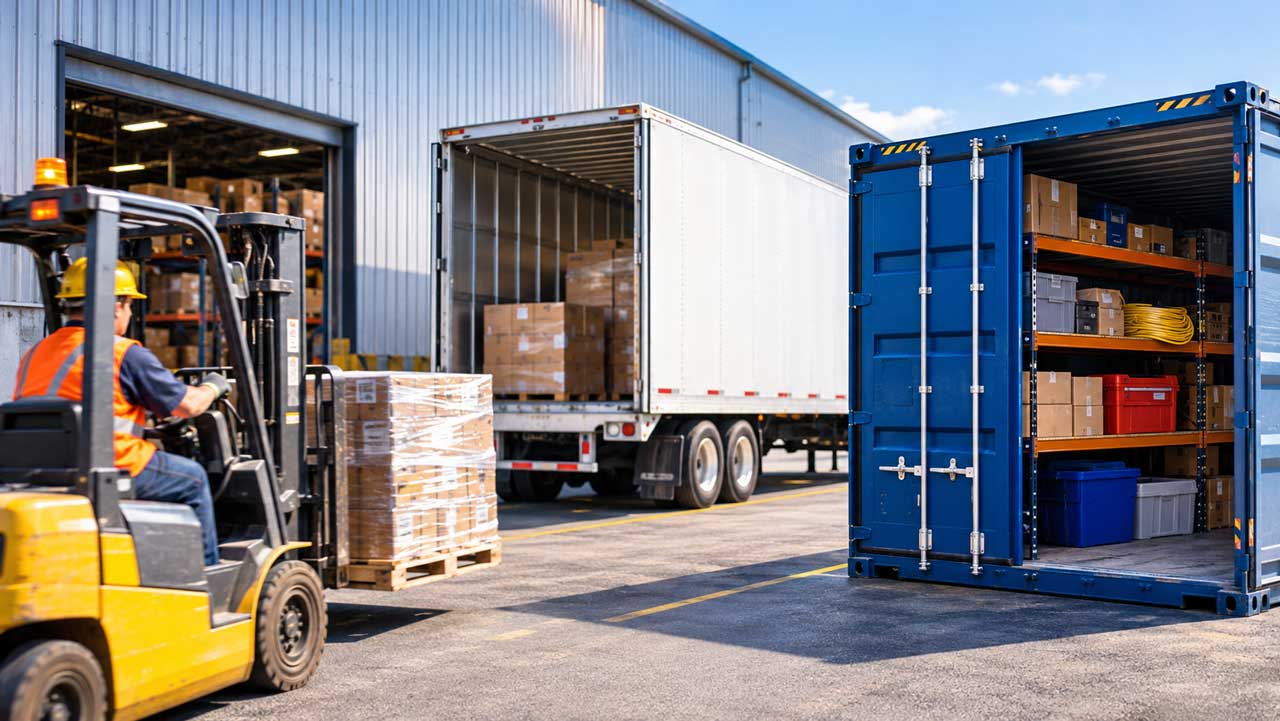
Storage trailers provide enclosed space that can be positioned at a suitable commercial property. Depending on the site and loading requirements, they can support the temporary storage of packaged goods, equipment, materials, and other appropriate items.
For businesses with loading docks, a trailer can provide additional storage capacity close to existing receiving or dispatch operations. This may reduce the need to move materials repeatedly between distant storage areas.
Companies considering storage trailer rentals in Toronto should assess the dimensions of the unit, the available loading space, the expected rental period, and the frequency with which employees need access to stored goods.
Trailer size is an important consideration. A unit that is too small may create operational problems, while a larger trailer requires sufficient room for delivery, placement, and safe access.
Businesses should also confirm that the chosen location can accommodate the trailer and that the intended contents are suitable for the storage environment.
Shipping Containers for Flexible Storage Capacity
Shipping containers provide another option for organizations that need secure, enclosed space. They are commonly considered for construction materials, tools, retail inventory, equipment, and supplies that require protection from ordinary outdoor weather conditions.
Containers are available in different sizes, allowing businesses to compare their available footprint with the amount and type of material they need to store.
Ground-level access can be useful when employees need to move items in and out without relying exclusively on a loading dock. However, the appropriate unloading equipment and site arrangement depend on the weight, dimensions, and handling requirements of the stored goods.
Companies evaluating storage containers for sale should consider whether purchasing a unit makes more sense than renting one. Ownership may suit a business with recurring, long-term storage needs, while rental can provide greater flexibility for temporary projects.
The decision should account for the purchase price or rental fees, delivery and placement costs, site preparation, maintenance, security, and the expected useful life of the unit.
On-Site or Off-Site Storage: Which Is More Suitable?
The right storage arrangement depends on how frequently a business needs to access its inventory and how much room is available at its main facility.
On-Site Storage
Keeping a storage trailer or container at the business premises can make inventory accessible to employees throughout the working day. This may be useful for construction equipment, seasonal products, spare parts, and materials required for ongoing operations.
However, companies should evaluate vehicle access, available ground space, fire and safety requirements, and any property restrictions before arranging delivery.
Storage units should not obstruct emergency exits, pedestrian routes, loading areas, or other essential operations.
Off-Site Storage
Off-site storage can be a practical alternative when a business has limited room at its main location. A loaded trailer may be moved to a suitable secure storage yard, depending on the provider’s available services and arrangements.
This can free up valuable space at the main premises while retaining stored goods for future use. The trade-off is that accessing inventory may require additional coordination and transportation.
Businesses should compare the total cost and operational impact of both arrangements rather than considering rental charges alone.
Planning for Security and Weather Protection
Stored inventory represents a financial investment, so security and protection should be part of the selection process.
Businesses should review the construction of the storage unit, the condition of its doors and seals, available locking arrangements, and the security of the surrounding site. Lighting, access control, surveillance, and inventory records may provide additional safeguards depending on the circumstances.
Weather protection also matters. A well-maintained, weather-resistant unit can help protect suitable contents from ordinary outdoor exposure, but it should not automatically be treated as a climate-controlled environment.
Products sensitive to temperature, humidity, condensation, or extreme weather may require specialized storage conditions.
Companies should inspect storage units before use, keep valuable goods organized, and establish procedures for checking the condition of inventory. Hazardous, flammable, or otherwise restricted materials should only be stored when the facility, equipment, and applicable regulations explicitly permit them.
Calculating the Total Cost of Mobile Storage
A meaningful cost comparison includes more than the advertised rental or purchase price.
For a rental arrangement, businesses should account for the duration of use, delivery and pickup charges, any applicable service fees, and the costs associated with preparing the site.
For a purchase, the calculation may also include financing, maintenance, repairs, security measures, and the future resale value of the unit.
Companies should compare these costs against alternatives such as expanding a warehouse, leasing additional space, or using a third-party storage facility.
The financial benefits will vary by business. Mobile storage may be particularly attractive when the need is temporary, demand fluctuates, or a permanent expansion would create unnecessary long-term commitments.
A clear estimate of the required storage volume and expected duration can help prevent paying for unused capacity.
Integrating Mobile Storage Into Inventory Management
Adding physical storage capacity is only one part of an effective inventory strategy. Businesses should also consider how stored materials will be recorded, organized, accessed, and replenished.
A simple inventory system can identify which products are stored in each unit, when items were received, and when they are expected to be used or dispatched.
Clear labeling and designated storage areas can reduce the time employees spend searching for materials. Regular inventory checks can also help identify discrepancies, damaged goods, or items that have remained unused for extended periods.
For organizations with several storage locations, consistent recordkeeping becomes even more important. Employees should know who is authorized to access each unit and how stock movements are recorded.
These processes help ensure that additional storage capacity supports operational efficiency rather than creating another layer of inventory-management complexity.
Conclusion
Mobile storage trailers and shipping containers can give businesses a flexible way to manage inventory, equipment, and materials without immediately investing in permanent warehouse expansion.
The best solution depends on the amount of space required, the duration of use, access frequency, security needs, and the total cost of ownership or rental. Businesses should also evaluate site suitability and establish clear procedures for organizing and monitoring stored goods.
By assessing these factors before making a decision, companies can choose a storage arrangement that supports day-to-day operations while preserving flexibility as their needs change.
Disclaimer: This article provides general business information. Storage suitability, site requirements, and permitted uses depend on the property, stored materials, local rules, and the provider’s terms.