Far North Ontario Weather Forecast: October 16–18, 2026 — Snow, Freezing Nights and a Warmer Sunday for Fly-In Communities
NETNEWSLEDGER WEATHER DESK | FRIDAY, OCTOBER 16, 2026
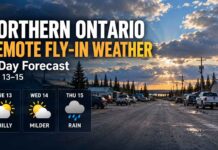
Thunder Bay – Weather Desk — A chilly and unsettled start to the weekend is giving way to improving weather across Ontario’s Far North, with snow showers, freezing overnight temperatures and brisk winds expected to affect several remote communities before warmer conditions arrive Sunday.
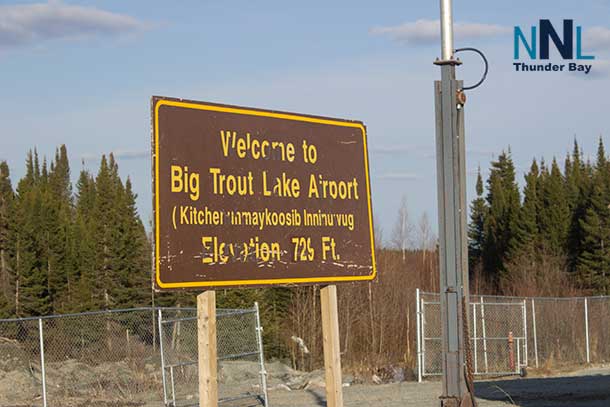
For residents of Fort Severn, Peawanuck, Kitchenuhmaykoosib Inninuwug (Big Trout Lake), Sandy Lake and Attawapiskat, the three-day forecast highlights the challenges of travelling on the land during the transition from autumn to winter.
Friday will bring the greatest concerns, particularly around the Hudson Bay and James Bay coastal communities, where snowfall, cold winds and poor visibility could create difficult conditions for hunters and families travelling by boat, ATV or on foot.
Inland communities should experience a gradual improvement by Saturday, with significantly warmer temperatures developing Sunday.
For families heading out to hunt moose, gather traditional foods or harvest and process game, the weather will require careful planning. Shorter daylight hours, cold water, changing winds and freezing nighttime temperatures are increasingly important considerations.
Today’s Weather Overview — Friday, October 16
Current Conditions: Cold Air and Snow Showers Across the Far North
Friday morning temperatures across the Far North range from just below freezing near Hudson Bay to several degrees above freezing farther inland.
Fort Severn is starting the morning near -3°C, with mostly cloudy skies and brisk winds. Peawanuck is reporting light snow and temperatures close to -1°C.
Farther south, Sandy Lake is near 0°C, while Kitchenuhmaykoosib Inninuwug is beginning the day around -1°C under cloudy skies.
Near the James Bay coast, Attawapiskat is experiencing temperatures near 4°C, but colder weather and snow are expected as Friday progresses.
The main weather concern is the combination of wind, wet snow and temperatures near freezing. These conditions can make travel more difficult, especially around exposed shorelines, open muskeg, wet trails and river crossings.
Three-Day Temperature Outlook for Far North Communities
| Community | Friday high / low | Saturday high / low | Sunday high / low |
|---|---|---|---|
| Fort Severn | 2° / -4° | 2° / -1° | 12° / 4° |
| Peawanuck | 2° / -4° | 2° / -2° | 14° / 4° |
| Big Trout Lake (KI) | 4° / -1° | 8° / 5° | 13° / 5° |
| Sandy Lake | 6° / 0° | 11° / 6° | 12° / 2° |
| Attawapiskat | 3° / -5° | 4° / -3° | 12° / 6° |
Temperatures in °C, compiled from updated regional weather data on October 16. Highs and lows may be revised. Saturday overnight lows are listed with Saturday’s forecast period.
Community-by-Community Weather Forecast
Wasaho First Nation: Cold Winds and Flurries Before Sunday’s Warm-Up
Fort Severn, Ontario’s northernmost community, will experience a cold Friday, with brisk winds, intervals of cloud and sunshine, and the possibility of afternoon flurries. Temperatures will reach approximately 2°C before dropping to -4°C overnight.
Saturday will remain chilly, with considerable cloud cover and a high near 2°C. Overnight temperatures will hover close to -1°C.
Sunday brings a major change, with temperatures potentially climbing to 12°C. Winds will increase, and cloud will build during the afternoon, with a chance of evening showers.
For hunters and harvesters: Friday and Saturday are especially important days to guard against cold-weather exposure. Hunters travelling along the Severn River or near the Hudson Bay coastline should check wind conditions before departing. Sunday will be warmer but potentially too windy for some small-boat travel.
Peawanuck: Snow Showers Friday, Much Warmer Sunday
Peawanuck residents are waking to light snow and temperatures around -1°C.
Friday’s forecast calls for a high near 2°C, with snow showers possible throughout the day. Brisk winds will add to the cold conditions, and temperatures will fall to approximately -4°C overnight.
Saturday will remain mostly cloudy and cold, with a daytime high near 2°C.
By Sunday, however, temperatures could rise sharply to 14°C, accompanied by gusty winds and periods of sunshine.
For hunters and harvesters: Cold mornings could leave a thin layer of ice on equipment, boats and sheltered pools of water. That does not mean river or lake ice is safe for travel. Carry extra dry clothing and have a reliable way to communicate with family members back home.
Kitchenuhmaykoosib Inninuwug — Big Trout Lake: Cloudy Friday, Improving Weekend
At Kitchenuhmaykoosib Inninuwug, Friday will be mainly cloudy, with temperatures reaching approximately 4°C. The morning will feel cold, with temperatures below freezing and a steady breeze.
Friday night could bring showers, particularly toward the early hours of Saturday.
Saturday will see some improvement, with clouds giving way to occasional sunshine during the afternoon. The high will reach around 8°C.
Sunday looks warmer and windier, with partly sunny skies and temperatures reaching 13°C.
For hunters and harvesters: Big Trout Lake is a large body of water, and conditions can change rapidly when winds increase. Hunters and families travelling to camps should be especially careful about crossing open water. Confirm the return route and carry enough fuel for unexpected delays.
Sandy Lake First Nation: Cloudy Friday, Sunshine Saturday and Sunday
Sandy Lake will experience cloudy conditions Friday, with temperatures reaching 6°C. Friday night will fall to approximately 0°C.
Saturday will be milder, with a mixture of sunshine and cloud and a high near 11°C. Saturday night temperatures will remain comparatively mild, around 6°C.
Sunday will offer plenty of sunshine and a high near 12°C, although breezy conditions are possible.
For hunters and harvesters: Saturday and Sunday may offer better conditions for travelling to camps and preparing harvested game. However, wet ground, cold water and shorter daylight hours remain hazards. Plan to be back before darkness unless properly prepared for overnight travel.
Attawapiskat First Nation: Friday Snowfall Followed by Weekend Improvement
Attawapiskat faces one of the more significant weather changes in the region.
Friday will be windy and colder, with cloudy skies and scattered morning showers. Snow is expected during the afternoon, with a supplementary forecast indicating possible accumulations of 2–4 centimetres. Temperatures will reach approximately 3°C before dropping to -5°C overnight.
Saturday will improve considerably, with mainly sunny skies and a high near 4°C. However, the morning will remain cold, with temperatures around -5°C.
Sunday will be warmer and breezy, with intervals of sunshine and a high near 12°C.
For hunters and harvesters: Friday’s potential snow accumulation could temporarily obscure trails and familiar landmarks. Hunters travelling inland should consider delaying longer trips until visibility and trail conditions improve. Coastal travel requires particular caution because wind, tides and cold water can create dangerous conditions.
Tomorrow’s Forecast — Saturday, October 17
Expected Conditions: A Better Day for Travel in Some Communities
Saturday will provide a welcome improvement across much of Ontario’s Far North, although it will remain cold near Hudson Bay.
Fort Severn and Peawanuck can expect highs around 2°C, while Sandy Lake will warm to approximately 11°C.
The improvement should be more noticeable away from the immediate coast, where occasional sunshine and lighter precipitation will make outdoor work more manageable.
Hunters planning to travel between camps or return with harvested game should still allow extra time. Low temperatures and muddy or frozen trail sections can make loading and transporting equipment more difficult.
Sunday’s Forecast — October 18
Expected Conditions: Warming Temperatures but Increasing Wind
Sunday will be the warmest day of the forecast period for many Far North communities.
Highs ranging from 12°C to 14°C are possible across the communities covered in this report, a significant improvement from Friday’s near-freezing conditions.
However, the warmer air will not eliminate all weather concerns.
Windy conditions are expected in several communities, and exposed lakes, rivers and coastal areas could remain hazardous.
For those planning Sunday hunting trips, sunshine and mild afternoon temperatures may make outdoor work more comfortable, but early starts and late returns still require appropriate cold-weather gear.
Hunting and Harvesting Game: Important Safety Tips for the Weekend
For many First Nations families across Ontario’s Far North, autumn is an important time for hunting moose, gathering traditional foods, processing harvested animals and preparing supplies for the winter.
Knowledge of the land, weather, rivers and animal behaviour is passed between generations. That experience remains essential, particularly as changing weather creates new challenges during seasonal travel.
The following considerations can help hunters and families prepare for the October 16–18 weekend.
1. Tell Someone Where You Are Going
Before leaving the community, let a trusted family member know your destination, planned route, travelling companions and expected return time.
If your plans change, communicate the new information whenever possible.
For longer trips, carry a satellite communication device or personal locator beacon. Cellphone coverage may be unavailable outside the community.
2. Dress for Cold Weather, Even on Sunday
Friday and Saturday mornings could bring temperatures below freezing.
Wear moisture-wicking base layers, insulating clothing and a windproof outer layer. Waterproof boots and warm gloves are particularly important.
Carry a complete change of dry clothing in a waterproof bag.
For people using boats, a properly fitted lifejacket or personal flotation device should be worn, not simply carried onboard. Cold-water immersion can quickly affect breathing and physical movement.
3. Plan Carefully Around Rivers and Lakes
Many hunting camps and harvesting areas are reached by water.
With water temperatures falling, even a short unexpected immersion can become life-threatening.
Check wind forecasts, visibility and local water conditions before leaving. Avoid overloading boats with people, gear or harvested meat, and keep essential safety equipment accessible.
Do not assume that early ice on lakes, ponds or rivers can support people, ATVs or snowmobiles. Freeze-up is still developing, and ice thickness can vary sharply.
4. Handle and Cool Harvested Game Properly
Temperatures will increase noticeably by Sunday, making proper meat handling especially important.
After a successful harvest, follow established safe field-dressing practices and keep meat clean and protected from contamination.
Separate large muscle groups or quarters as appropriate, and allow air to circulate around the meat while protecting it from insects, dirt and animals.
Do not leave harvested meat piled in a boat, trailer or enclosed space where trapped heat can cause spoilage. Use clean breathable game bags, cooling facilities or appropriately chilled storage.
Meat that feels cool on the outside may still be warm deep inside.
5. Watch for Fatigue and Hypothermia
Hunters may spend long hours walking, travelling by water or carrying heavy loads.
Cold temperatures, damp clothing and exhaustion can increase the risk of hypothermia, even when the temperature is above freezing.
Warning signs include uncontrollable shivering, confusion, clumsiness, unusual tiredness and slurred speech.
If these symptoms develop, stop travelling, seek shelter, replace wet clothing and begin warming the affected person. Severe symptoms require urgent medical assistance.
6. Respect Local Harvesting Practices and Regulations
Hunters should follow their community’s harvesting protocols, applicable Indigenous harvesting rights and conservation practices.
Anyone hunting under provincial licensing requirements should confirm the relevant season, Wildlife Management Unit, tagging rules and mandatory reporting requirements.
7. Allow Extra Time to Return Before Dark
Mid-October brings shorter daylight hours to the Far North.
Hunters should establish a clear turnaround time and avoid travelling unfamiliar waterways or trails after dark unless properly equipped and experienced.
Carry navigation equipment, emergency food, a fire-starting kit, a first-aid kit and an emergency shelter.
For fly-in communities, travel plans should also account for aviation weather. Low cloud, snow and strong winds can delay flights or make landing conditions unsuitable.
Wardrobe Recommendations: What to Pack for Three Days on the Land
| Clothing and equipment | Why it matters |
|---|---|
| Thermal base layers | Protect against cold morning temperatures |
| Insulated waterproof boots | Keep feet warm and dry on wet or frozen ground |
| Windproof jacket | Reduces exposure to cold gusts |
| Warm gloves and toque | Protect hands and head during early-morning travel |
| High-visibility clothing | Improves visibility where appropriate and required for hunting |
| Waterproof spare clothing | Essential after rain, snow or accidental immersion |
| Emergency blanket or bivy | Provides protection during an unplanned overnight stay |
| Satellite communicator or beacon | Enables emergency contact outside cellphone coverage |
Weather Trivia: Why Snow Can Arrive So Early in Ontario’s Far North
Ontario’s Far North experiences a much earlier transition toward winter than communities around Lake Superior.
Fort Severn, for example, lies near Hudson Bay, where cold northern air can bring snow and freezing temperatures during October.
As the land cools, nighttime temperatures frequently drop below freezing, particularly under clear skies.
Yet October can also bring surprisingly warm periods when southerly winds transport milder air northward.
That contrast is evident in this weekend’s forecast: temperatures near freezing Friday could be followed by highs above 10°C by Sunday in several northern communities.
The rapid change is a reminder that autumn weather in the Far North can be highly variable, and a mild afternoon should never be mistaken for the end of cold-weather risks.
The Bottom Line for Far North Ontario
Residents of Ontario’s northern fly-in communities are facing a weekend that begins with snow showers, cold winds and freezing overnight temperatures before gradually improving.
Friday presents the greatest weather concerns, especially in Peawanuck, Fort Severn and Attawapiskat.
Saturday will bring improving conditions to many inland communities, while Sunday looks considerably warmer throughout the region.
For hunters and families heading onto the land, the most important message is to plan for the coldest conditions, even when warmer weather is forecast.
Check conditions before departing, travel with appropriate equipment, protect harvested meat and make sure someone at home knows when to expect your return.