For many older adults, the ability to remain at home as they age offers a richness of experience bound up with familiarity, lifestyle preferences and a lifetime of memories and routines. Yet staying home independently can become more difficult as faculties diminish and mobility, strength, vision or other abilities change. As the majority of seniors choose to age in place, they also note the many difficulties and challenges in that choice. But increasingly, technology is helping to make the choice more viable.
As with aging itself, the technological change is happening gradually. A simple device that allowed an older person to summon help has now developed into a much broader collection of technologies that can monitor the home, recognize unusual activity, provide information to family members and caregivers, and eventually perform physical tasks. These seemingly disparate technologies are not so much replacing one another as they are accumulating, creating layers of assistance available to the individual, from which to pick and choose.
Pieces of the Whole
Medical alert systems were the innovation that allowed an older person wearing a device with a help button to summon assistance in a medical emergency or other crisis. This enhanced a senior’s independence, by offering extended time to live at home with a means of reaching help without having another person physically present.
Wearable technology in mobile medical alerts allowed people to take their protection outside the home, while smartwatches brought emergency calling, location services and other capabilities onto a device many people already wanted to wear. Automatic fall detection added another important step. Instead of requiring someone to recognize an emergency and press a button, this technology could potentially recognize an event and initiate a response.
None of this development made the original medical alert obsolete. A button is still a remarkably useful piece of technology precisely because it is simple and intentional. But it is increasingly becoming one component of a much larger technological environment. Alan Wu, CMO of Bay Alarm Medical, observes how his company’s development of alert systems has evolved: “The original help button is still the central feature, but now it’s accompanied with a learning AI in a smartwatch.”
The Smart Home
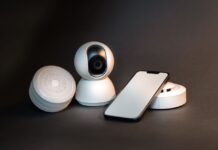
As the consumer chose to stay home, safety devices became more home-centric. Smart-home technology can control lighting, locks, thermostats, and appliances, while various sensors can detect movement, doors opening and closing, temperature changes, and other conditions. More specialized environmental monitoring systems can use radar or other sensing technologies to detect movement and activity without requiring an older person to wear a device.
A person who falls may be unable to reach a pendant. Someone experiencing a gradual change in mobility may never think to report it. But technology embedded in the home can potentially observe what is happening without requiring the person to do anything.
The new technology can observe patterns, and learn from them. How often does someone get out of bed, how does a person move around the house? Is a door being opened at an unusual time? Has activity in the kitchen changed? Has someone who normally moves throughout the house become unusually inactive? Service technology can learn its client, and offer assistance.
AI, by digesting the enormous amount of information generated by sensors and connected devices, finding the patterns, and identifying meaningful deviations, is shifting the focus from responding to emergencies to detecting that something may be changing before an emergency occurs. Jensen Wong, founder of Medical Alert Buyers Guide, reports that his review service increasingly evaluates how well an alert device integrates with the larger response ecosystem outside.
While mistakes and learning curves exist, the technology is beginning to move from something that people actively use, toward something that can quietly operate around them. And, perhaps counter-intuitively, this invisible web of dependability translates, for a frail or aging person, into personal independence.
The Mechanical World
Technology has evolved from communicating, to observing, then to interacting, and now to providing physical assistance. Robotics is still at an early stage for everyday use, but the possibilities are becoming easier to imagine.
A robot that can retrieve an object from the floor, carry something from one room to another, help with household tasks, or provide limited physical assistance, could address some of the practical problems that make independent living difficult.
This points toward a future in which aging technology becomes less recognizable as a distinct category of “senior technology.” A voice assistant does not have to be marketed as an aging product to be useful to an older adult. A smart lock can make it easier for a caregiver to enter the house when needed. A connected thermostat can make the home safer and more comfortable. An autonomous vehicle could eventually provide transportation to someone who has stopped driving.
The same pattern has occurred before. Much of the technology now entering consumer life has roots in institutional healthcare, where monitoring, communication and assistive technologies were developed for hospitals and professional care settings before becoming smaller, less expensive and more practical for ordinary homes.
The trajectory now points toward something broader than any individual device. Medical alerts, wearables, environmental sensors, AI, smart homes, robotics and eventually autonomous transportation seem inevitably to become parts of an interconnected support system.
Ideally, much of the technology will become almost invisible. Alan Wu, who was at this year’s CES 2026 tech show, observed the myriad of innovations designed to assist aging in place, and noted that very invisibility, concluding: “Technology can’t replace human connection, but it can help fill the quiet moments.”