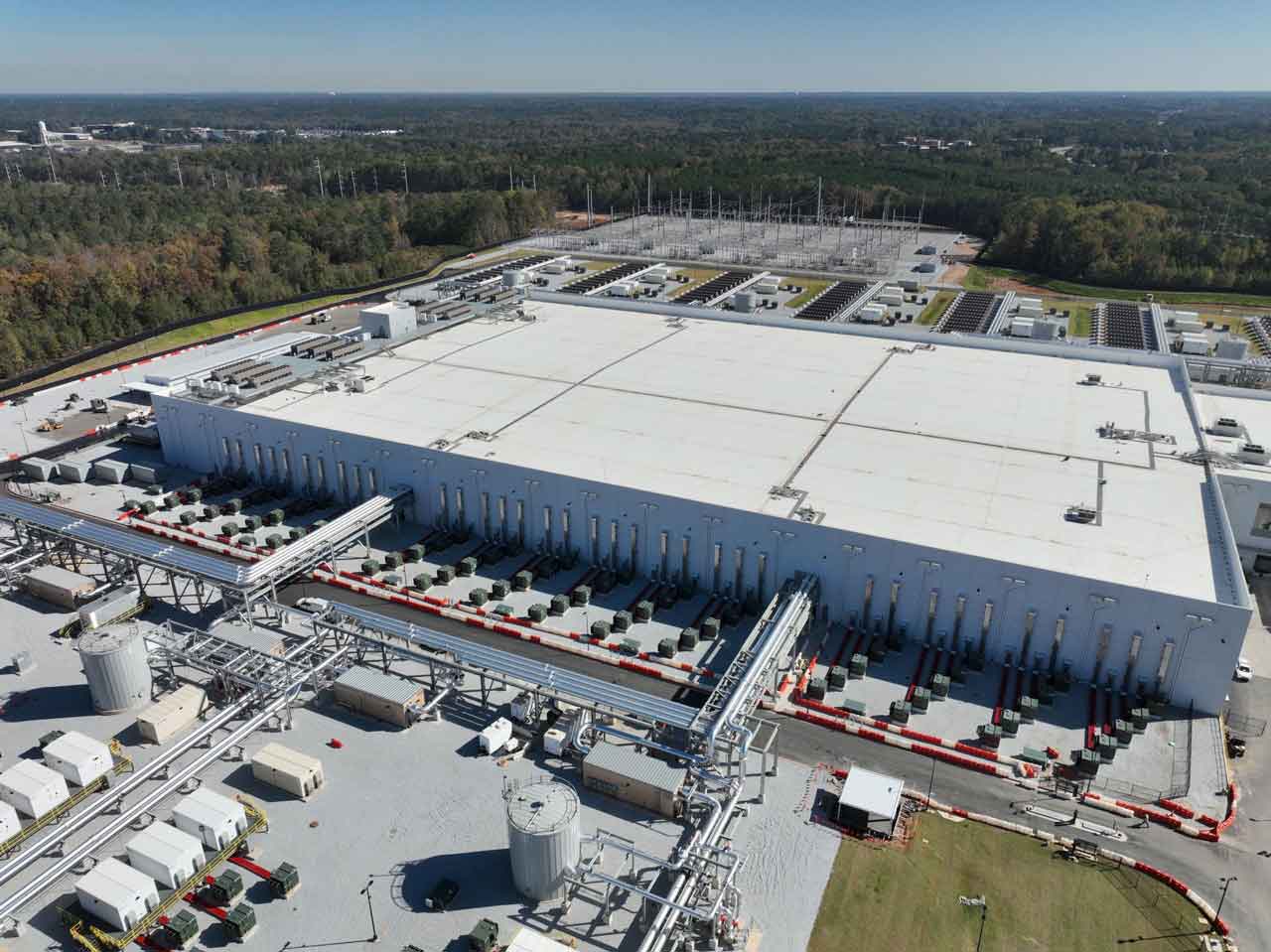
Canadian data centres can bring jobs and tax revenue, but their impact depends on power, water, infrastructure costs and enforceable local benefits over time
Jobs, tax revenue and digital infrastructure can bring lasting benefits—but electricity demand, water use and public costs require close scrutiny
THUNDER BAY — ANALYSIS — Internationally, there is a lot of debate ongoing over data centres in communities. While China is going full speed ahead, in North America the progress is far more mixed.
A proposed data centre proposal can arrive at a municipal council meeting with an impressive investment figure, promises of skilled employment and the prospect of a larger tax base. Those potential opportunities can get a municipal council going toward acceptance of the proposal.
Residents however may see something different: a large industrial building consuming electricity, drawing on local infrastructure, and raising questions about water, noise and who will pay for upgrades.
Both perspectives deserve consideration.
A data centre can be a valuable addition to a Canadian community. Its value depends on the facility’s design, the services it provides, the benefits that remain locally and the obligations placed on its owner.
An investment announcement alone cannot answer those questions.
For Thunder Bay and other Northern Ontario communities considering economic diversification, the challenge is to assess each proposal against realistic alternatives—and secure commitments that last beyond construction.
Why Canada needs data centres
Data centres house the computers and related equipment that store information and run digital services. They support banking, health care, research, government operations, cloud computing and artificial intelligence.
There is a national argument for expanding this infrastructure. In announcing its responsible development principles on September 3, 2026, the federal government said Canada relies significantly on computing, cloud and storage services outside the country.
More domestic capacity could provide greater resilience and choice for Canadian businesses and institutions.
However, national benefits and local benefits are different questions.
A facility can contribute to Canada’s digital economy while delivering only modest employment in its host community. Conversely, a relatively small facility may provide valuable services to local institutions.
Municipalities should establish what a proposed facility will actually do, who will use it and what commitments its operator will make to the community.
Construction jobs are real—but they are not permanent jobs
Building a large data centre can generate substantial work for construction companies, electricians, mechanical contractors and other trades.
The distinction between construction employment and operating employment is essential.
Meta’s July 2026 announcement for its Sturgeon County, Alberta, campus illustrates the difference. The company projected:
- More than $13 billion in investment;
- Approximately 3,000 workers on site at peak construction;
- More than 300 jobs once operational; and
- Approximately $60 million in local road and water infrastructure improvements.
These are company projections, not a record of completed investment or verified employment.
Three hundred ongoing jobs could be significant for a community. But presenting peak construction employment as though it represents permanent positions would give residents a misleading picture.
For municipal analysis, employment estimates should distinguish direct jobs from broader economic modelling. They should also identify the expected duration of construction, local hiring opportunities, wages, training requirements and whether operating positions will be employees or contractors.
A further question is how much spending will remain locally. A large capital budget should not automatically be treated as an equivalent injection into the host community’s economy.
Tax revenue can help—but the net benefit matters
A new industrial taxpayer can help fund municipal services and reduce reliance on existing taxpayers.
Alberta’s government points to projected property tax revenue as a major benefit of the Sturgeon County development. Its information page cites the county mayor’s estimate of upwards of $40 million annually in additional property taxes. That remains a forecast associated with a particular project and tax structure, not a benchmark that can be applied to every Canadian data centre.
For any municipality, the useful calculation is:
Additional municipal revenue, minus public costs, incentives and long-term obligations.
Council should request an independently reviewed financial assessment covering municipal servicing, road maintenance, emergency response needs and any financing commitments.
It should also examine what happens if construction is delayed, the facility opens at a smaller scale or the operator leaves.
An infrastructure agreement that looks affordable under full development may look very different if only one phase is completed.
Electricity is often the biggest public-policy issue
Data centres are entering an electricity system already planning for population growth, industrial expansion and electrification.
Ontario’s Independent Electricity System Operator projects that data centres could account for 8.6 per cent of provincial electricity demand in 2050 under its 2026 reference scenario. That is a forecast, not their current share, and the IESO explicitly identifies data centres as an uncertain source of future demand.
To illustrate the scale, a hypothetical facility drawing a constant 100 megawatts would consume 876,000 megawatt-hours annually—100 multiplied by 8,760 hours. Actual consumption would depend on its operating load.
The community question extends beyond whether enough electricity can be generated. It includes whether local transmission lines and substations can deliver it, what upgrades are required and who bears the financial risk.
Technical behaviour matters, too. Alberta’s electricity system operator identifies rapid changes in data-centre demand and sensitivity to voltage and frequency fluctuations as potential challenges for grid operations. It has developed connection requirements to address those concerns.
A well-planned development could help finance additional infrastructure. A poorly structured arrangement could leave other customers exposed to costs.
Neither outcome should be assumed without examining the connection agreement and applicable utility rules.
Water use depends on the cooling system
Claims that all data centres consume enormous amounts of local water are too broad. Claims that cooling has no environmental consequences are equally unhelpful.
The design matters.
Meta says its Sturgeon County facility will use closed-loop liquid cooling with dry cooling, eliminating operational water use in the cooling system. The company still anticipates water use elsewhere in the facility. That distinction matters: no water consumed for operational cooling does not mean no water used on the site.
A September 2026 research preprint examining data-centre cooling also highlights the relationship between direct water consumption and water used in electricity generation. It argues that assessments should consider both, including where and when impacts occur. As a preprint, its findings should be treated as emerging research.
Municipal review should therefore require figures for average and peak water demand, the source of supply, wastewater requirements and performance during hot or dry conditions.
For a community near a large lake, the analysis should still examine treatment and distribution capacity. A visible abundance of raw water does not establish that existing municipal infrastructure can serve any proposed demand.
Noise, emissions and neighbourhood compatibility matter
Residents living near a proposed facility deserve answers about sound, lighting, construction traffic and the operation of backup equipment.
Canada’s responsible development principles call for independently verifiable information on expected power and water use, infrastructure requirements, sound and emissions. They also call for ongoing reporting on significant commitments.
For a municipality, that should translate into project-specific studies and clear performance conditions.
An appropriate review would examine normal operations and backup-system testing, nighttime conditions, nearby homes and the combined effects of neighbouring industrial activity.
The same discipline should apply to environmental promises. Council should ask which electricity sources will supply the facility, what on-site generation is proposed and how emissions will be measured.
A community should assess the entire development, including any associated power infrastructure.
Waste heat could become a local asset
Computers produce heat, and some of that energy can potentially serve another purpose.
The Canada Energy Regulator has highlighted data-centre heat recovery and the potential to supply district heating networks. Its analysis describes systems that raise the temperature of recovered heat so it can be useful outside the facility.
For a northern community, this is worth investigating. Potential customers could include nearby buildings or other operations requiring heat.
However, the practical questions come first: Is a customer close enough? Who pays for pipes and equipment? Does demand match the available heat? Who provides backup heat during an outage?
For planning purposes, a funded agreement with an identified customer carries more weight than a general promise to explore heat reuse.
Canadian location does not settle every data-security question
Hosting computing infrastructure in Canada can improve domestic capacity. It does not remove the need to examine how information is managed.
The Office of the Privacy Commissioner of Canada advises organizations to assess providers’ contracts, access controls, subcontracting and the locations of primary and backup systems. Organizations remain accountable for personal information they outsource.
For a community evaluating promised innovation benefits, the practical questions include whether local businesses and institutions will gain usable computing services, research partnerships or training opportunities.
A nearby building does not, by itself, establish that those benefits will follow.
Indigenous participation should begin early
The federal principles explicitly identify Indigenous rights holders alongside host communities. They call for early engagement and benefits that can include training, procurement, infrastructure and research partnerships.
In Northern Ontario, proponents should build those relationships while plans can still change.
Potential commercial partnerships should be evaluated on their actual terms, including financial exposure and decision-making authority. Announcing a partnership does not establish that every affected First Nation supports a project.
Each community’s position should be represented accurately.
What Thunder Bay should ask before supporting a project
This analysis does not assess a specific Thunder Bay proposal. It offers a framework for evaluating one.
A northern location should be tested through engineering and financial studies. Cooler weather may offer opportunities, but it does not establish available electricity capacity, suitable fibre connections or a workable business case.
Council should compare the proposal with other realistic uses of the same land, servicing capacity and public resources.
| Issue | Evidence council should request |
|---|---|
| Employment | Permanent positions, construction duration, wages and local hiring plans |
| Municipal finances | Net revenue after incentives, servicing and long-term costs |
| Electricity | Confirmed capacity, upgrade costs and responsibility if development stalls |
| Water | Average and peak demand, cooling design and wastewater requirements |
| Neighbours | Sound studies, lighting plans and backup-equipment operating conditions |
| Local business | Specific procurement and training commitments |
| Indigenous participation | Early engagement and clearly documented community positions |
| Accountability | Public reporting, independent verification and remedies for missed commitments |
| Closure | Responsibility and financial provision for site restoration |
These are proposed evaluation criteria, not a claim that every municipality currently requires them.
The Pembina Institute’s recent assessment similarly argues that governments should turn responsible-development principles into measurable outcomes and enforceable commitments. It supports expanding digital capacity while protecting electricity customers, water resources and host communities.
A good deal must stand up after the announcement
The federal framework provides a useful starting point, but Ottawa describes it as complementing existing provincial, territorial, municipal and Indigenous processes. It should not be confused with a project-specific approval or a guarantee that promised benefits will materialize.
The strongest case for a data centre is a project with credible customers, reliable financing, suitable infrastructure and clear local benefits—supported by agreements assigning costs and responsibilities.
The weakest case relies on a large investment headline while leaving employment, public costs and environmental performance unresolved.
For Thunder Bay and other Canadian communities, welcoming investment and demanding evidence belong together. Council’s jobs are to negotiate a development that remains valuable to residents when construction crews have left and the facility is operating.