FONOM and NOMA Renew Call to Four-Lane Highways 11 and 17 as Northern Debate Moves Toward a National Plan
THUNDER BAY — REGIONAL NEWS — September 14, 2026 — Northern Ontario’s two major municipal associations are calling for a jointly funded federal-provincial plan to upgrade Highways 11 and 17 to four lanes, renewing a debate that NetNewsLedger has followed for more than a decade.
For Northern residents, the issue is about safer travel and dependable connections. For businesses, it is about getting workers, supplies and products to their destinations. The latest proposal asks governments to move beyond individual announcements and establish a phased plan with clear priorities, timelines and measurable progress.
FONOM and NOMA Ask Ford and Carney to Work Together
In their September 14 joint statement, the Federation of Northern Ontario Municipalities and the Northwestern Ontario Municipal Association said they had written to Premier Doug Ford seeking formal discussions with the federal government.
The associations said both Ford and Prime Minister Mark Carney have recognised the importance of these east-west corridors. They want four-laning established as the long-term objective, supported by a shared funding plan.
“Northern communities have waited too long for a comprehensive solution to the safety, reliability and capacity challenges along these highways,” said FONOM president Dave Plourde. “With both governments recognizing their importance, now is the time to move from discussion to action and establish four-laning as the long-term objective.”
The statement identifies mining, forestry, manufacturing, tourism and essential goods movement as key reasons for investment. It also points to national security, including the movement of military personnel, equipment and supplies.
“These are not simply Northern Ontario highways. They are vital parts of Canada’s national transportation and supply chain network,” said NOMA president Rick Dumas. “A federal-provincial partnership would improve safety for Northern residents while strengthening trade, resource development and the movement of goods across the country.”
The organisations represent 154 municipalities. They are asking that Northern municipalities help develop the phased plan and have offered to meet jointly with Ford and Carney.
This is a request for a partnership—not an announcement that governments have approved a corridor-wide construction programme. The supplied release does not set a total budget, identify the first construction sections or provide a completion date.
NetNewsLedger’s Archive Shows How Long the Discussion Has Continued
NetNewsLedger’s coverage records both incremental progress and repeated calls for a broader solution. Its archive also distinguishes government announcements and political contributions from the outlet’s own editorial advocacy.
On July 14, 2010, NetNewsLedger published a contribution from then-MPP and minister Michael Gravelle describing widening projects around Thunder Bay and toward Nipigon. He highlighted the corridor’s strategic importance and the lack of an alternative route on some sections. The national-connectivity argument was already present. Read the 2010 contribution.
On July 26, 2013, Highway 11-17 Twinning Celebrated reported Ontario’s continuing expansion programme, connecting four-laning with safety, jobs, tourism and economic development. The focus remained largely on particular projects and regional benefits. Read the 2013 report.
The May 23, 2014 article Liberals Promise More Highway Twinning covered an election commitment for two additional Highway 11/17 sections. It illustrates how highway expansion became part of campaign promises. Those were commitments reported at the time, not proof that every promised schedule was met. Read the 2014 report.
By July 19, 2020, NetNewsLedger was reporting another Northern highways investment announcement, including continued advancement of Highway 17 four-laning between Kenora and the Manitoba border. The discussion extended beyond the Thunder Bay–Nipigon corridor, but still revolved around selected projects. Read the 2020 report.
From Reporting Projects to Calling for a Divided National Corridor
NetNewsLedger’s March 9, 2026 editorial, Build a divided Kenora-to-Sudbury highway before the next crash closes the North again, made an explicit case for a much broader divided corridor. It framed the issue around resilience and national infrastructure, not simply faster driving. Read the March editorial.
On April 20, Looking for Real Solutions for Highway 11 and Highway 17 in Ontario North proposed a federal-provincial twinning fund, prioritising high-risk sections and using barrier-separated 2+1 roads where full twinning would not arrive soon. It also called for better winter maintenance, truck rest areas and faster incident clearance. Read the April analysis.
The distinction matters: a 2+1 road alternates passing opportunities within a three-lane layout. It is not a four-lane twinned highway. The April argument treated it as an interim safety measure, while retaining full twinning as the long-term goal.
The Municipal Campaign Has Also Broadened
On May 7, 2026, FONOM, NOMA and the Ontario Trucking Association announced a strengthened partnership seeking coordinated investment. Their stated approach included targeted four-laning, 2+1 configurations and enhanced safety measures. Source: FONOM.
On June 2, NOMA, FONOM and ROMA leaders met federal Transport Minister Steven MacKinnon to discuss highway modernisation, twinning, reliability and climate resilience. That meeting was a step in advocacy, not a signed construction-funding agreement. Source: FONOM’s meeting release.
NetNewsLedger’s August 16 AMO coverage again identified Highways 11 and 17 as a leading NOMA priority, linking reliable transportation with the Northwest’s supply chains and development prospects. Read the AMO report.
Analysis: What Has Changed—and What Still Needs to Happen?
The archive suggests an evolution in emphasis, rather than a completely new argument. Safety, jobs and national connectivity have been raised for years. What has become more prominent is the demand for a coordinated corridor-wide programme, shared federal responsibility and publicly measurable delivery.
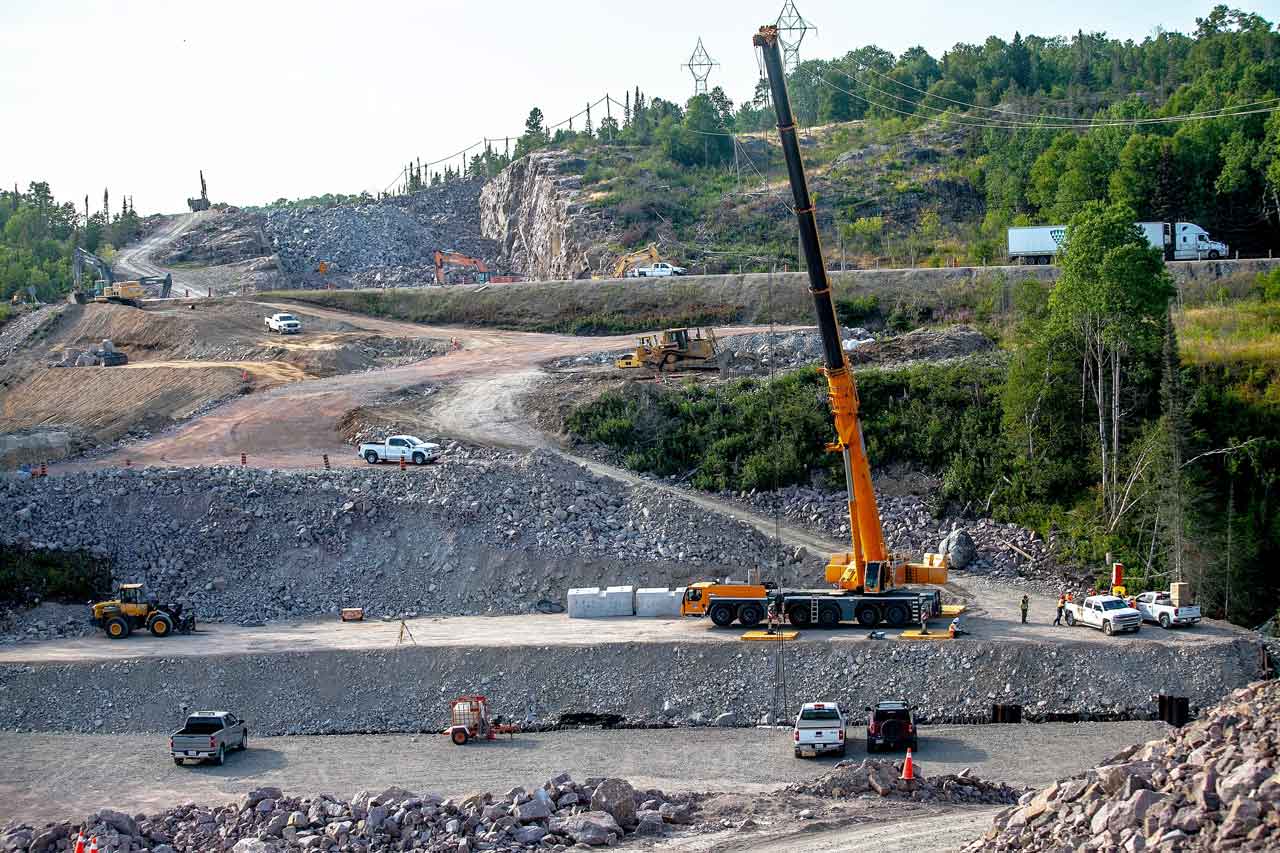
There is also a practical reason to distinguish planning from construction. The Ministry of Transportation’s Pearl Lake four-laning project website traces preliminary planning to 1997 and corridor protection to 2003. Those dates show the long history behind one project; they do not establish the status of every Northern highway section. Source: MTO project website.
A credible phased programme would identify which sections come first, explain the safety and reliability reasons for that order, establish funding responsibilities and report kilometres opened—not only projects announced.
It should also address maintenance, emergency response and meaningful First Nations participation. Four-laning cannot eliminate every collision or weather closure, and municipal involvement alone is not a substitute for Indigenous engagement.
For Thunder Bay and the Northwest, the significance of today’s release is straightforward: FONOM and NOMA are asking for a delivery framework around an objective discussed for years.
The next test is whether Ontario and Ottawa turn that request into an agreement with funding, priorities and a schedule the public can follow.