Could a Kenora-to-Toronto Passenger Train Work? The Opportunity, the Limits and the Likely Cost
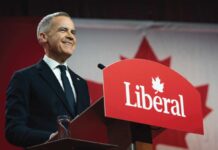
THUNDER BAY — TRANSPORTATION ANALYSIS — Prime Minister Mark Carney’s statement in Thunder Bay on Thursday that restoring VIA Rail service to the city is a federal priority opens the door to a much bigger question: What if Ottawa and Queen’s Park worked together on a passenger train running from Kenora through Thunder Bay to Toronto?
The short answer is that it could be done. The railway corridor exists, the federal government controls VIA Rail, Ontario has experience restoring northern passenger service, and Ottawa has just committed $4.7 billion for 313 new long-distance, regional and remote VIA passenger cars.
In Southern Ontario, rail travel is far more prevalent. There are options including VIA Rail, MetroLinx and streetcar and subway network in Toronto. What would it be like if there were a way to travel by rail connecting to that network from Kenora, through Dryden, into Thunder Bay, along the northshore of Lake Superior into Sault Ste. Marie and on down into the GTA?
A Kenora–Toronto train would be a long-distance, overnight railway covering roughly 1,800 to 1,900 kilometres, depending on the final route.
It would also require a major and continuing public investment. A reasonable early planning range is at least $1 billion to $3 billion to launch a useful service on existing freight tracks. A more frequent and reliable daily service, with substantial track-capacity work, could move into the $3-billion-to-$6-billion range or higher. Annual operations could require roughly $50 million to $100 million, with ticket revenue covering only part of that amount.
Those are NetNewsLedger order-of-magnitude estimates based on public passenger-rail benchmarks. They are not government estimates, and no federal or provincial Kenora–Toronto proposal has been announced.
Carney’s statement is a starting point, not yet a route plan
Prime Minister Mark Carney made the Thunder Bay service comment during a question-and-answer session on September 3, 2026.
His government’s formal announcement that day committed $4.7 billion to build 313 VIA passenger cars in Canada, with manufacturing and assembly work in Thunder Bay and La Pocatière, Quebec. Ottawa says the first cars are expected to enter service in 2031, with the complete fleet in service by 2035.
The investment is expected to support nearly 700 jobs and follows a separate $1.95-billion commitment for 45 locomotives and a Montreal-area maintenance facility. The details are contained in the Prime Minister’s official announcement.
That creates an opening for Northern Ontario. Ottawa will have new equipment and will have to decide where it goes. It does not, however, provide a route, timetable, station plan, track-access agreement or operating budget for Thunder Bay.

Why this should not literally be a GO Train
GO Transit is operated by Metrolinx to move people within the Greater Toronto and Hamilton Area and across the Greater Golden Horseshoe. Its familiar bilevel trains are well suited to high-volume regional trips into and around Toronto. That is Metrolinx’s stated service territory and mandate.
A trip from Kenora to Toronto would be closer to a transcontinental journey than a commute. VIA’s current Toronto–Winnipeg trip covers 1,897 kilometres and has a scheduled average duration of about 34 hours and 35 minutes, according to VIA Rail’s route information. The proposed southern route would not necessarily take that long, but it would still require at least a full day and likely an overnight journey.
| Question | Conventional GO service | Kenora–Thunder Bay–Toronto service |
| Main purpose | Frequent regional trips in and around the Greater Golden Horseshoe | Long-distance transportation across Northern Ontario |
| Typical customer need | Commuting, appointments and day trips | Overnight travel, regional access, tourism and connections |
| Passenger accommodation | Comfortable regional seating and basic onboard services | Reclining coach seats, accessible sleeping space, food service, baggage and showers or wash-up facilities |
| Likely operator | Metrolinx/GO Transit | More logically VIA Rail, Ontario Northland or a joint operating arrangement |
| Government role | Primarily provincial | Federal–provincial funding and governance, plus agreements with the host railway |
GO could still be involved. Metrolinx could help integrate tickets, schedules, PRESTO payments and connections in Southern Ontario. However, VIA Rail is Canada’s national passenger railway, while Ontario Northland has the provincial experience that most closely matches this proposal.

The Northlander provides the closest Ontario comparison
Ontario Northland plans to restore the Northlander between Toronto and Timmins, with a rail connection to Cochrane, later in 2026. The route is about 740 kilometres long, includes 16 stops and is planned to operate between four and seven days per week, depending on the season. Ontario Northland says the province has invested more than $100 million in rail infrastructure for the return of service.
The province also committed $139.5 million for three Siemens trainsets. Each set has a locomotive and three passenger cars with Wi-Fi, power outlets, accessible washrooms and other modern features, and new-train information show what a modern northern regional service can look like.
The published business case is equally important. In 2021 dollars, it placed capital and lifecycle rehabilitation costs for a new-fleet option at approximately $286 million to $305 million. It projected annual rail operating costs of about $17 million to $18 million, against fare revenue of roughly $5 million to $6 million. In other words, even the strongest options required an annual public subsidy.
The business case projected farebox cost recovery of 28 to 35 per cent. It also reported that, in 2019, GO Transit recovered about 64 per cent of operating costs, VIA’s corridor services recovered about 69 per cent and VIA’s long-distance services recovered about 47 per cent. The figures are in the [Northlander Updated Initial Business Case](https://www.ontarionorthland.ca/sites/default/files/2023-06/UIBCen.pdf).
A Kenora–Toronto train would be roughly two-and-a-half times the Northlander’s route length. It would need more equipment, more crews and overnight passenger services. It would also cross a long, busy freight corridor where additional sidings, signals or sections of track could be required.
What would the route look like?
The most direct concept would use the Canadian Pacific Kansas City corridor west from the Toronto or Sudbury area, following the Lake Superior route through or near communities such as White River, Schreiber, Nipigon and Thunder Bay before continuing west toward Ignace, Dryden and Kenora.
The exact alignment and stops would have to be determined by engineering, market and community studies. First Nations and municipalities along the corridor would need to be involved from the beginning, including in decisions about station sites, procurement, employment and tourism opportunities.
VIA already operates three round trips a week between Sudbury and White River. Extending that service west could become one building block, but a through Kenora–Toronto train would require a larger operating plan.
The hardest negotiation would likely be with CPKC. VIA owns very little of the railway over which it operates, and the Lake Superior route is a critical freight corridor. Passenger trains would need reliable operating slots, while CPKC would want to protect freight capacity. Where the line is single track, passing sidings and careful scheduling become essential.
What the service could mean for passengers
For customers, the train’s main value would not be speed. Air travel would remain the practical choice for a time-sensitive Kenora-to-Toronto business trip.
The railway’s strength would be access. It could link communities that have limited transportation choices, offer an alternative during highway disruptions, provide more room for baggage and mobility devices, and serve people who cannot or do not want to drive long distances.
Likely passenger markets include students, seniors, medical travellers, families, people visiting First Nations and northern communities, tourists, and residents connecting through Toronto or Winnipeg. A daylight passage along parts of Lake Superior could itself become a tourism product.
There would also be disadvantages:
- The trip would take at least a full day and could run well beyond 24 hours.
- Shared freight tracks could create delays unless governments pay for enough capacity.
- Three trains a week would offer mobility, but not the flexibility of daily air or bus service.
- A basic commuter-style seat would not be acceptable for most passengers on an overnight trip.
A credible train would therefore need comfortable coach seating, accessible sleeping accommodation, food and beverage service, reliable communications, checked or generous baggage capacity and timed bus connections to communities away from the railway.
What might a passenger pay?
Ontario Northland currently lists an advance adult fare of $142.17 between Timmins and Toronto, with a last-minute adult fare of $181.67. The Kenora route would be far longer, but its fare could not simply rise in direct proportion to distance without pricing many northern residents out of the service.
For planning purposes, a subsidized one-way coach fare in the range of $250 to $400 could be tested. A private room or sleeper could cost considerably more — perhaps $600 to $1,200 depending on the accommodation and meals.
These are illustrative consumer-price scenarios, not announced fares. A business case would have to test them against air, bus and driving costs, and consider discounted fares for students, seniors, children, medical travel and residents of remote communities.
The business case: wider benefits, but not a profit-making railway
From a regional business standpoint, passenger rail could generate benefits that do not appear at the ticket counter.
Hotels, restaurants, outfitters and tourism operators could build packages around the route. Stations could support local taxi, u-ride, transit, rental-car and retail activity.
Construction and ongoing maintenance would generate work, while Thunder Bay’s Alstom plant could become part of a northern rail supply and service hub.
The route could also improve labour mobility. Employers would have another way to move workers, while students, patients and families would have another link to regional centres.
However, the train would have limits as a business-travel product. A journey of more than 24 hours cannot compete with a flight for a one-day meeting. Unreliable arrival times would weaken confidence, and a lightly used train would still carry substantial crew, fuel, maintenance and track-access costs.
The service should therefore be judged as public infrastructure, not as a stand-alone commercial venture. VIA itself carried 4.4 million passengers in 2025 and generated $514.8 million in revenue, but self-generated revenue covered only 58 per cent of its operating costs. VIA describes passenger rail as a subsidized public service in its 2025 results.
What could it cost?
No route study has been completed, so any number offered today should be treated cautiously. The following ranges are planning scenarios, not a quotation or government budget.
| Cost item | Illustrative range | What drives the number |
| Feasibility, engineering, consultation and negotiations | $20 million–$50 million | Ridership work, environmental review, Indigenous and municipal engagement, station selection and CPKC capacity modelling |
| Trainsets and maintenance facilities | $300 million–$700 million | Number and length of trainsets, locomotives, sleepers, food-service cars, spare equipment and maintenance location |
| Stations and accessibility work | $100 million–$300 million | Number of stops, platform standards, heated waiting areas, road access, security and municipal connections |
| Track, signals and freight-capacity improvements | $500 million–$2 billion or more | Passing sidings, siding extensions, bridges, signalling, grade crossings and the host railway’s requirements |
| Total for an initial useful service | Approximately $1 billion–$3 billion | Assumes use of the existing freight railway and roughly three round trips a week |
| More robust daily service | Approximately $3 billion–$6 billion or more | More trainsets, crews and major capacity improvements to protect reliability |
Annual gross operating costs could begin in the $50-million-to-$100-million range for a limited service and rise with frequency. A public subsidy of perhaps $35 million to $75 million a year would be plausible if fares recovered between one-quarter and one-half of operating costs.
The method behind that range is straightforward. The Northlander business case projected approximately $17 million to $18 million in annual operating costs for a 740-kilometre route. A Kenora–Toronto route would be about 2.5 times as long, before adding the costs of overnight crews, sleeping cars, food service and larger maintenance needs. This is a useful comparison, but not a substitute for a route-specific study.
Building a dedicated passenger railway for the entire distance would be a very different project and could cost tens of billions of dollars. That is unlikely to be the practical starting point. Targeted improvements to the existing corridor would be more realistic.
Who should run it and who should pay?
The cleanest model would be a federal–provincial partnership with clearly divided responsibilities:
- Ottawa and VIA Rail would provide long-distance equipment, national booking connections, operating expertise and a share of the annual subsidy.
- Ontario and Ontario Northland could support stations, northern feeder buses, provincial ticket integration and part of the capital and operating cost.
- Metrolinx could connect the service with GO trains and local transit in the Greater Golden Horseshoe without trying to turn GO into a 1,900-kilometre railway.
- CPKC would need to negotiate track access, dispatching, schedules and capacity improvements.
- First Nations and municipalities would need decision-making roles on stops, access, economic opportunities and local service needs.
A service agreement would also have to settle who carries the financial risk when ridership is lower than expected and who pays when freight growth creates the need for more track capacity.
What should happen next?
If the two governments want to test the idea seriously, the next step is not ordering a GO locomotive with “Kenora” on its destination board.
Ottawa and Ontario should jointly commission a Northern Ontario passenger-rail business case comparing at least three choices:
- Extending the existing Sudbury–White River service to Thunder Bay;
- Operating a Thunder Bay–Kenora or Thunder Bay–Winnipeg regional service; and
- Creating a through Kenora–Thunder Bay–Toronto overnight train.
The study should publish ridership forecasts, travel times, proposed stops, fare scenarios, capital work, annual subsidies and a clear comparison with bus and air alternatives. It should also determine whether three weekly round trips are enough to build a market or whether daily service is necessary.
The bottom line
A Kenora-to-Toronto passenger train is technically possible and could provide real value to Northwestern Ontario. It would improve transportation choice, create a new tourism corridor and give communities an alternative to highways and air travel.
It would not be a conventional GO Train, it would not be fast, and it would not pay for itself from fares.
The realistic model is a publicly supported, long-distance service led by VIA Rail or Ontario Northland, connected to GO in Southern Ontario and operated over CPKC track under a long-term agreement. The likely entry price is measured in billions of dollars, followed by tens of millions in annual public support.
Carney’s statement puts passenger rail back on Thunder Bay’s agenda. The real test now is whether Ottawa and Ontario will put engineers, railway operators, First Nations, municipalities and dollars around that political priority.
EDITOR NOTES
This article is analysis, not a report of an approved project. No Kenora–Toronto GO, VIA or Ontario Northland service has been announced.
Carney’s “priority” statement was made during the Thunder Bay question-and-answer session and does not appear in the published prepared speech or federal news release.
All route lengths, capital ranges, operating ranges and hypothetical passenger fares for the proposed service are estimates. The Northlander figures and current VIA data are sourced; the Kenora–Toronto figures require a formal feasibility study.
CPKC, VIA Rail, Metrolinx, Ontario Northland, Indigenous governments and affected municipalities have not been interviewed for this analysis. Their positions should not be inferred.
Human editor approval is required before publication.
SOURCES CHECKED
Prime Minister of Canada, September 3, 2026 — VIA fleet investment announcement
Prime Minister of Canada, September 3, 2026 — Thunder Bay speech
NetNewsLedger, September 3, 2026 — Prime Minister Carney Says Returning VIA Rail to Thunder Bay Is a Priority
Metrolinx — About Us
Ontario Northland — Northlander project
Ontario Northland — New trainsets
Ontario Northland — Northlander fares
Ontario Northland — Updated Initial Business Case
VIA Rail — Toronto–Winnipeg route information
VIA Rail, May 6, 2026 — 2025 ridership and financial results