Alberta votes October 19 on ten referendum questions. What Canadians need to know about separation, immigration, treaty rights and constitutional changes
Ten questions cover immigration, public services, constitutional change and a possible path toward a future separation vote. Monday’s ballot will not make Alberta independent
THUNDER BAY — October 16, 2026 — Albertans are already voting in a referendum that reaches well beyond provincial politics, with decisions on immigration and constitutional reform alongside a question about whether to begin a process toward a future vote on leaving Canada.
The final voting day is Monday, October 19. There are ten questions, not one, and each has its own ballot.
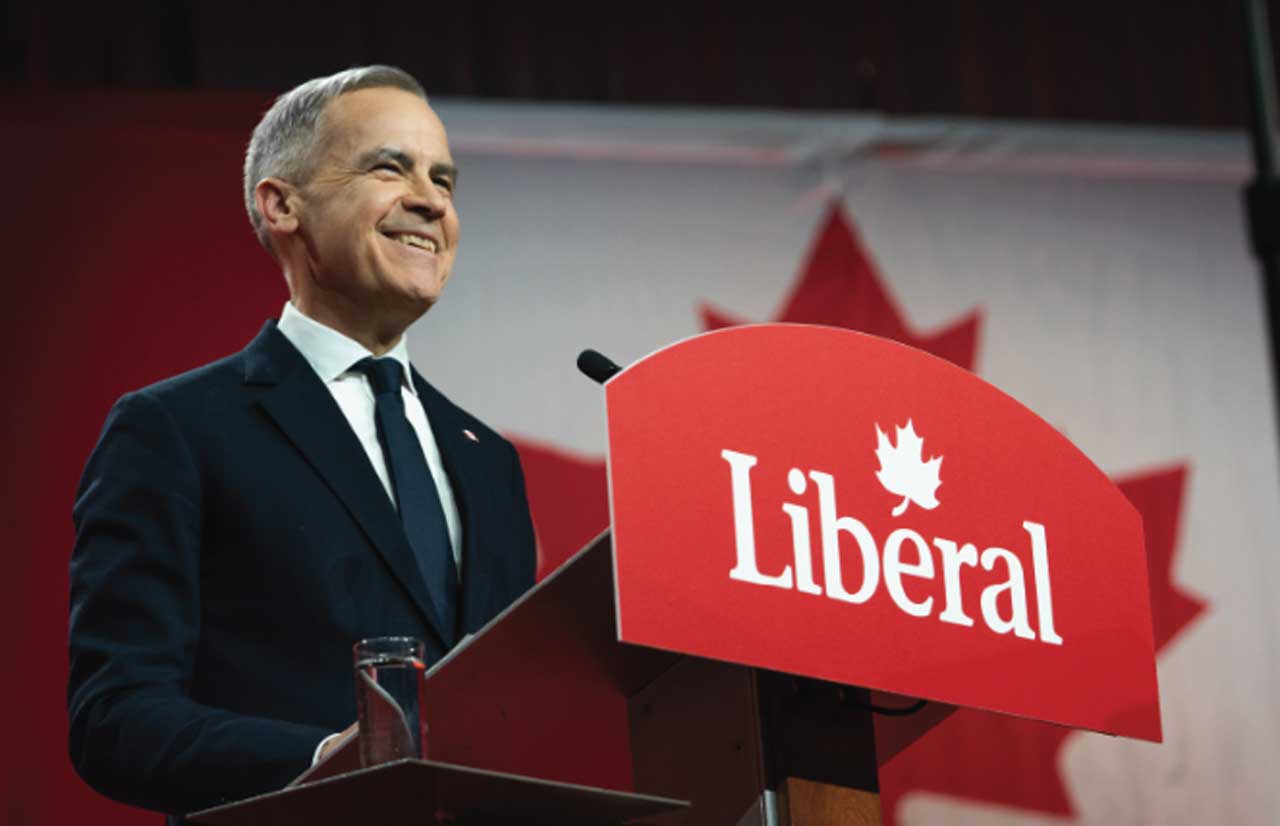
Prime Minister Mark Carney campaigned in Calgary on October 15, urging Albertans to remain in Canada. His appeal comes as Premier Danielle Smith also supports remaining in Confederation, while seeking support for the referendum’s other nine proposals.
For Canadians following the debate from outside Alberta, the central distinction is this: the separation-related question is non-binding and concerns a process toward another referendum. It does not authorize Alberta to leave Canada immediately.
What Question 10 actually asks
Question 10 offers two choices: Alberta remains a Canadian province, or its government begins the legal process required to hold a future binding provincial referendum on separation.
It is not a yes-or-no ballot. Voters select one of the two options.
Elections Alberta explicitly identifies this question’s result as non-binding. The Alberta government nevertheless says that majority support for the second option would lead it to begin the necessary legal processes. That is a political commitment about its response, distinct from the ballot’s legal status.
Analysis: Describing Monday’s vote simply as an “independence referendum” leaves out a crucial step. Describing it as meaningless because it is non-binding misses its potential political weight.
A result favouring the second option could strengthen demands for another vote and pressure the government to act. A result favouring remaining in Canada would give the federalist side a direct electoral response to separatist demands.
Neither outcome can tell us, by itself, whether the underlying political grievances will disappear.
The other nine questions matter, too
The ballot combines several different debates. The following are summaries, not substitutes for the official wording.
| Question | What voters are being asked to support |
|---|---|
| 1 | Greater provincial control over immigration, lower intake, economic priorities and employment priority for Albertans. |
| 2 | Limiting provincially funded services to citizens, permanent residents and people with Alberta-approved immigration status. |
| 3 | A 12-month Alberta residency requirement for temporary-status residents seeking provincial social support programs. |
| 4 | Health-care and education fees or premiums for temporary-status residents and their families. |
| 5 | Requiring documentary proof of Canadian citizenship to vote in provincial elections. |
| 6 | Provincial selection of judges for provincial superior trial and appeal courts. |
| 7 | Abolishing the federal Senate. |
| 8 | Provincial opt-outs from certain federal programs while retaining associated funding. |
| 9 | Giving provincial laws priority in conflicts involving provincial or shared jurisdiction. |
Questions 3 and 4 expressly preserve the existing eligibility of Canadian citizens and permanent residents. Questions 6 through 9 seek support for working with other provinces on constitutional amendments.
Citizenship is already a requirement for voting in Alberta’s provincial referendum. Question 5 concerns additional proof requirements, rather than creating that citizenship requirement for the first time.
Carney’s message has a clear national-unity context
At the Calgary rally, Carney said: “Albertans have a choice: to build a stronger Alberta and an even greater Canada to leave for our children.”
The Canadian Press reported that he contrasted that path with prolonged division and uncertainty. He also urged voters to reject the other nine questions, putting him at odds with Smith on the broader package even though both favour Alberta remaining in Canada.
The Prime Minister’s published October 12 Thanksgiving statement separately emphasized national unity in the face of threats to Canada’s economy, security and sovereignty.
Analysis: Carney is asking Albertans to distinguish dissatisfaction with Ottawa from support for beginning a separation process. His challenge is to make that argument without dismissing concerns about energy policy, public services or provincial influence.
An effective unity campaign must explain what cooperation can deliver, as well as what division could put at risk.
Smith supports Canada while arguing for greater autonomy
In her May 21 address announcing the additional question, she stated that she supported Alberta remaining in Canada and wanted stronger provincial autonomy within Confederation. She also committed her government to respecting the direction voters provide.
Her earlier February address presented immigration restrictions and constitutional reform as responses to pressures on services and provincial finances. Those are the government’s arguments for its proposals, not independent proof that every promised benefit would follow.
Separatist organizers take a different view of Ottawa’s commitments. The Associated Press has reported that Let Alberta Decide co-chair Tanya Clemens argued that agreements between Carney and Smith did not adequately resolve longstanding grievances.
Analysis: Voters can support remaining in Canada while disagreeing sharply about immigration, federal spending or constitutional reform. Results should therefore be read question by question, rather than treated as a single endorsement of one leader’s agenda.
Even a future separation vote could not create independence by itself
Canada’s constitutional framework does not allow a province to leave unilaterally.
The Supreme Court’s 1998 Quebec Secession Reference established that a clear majority answering a clear question in favour of secession would create an obligation to negotiate. It did not establish an automatic right to independence. A later explanation published by the Supreme Court describes the need to respect democracy, federalism, constitutional government and minority rights together.
The federal Clarity Act gives the House of Commons a role in assessing both the question and the resulting majority before Ottawa negotiates secession.
The Act sets no fixed percentage that automatically counts as a clear majority. It identifies the size of the majority, turnout and other circumstances as relevant considerations.
Lawful secession would require a constitutional amendment following negotiations involving at least the federal government and all provincial governments.
Calling a later provincial referendum “binding” would not remove those constitutional requirements.
Constitutional reform needs agreement outside Alberta
The same distinction between a provincial mandate and a national legal change applies to Questions 6 through 9.
Canada has several constitutional amendment procedures. The general procedure requires resolutions from Parliament and at least seven provincial legislatures representing at least half the provinces’ combined population, subject to the Constitution’s detailed rules. Other changes require different levels of consent.
Senate abolition is a particularly demanding example. The House of Commons’ procedural reference explains that the Supreme Court’s 2014 Senate Reform Reference required unanimous federal-provincial consent for abolition. Alberta cannot abolish the Senate through its own referendum.
A favourable vote could support a provincial negotiating position. It would not establish that Ontario, Quebec, the Atlantic provinces or other governments had agreed.
First Nations’ treaty rights are central
This debate involves more than a disagreement between Edmonton and Ottawa.
Section 35 of the Constitution Act, 1982 recognizes and affirms existing Aboriginal and treaty rights. Those rights cannot simply be treated as a matter for a provincial majority to dispose of.
In a February statement published by the Blood Tribe, the Assembly of Treaty Chiefs of Treaties 6, 7 and 8 opposed the separatist agenda and accused Alberta’s government of failing to respect treaty responsibilities. The Blackfoot Confederacy Chiefs emphasized their treaty relationship with the Crown. These are the positions of the leaders identified in that statement, not a claim that every Indigenous person holds an identical view.
Litigation also helped shape the current ballot.
Lawyers representing Athabasca Chipewyan First Nation reported that a May 13 Alberta Court of King’s Bench decision set aside approval of an earlier independence initiative petition, including on consultation grounds. Alberta’s current referendum explainer says the government is appealing the decision and acknowledges its continuing legal effect unless overturned or clarified.
The Clarity Act also requires negotiations to address relevant Indigenous rights, interests and territorial claims, alongside matters such as assets, liabilities, borders and minority rights.
What could change for immigrants and public services?
Questions 1 through 5 are identified as non-binding by Elections Alberta. Their approval would not itself rewrite eligibility rules or set a particular fee.
Any resulting measures would need to be examined through actual legislation, regulations, agreements and implementation decisions.
Immigration is also not an area where a provincial vote simply eliminates federal authority. Section 95 of the Constitution Act, 1867 provides legislative roles for both orders of government and makes provincial immigration laws subject to conflicting federal legislation.
Analysis: Families should watch the details: which immigration categories would qualify, which programs would be affected, whether exceptions would apply, what fees might be charged and when changes would start.
The ballot does not supply all those answers. Employers and service providers should distinguish a proposed policy direction from an enforceable new rule.
What about pensions, currency, taxes and trade?
Question 10 does not settle the terms of a hypothetical independent Alberta.
The October 19 vote would not itself create a new currency, establish an international border or negotiate the division of Canadian assets and debts.
The Clarity Act specifically identifies assets, liabilities and possible boundary changes among matters that negotiations would have to address where relevant.
Analysis: Claims that separation would automatically produce a particular tax saving, preserve every existing arrangement or guarantee a specific economic outcome go beyond what this ballot establishes.
Businesses making long-term decisions would want clarity about market access, regulation, transportation, taxation and financing. The practical risk is uncertainty over those arrangements; this article does not assign a dollar value to that risk or predict an immediate market reaction.
Why Thunder Bay and Northwestern Ontario should follow the vote
Regional analysis: Constitutional negotiations over federal programs, provincial authority or national institutions would matter to Ontario as well as Alberta.
For Northwestern Ontario readers, the relevant issues include how governments fund services, approve infrastructure and coordinate economic development. Employers recruiting across provincial boundaries and families with connections in Alberta would also have reasons to follow subsequent policy decisions.
Ontario residents do not vote in Alberta’s referendum. However, Alberta cannot deliver the proposed national constitutional changes without participation beyond its borders.
The distinction matters: Monday’s results could influence a national debate, while leaving many practical decisions for later.
How Albertans can vote — and when results are expected
Elections Alberta lists the following arrangements:
- Eligibility: Canadian citizens who are at least 18 on October 19 and ordinarily resident in Alberta.
- Advance voting: Continues through Saturday, October 17, at an advance location within the voter’s electoral division.
- Election Day: Monday, October 19, from 9 a.m. to 8 p.m., at the voter’s assigned location.
- Special ballots: Completed packages must be received by Elections Alberta by 5 p.m. on October 16; the application deadline has passed.
- Registration: Eligible voters can still register when voting in person.
- Official results: Scheduled for October 29.
Times are local to Alberta. Voters should check the official voting-location tool and accepted identification requirements before leaving.
Elections Alberta says ballots will be counted by hand, with Question 10 counted first. Unofficial results are to be published within 48 hours after all voting locations close.
As results arrive, Canadians should distinguish support for a process from support for eventual independence, and support for constitutional negotiations from an amendment already achieved. Those distinctions will determine what the vote actually changes.