THUNDER BAY — No new wildland fires were confirmed in Northwestern Ontario by early Tuesday evening, Aug. 25, as firefighting operations continued to wind down at several long-running fires.
There were 64 active wildland fires in the Northwest Fire Region as of 5:56 p.m. CDT. Three were not under control, four were being held, 12 were under control and 45 were being observed.
Two small fires discovered after the previous evening’s update were quickly extinguished.
Two Nipigon District Fires Called Out
Aviation, Forest Fire and Emergency Services reported two fires discovered during the evening of Aug. 24.
Nipigon 104 was located east of Deep Lake, approximately 13 kilometres north of Schreiber.
The fire reached 0.1 hectares before being called out.
Nipigon 105 was located near the east shore of McIvor Lake, approximately nine kilometres west of Cameron Falls.
That fire reached 0.2 hectares and has also been called out.
A fire classified as “called out” is considered extinguished.
Northwest Region Has 64 Active Fires
As of Tuesday evening, the Northwest Fire Region had:
- 3 fires not under control
- 4 fires being held
- 12 fires under control
- 45 fires being observed
The large number of fires being observed reflects the scale of the 2026 fire season, although fire behaviour has declined across a number of the region’s major incidents.
Atikokan Cluster Moving Back to Local Fire Management
After several weeks of active suppression operations, command of the Atikokan Cluster of Fires is being transitioned back to the Fort Frances Fire Management Headquarters.
The cluster includes Fort Frances 13, Fort Frances 14 and Fort Frances 15.
The Brown Incident Management Team will demobilize its Atikokan-based incident command post on Wednesday, Aug. 26.
Fire officials report that low fire behaviour has been observed in recent days.
This will be the final provincial update listing the Atikokan Cluster as a fire of note.
Ongoing information about these fires will remain available through the Northwest Region fire information officer at 1-888-258-8842.
Flight Restrictions Remain Near Fort Frances 14
A Notice to Airmen, or NOTAM, remains in place around Fort Frances 14, northeast of Byers Lake.
The NOTAM adds to the standard airspace restrictions already in effect around active forest fires.
Under Section 601.15 of the Canadian Aviation Regulations, aircraft not involved in fire suppression are generally prohibited from flying within five nautical miles of an active forest fire and below 3,000 feet above ground level.
Pilots should check NAV Canada’s Collaborative Flight Planning Services for current wildfire-related NOTAMs before flying in affected areas.
Rinker Complex Remains Not Under Control
Firefighting operations at the massive Rinker Complex are also transitioning.
The Perin Incident Management Team transferred command of operations for Thunder Bay 36, Dryden 34 and Dryden 35 to the Thunder Bay Fire Management Headquarters on Tuesday, Aug. 25.
All three fires remain classified as not under control.
Despite that classification, wildland fire activity across the complex remains low.
Ontario and Mexican firefighting crews continue working on the fires with helicopter support.
Crews are focusing on suppressing remaining hotspots while equipment is being removed from areas where it is no longer required.
The transition from an incident management team to the Thunder Bay Fire Management Headquarters reflects the reduced level of fire activity, but the fires remain active and continue to require monitoring and suppression work.
NOTAM Remains in Place Near Thunder Bay 36
A NOTAM also remains in effect in the area of Thunder Bay 36.
The flight restriction is in addition to the standard Canadian Aviation Regulations applying to all active forest fires.
Aircraft not involved in fire suppression should remain outside restricted fire zones.
The airspace around an active forest fire is generally restricted within five nautical miles of the fire and up to 3,000 feet above ground level.
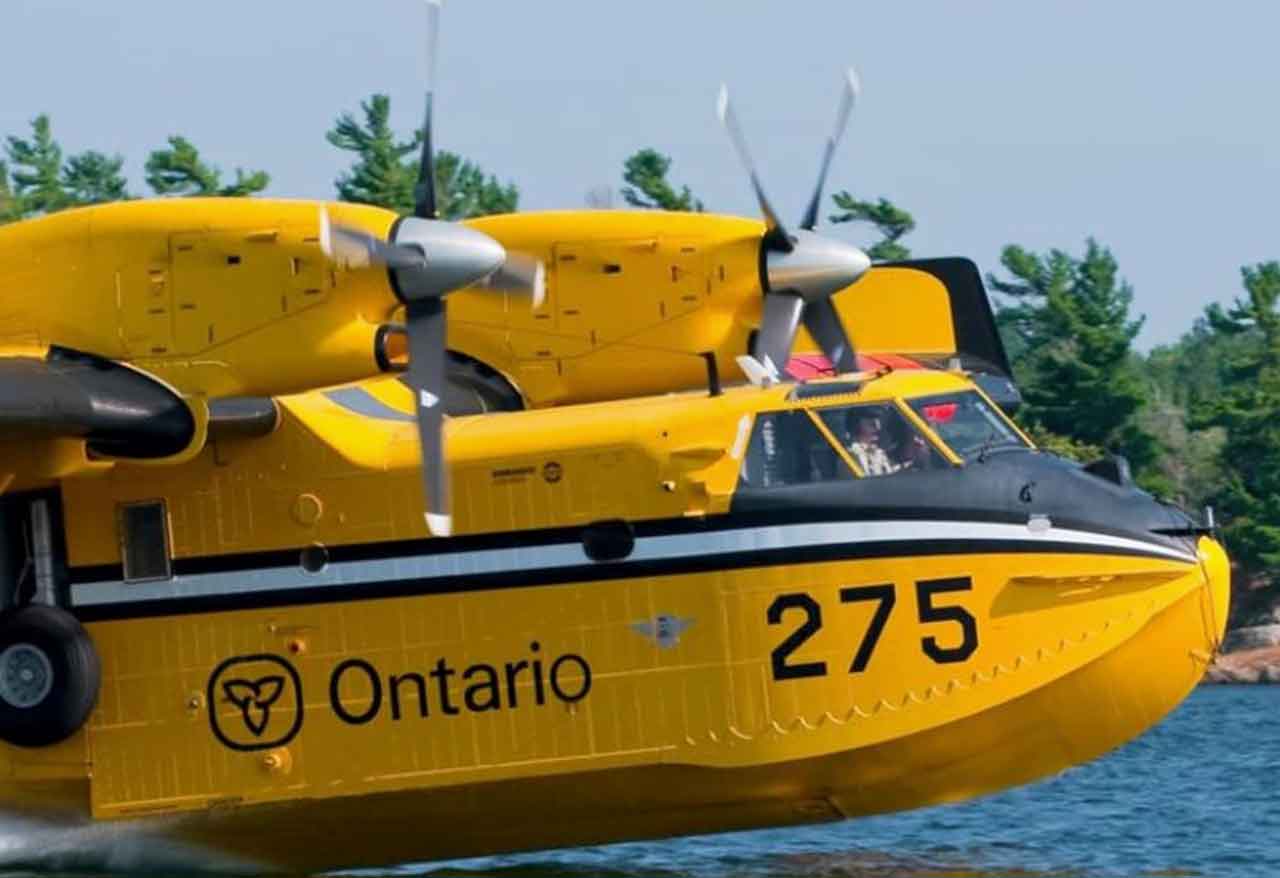
These restrictions are important for public safety and to ensure waterbombers, helicopters and other firefighting aircraft can operate without interference.
Fire Danger Can Change Quickly Across the Northwest
Fire danger ratings continue to vary across Northwestern Ontario.
Ontario’s interactive fire map calculates fire danger using information collected from more than 130 weather stations across the province’s fire region.
Conditions can change through the day as temperatures, humidity, wind and precipitation change.
Residents, campers, hunters, anglers and people travelling into remote areas should check current fire danger conditions before heading outdoors.
Outdoor Fire Rules Remain in Effect
Ontario’s legislated fire season runs from April 1 to Oct. 31.
Aviation, Forest Fire and Emergency Services is reminding residents to consider alternatives to burning yard waste and woody debris, including composting or using local landfill services.
Where outdoor burning is permitted, fires may be lit no earlier than two hours before sunset and must be extinguished no later than two hours after sunrise.
Anyone burning outdoors should have adequate water and tools available to control the fire.
Residents living within municipal boundaries should also check with their local fire department for additional burning restrictions, permits or municipal fire bans.
How to Report a Wildland Fire
To report a wildland fire north of the French and Mattawa rivers, call:
310-FIRE (3473)
To report a wildland fire south of the French or Mattawa rivers, call:
911
With major fire complexes beginning to transition back to local fire-management headquarters, the Northwest Region is seeing signs of reduced fire activity.
However, the continuing presence of 64 active wildland fires — including three still classified as not under control — means the 2026 wildfire season is not over.
NetNewsLedger will continue providing Northwestern Ontario wildfire updates as conditions change.