For NetNewsLedger readers, the strongest local connections are economic and practical: U.S. tariffs threaten forestry and other export-dependent industries; wildfires continue to affect northern First Nations and transportation corridors; higher global oil prices can move diesel, aviation and freight costs; and Thunder Bay council faces two significant housing proposals tonight.
The Five Stories to Put at the Top of the Morning File
-
Canada–U.S. tariff talks: Ottawa and Washington are negotiating ahead of new U.S. Section 338 tariffs scheduled for Aug. 19 that could impose a 50 per cent duty on certain Canadian products. This remains the most consequential economic story for Northwestern Ontario.
-
Northwestern Ontario wildfires: The latest published provincial update entering Tuesday reported 112 active fires in the Northwest Region, including 12 not under control. A newer Tuesday morning regional count was not yet available in the sources checked.
-
Colombia earthquake: Rescue crews are searching collapsed buildings after a magnitude 7.4 earthquake struck western Colombia. Reuters reported Tuesday morning that the death toll had reached at least 164, with authorities expecting it to rise.
-
Hormuz and oil prices: Hopes for a quick diplomatic resolution between Iran and the United States have faded, pushing Brent crude to around US$88 a barrel early Tuesday. That matters in Northwestern Ontario because trucking, mining, forestry and remote-community aviation are highly fuel-dependent.
-
Thunder Bay housing decisions: Council has public meetings tonight on proposals for 360 apartments at 791 Arundel St. and 150 apartments at 144 Fanshaw St. — potentially 510 new units combined.
International: Colombia Earthquake Becomes Major Humanitarian Story
A powerful earthquake struck Colombia’s coffee-growing region Monday, damaging cities including Cali, Pereira and Manizales. At least 164 deaths had been confirmed by Tuesday morning, with rescue crews continuing to search for people trapped beneath buildings. Hospitals and transportation infrastructure have also been damaged.
NetNewsLedger angle: The immediate story is humanitarian rather than directly regional. It also provides an opportunity to explain emergency preparedness and Canada’s international disaster-response role as the situation develops.
International: U.S.–Iran Standoff Pushes Oil Higher
Negotiations surrounding the Strait of Hormuz have lost momentum after U.S. President Donald Trump demanded compensation from Iran over previous conflicts. Oil prices have risen about five per cent over two sessions, with Brent near US$88 a barrel early Tuesday.
This has a much stronger Northwestern Ontario connection than the geographic distance suggests. Mines, forestry operations, long-haul trucking and northern aviation consume significant quantities of fuel. Remote First Nations that depend heavily on aircraft for passengers, medical travel and supplies are particularly exposed to sustained fuel-cost increases.
International: Congo Ebola Death Toll Passes 2,000
The Democratic Republic of Congo has now recorded 2,011 confirmed Ebola deaths and 4,381 confirmed cases, Reuters reported Tuesday. The current Bundibugyo-strain outbreak has spread rapidly amid conflict, strained health systems and difficulties tracing cases.
This is becoming an international public-health story worth putting back on the NetNewsLedger reader radar. The United States has already tightened travel procedures for people returning from affected areas.
International: Ukraine-Russia War Intensifies Again
Russia reported striking logistics facilities and a steel plant in Ukraine overnight, while Ukrainian officials reported six deaths and 20 injuries in Zaporizhzhia. The attacks followed Monday’s Ukrainian drone strike on Nizhnekamsk in Russia, where Russian authorities said 13 people were killed.
For Canada, continued attacks on energy and industrial infrastructure affect NATO policy, defence spending, petroleum markets and Ottawa’s continuing support for Ukraine.
International: Trump’s Gaza Plan Remains in Trouble
Israeli Prime Minister Benjamin Netanyahu continues to reject withdrawal from Gaza until Hamas is fully disarmed, while an official from the U.S.-backed Board of Peace says Washington’s proposed peace roadmap remains operative. Hamas has accepted elements of the plan but disagreements remain over disarmament and sequencing.
This remains an evolving story and should be reported cautiously: there is not yet a final Gaza settlement.
National: Aug. 19 U.S. Tariff Deadline Is the Canadian Story to Lead
Global Affairs Canada says negotiations with Washington are intensive as Canada seeks relief from existing sectoral tariffs and new Section 338 tariffs scheduled for Aug. 19. Federal analysis says those tariffs could impose duties of 50 per cent on certain Canadian products.
Possible Canadian concessions under discussion include U.S. autos, dairy quota administration and greater access for American alcohol, potentially in return for relief on U.S. steel and aluminum tariffs. No agreement is assured.
National: B.C. Wildfire Emergency Worsens
British Columbia’s Bald Range wildfire has forced more than 20,000 people from their homes and produced significant structural losses around Summerland and neighbouring communities. Reuters reported Monday that an 80-year-old woman became the first reported fatality associated with the fire, which had grown beyond 13,600 hectares.
The Northwestern Ontario connection is important. Simultaneous major wildfire emergencies put pressure on Canada’s shared pool of firefighters, aircraft and emergency-response resources. They also reinforce questions Northern Ontario First Nations have raised this summer about warning systems, evacuations and emergency accommodation.
National Politics: Liberal MP Shaun Chen to Resign
Scarborough North Liberal MP Shaun Chen announced Monday that he will resign at the end of this week because of continuing health problems following a motor-vehicle collision last year.
The resignation creates another federal byelection to watch and adds a political dimension to an already difficult period for Prime Minister Mark Carney as Ottawa manages Canada–U.S. negotiations.
Regional: 112 Northwest Fires Remain the Public-Safety Priority
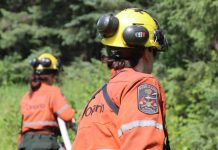
The latest published Northwest Region update reported 112 active wildland fires: 12 not under control, seven being held, six under control and 87 being observed.
Thunder Bay 36 and the broader Rinker Lake fire complex remain particularly important because of their scale and implications for communities, wilderness travel and firefighting resources. The region has already experienced evacuations, transportation interruptions and the destruction of First Nation community infrastructure this summer.
Thunder Bay itself is forecast to reach about 25 C Tuesday, with wildfire smoke contributing to hazy skies.
This remains a climate, Indigenous emergency-management and infrastructure story — not simply a daily fire-count story.
Regional: Forestry Wants Action on Rail Costs
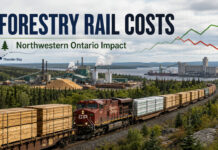
The Forest Products Association of Canada says rail transportation can represent 20 to 25 per cent of the delivered value of forest products, amounting to roughly $2 billion to $3 billion annually for the sector. The industry is calling for a forestry-specific approach to improving rail competitiveness.
This deserves strong follow-up because Northwestern Ontario mills face unusually long distances to markets. Rail costs layered on top of U.S. tariff risk could become a significant competitiveness and employment issue.
Regional: Watch for Movement on the Ring of Fire Roads
Ontario’s schedule calls for construction of the approximately 184-kilometre Marten Falls Community Access Road to begin in August, while construction on the Webequie Supply Road began in June.
The NetNewsLedger reader watch should be for an actual construction-start announcement, contracts, Indigenous employment and procurement opportunities — while continuing to report differing First Nations perspectives concerning mining, roads, environmental protection and Treaty rights.
Local: Two Major Apartment Proposals Before Thunder Bay Council Tonight
Tonight may produce the most consequential local story.
The 791 Arundel St. proposal would permit two 180-unit apartment buildings, for 360 units, while the proposal at 144 Fanshaw St. calls for a six-storey building with 150 units and 188 parking spaces. Both public meetings are scheduled for 6:30 p.m. Tuesday.
Together, the proposals represent 510 potential new housing units.
How does Thunder Bay accommodate hundreds of new homes while addressing neighbourhood concerns, infrastructure capacity, transportation and greenspace?
Local: Municipal Election Campaign Enters Its Final Nomination Stretch
Thunder Bay’s municipal nomination period closes Friday, Aug. 21 at 2 p.m., with certification scheduled for Aug. 24 and election day on Oct. 26. As of Monday morning, NetNewsLedger reported seven nominees for mayor and seven for at-large council, although the field can still change before nominations close.
Housing votes such as those before council tonight are likely to sharpen the campaign debate around growth, taxation, homelessness, policing, infrastructure and neighbourhood development.
Former Councillor at Large Aldo Ruberto has declared his candidacy for Mayor. As well Peng You is running for a Councillor at Large seat. Incumbent Mark Bentz has announced he will see re-election. Shane Judge is also running for the Mayor’s seat bringing the total so far to eight candidates.
Local: $60 Million Construction Program Is Affecting How Thunder Bay Moves
The city says it is investing approximately $60 million in 2026 in roads, bridges, sidewalks, trails, watermains and other infrastructure, with multiple projects affecting drivers, cyclists and pedestrians during August.
For daily readership, service journalism on closures and travel delays should continue alongside the larger political question: whether infrastructure investment is keeping pace with Thunder Bay’s housing and growth ambitions.