When Americans discuss the housing shortage, the conversation usually begins with construction.
“We need to build more homes.”
“We need faster construction methods.”
“We need more skilled labor, more modular housing, more efficient permitting and lower material costs.”
All of that is true. But before anyone can build a home, the project needs something even more fundamental: land.
In many of the communities where housing is needed most, the cost of acquiring that land can make an otherwise worthwhile project financially impossible before the first architectural sketch. A developer may then spend several additional years navigating entitlements, permits and agency reviews while carrying the cost of the property, financing and professional teams.
That means America doesn’t merely have a construction problem. It has a land-access problem, a regulatory-timing problem, and a predevelopment-capital problem as well.
Yet, ironically, there is a great deal of land that could help already held by institutions deeply rooted in the communities experiencing the shortage.
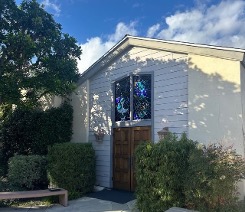
Across the country, churches and other faith-based organizations own parking areas, aging buildings and underused parcels. Many would like those properties to serve their neighborhoods more meaningfully. At the same time, they may be facing declining facility use, growing maintenance expenses or pressure to sell property simply to preserve the organization’s financial health.
However, a rising organization — OLOS Impact — believes the opportunity in meshing these complementary needs is not to treat churches as convenient land sellers. It is to treat them as long-term housing partners.
New and Better Questions About Church Property
The conventional real estate question is straightforward: What could this property be sold for?
The more consequential question is this: What could this property become?
With the right development structure, underused faith-owned land may be able to support attainable, workforce, mixed-income, senior or other community-serving housing. The organization can potentially retain a long-term interest in the property, strengthen its financial position, modernize ministry space and expand its community impact.
The community gains housing. The church gains a more sustainable asset. Developers and investors gain access to projects that may become more feasible because the land does not need to be purchased through a conventional transaction.
That does not mean every church property is suitable for housing. Zoning, infrastructure, neighborhood context, environmental conditions, financing and the organization’s own mission must all be evaluated. Some sites will not work.
But too many potentially useful properties are never seriously considered because church leaders understandably do not know where to begin — or because the only proposals they receive require them to sell.
Housing Is an Ecosystem. Not a Solo Project.
The housing crisis is too large for any one sector to solve.
Developers are essential, but so are local officials, capital providers, technology companies, nonprofits, community organizations and policymakers. Faith institutions can become another important participant because they contribute something extraordinarily difficult to replicate: land combined with longstanding community relationships.
This requires developers to approach projects differently.
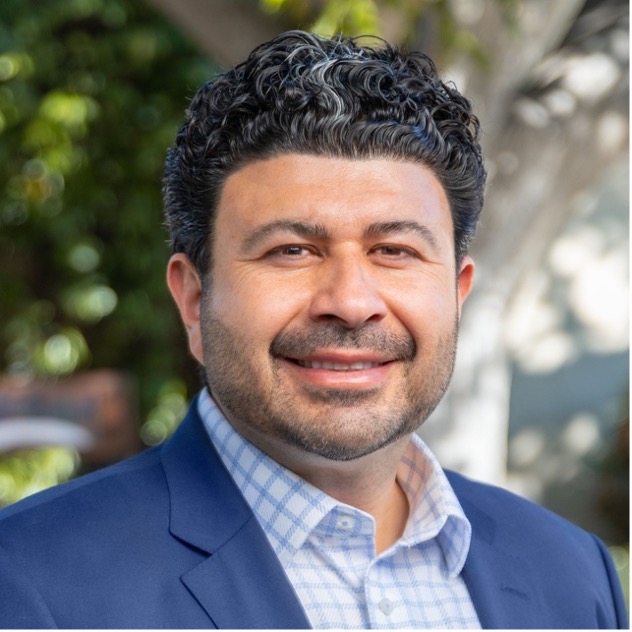
OLOS CEO and Founder Christopher Montes maintains that instead of, “How do we control this opportunity?” our first questions should be, “What does this organization hope to accomplish, and who needs to participate to make that outcome possible?”
A church may bring land, neighborhood knowledge and a vision for service. A developer may bring entitlement, construction and project-management experience. Capital partners make the project financeable. Technology can help evaluate zoning, density, project economics and likely community impact before either side spends heavily on a concept that will not work.
Out of the right discussions, aligned partnerships can emerge.
Policy Can Unlock — or Prevent — the Opportunity
Policy support is vital for these partnerships to create meaningful community housing success. Even a promising site and proposal may remain dormant if approval takes several years or predevelopment capital is unavailable.
We also need better mechanisms for financing the period before construction. Predevelopment capital pays for feasibility work, design, engineering, legal structuring and entitlement. It is among the hardest money to secure because the project is not yet ready for conventional construction financing.
Without it, a viable idea may never become a buildable project.
Tax incentives, public-private funds, loan guarantees and other programs could encourage more capital to enter this early stage. Streamlined approval rules could further reduce risk by giving landowners, developers and communities a clearer path from concept to construction.
As an early leader in this emerging effort, California has begun creating more direct pathways for housing on land owned by faith-based institutions. New announcements and projects are imminent, according to OLOS. Montes and his team urge other states to examine policies that allow responsible projects to advance without forcing them through unnecessary years of uncertainty.
Stewardship, not Liquidation
For faith organizations, the principle of stewardship is paramount in maximizing the opportunity its available property brings, as follows:
- Land may be one of the most valuable resources an institution possesses. Stewarding it well does not necessarily mean preserving it unchanged forever. Nor does it necessarily mean selling it to the highest bidder.
- True stewardship may mean multiplying what that land can accomplish.
For example, a mostly empty parcel can potentially become homes for teachers, ministry employees, service workers, young adults, seniors or families who are being priced out of the communities they serve. At the same time, thoughtful development can create long-term economic value that supports the institution’s mission for another generation.
Faith-owned land will not single-handedly solve America’s housing crisis. No credible housing solution should make that claim.
But the shortage of accessible housing is too severe for our communities to overlook land that is already available, institutions that want to serve, and partnerships capable of bringing these resources together.
Says Montes: “Before we conclude that America has nowhere left to build, we should take a more thoughtful look at what has already been placed in our hands.”