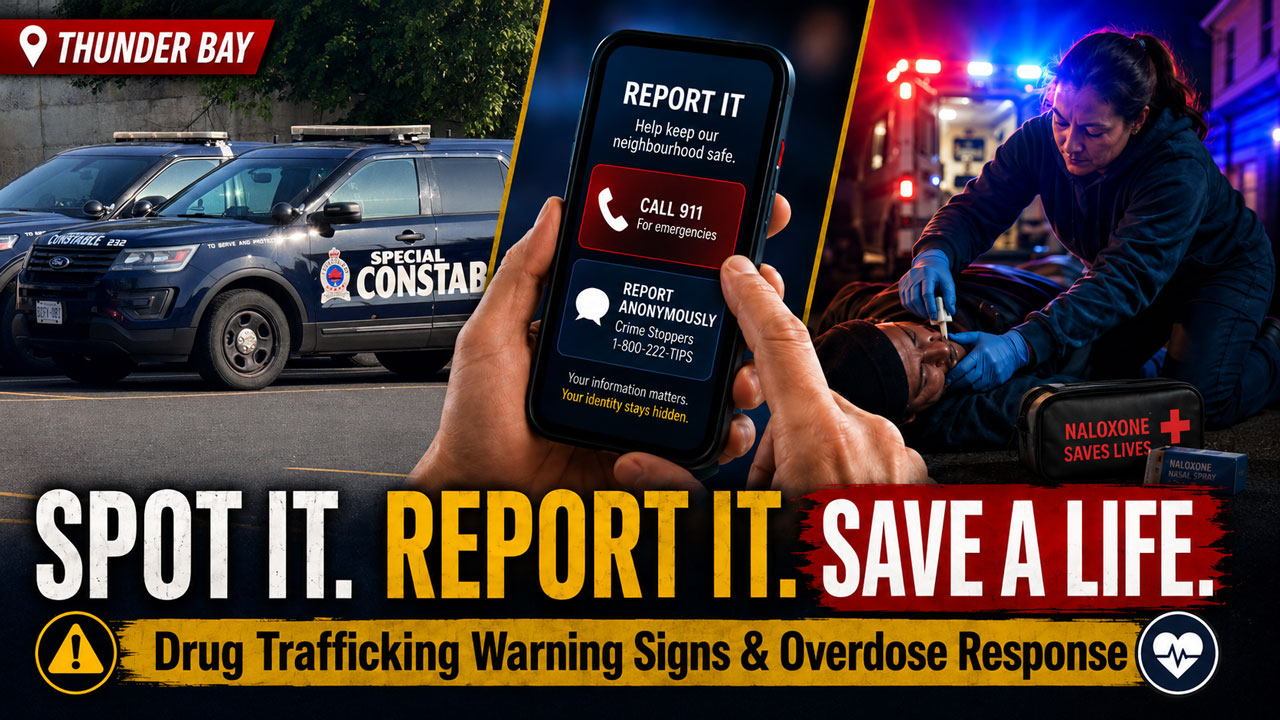
How to spot possible neighbourhood drug trafficking, report it safely and respond to an overdose
THUNDER BAY — Drug trafficking does not have a particular face, age, background or type of address.
What neighbours can recognize are patterns: unusually brief visits, vehicles arriving repeatedly at all hours, hand-to-hand exchanges, escalating disturbances or activity that suddenly changes the character of a home or apartment.
Across Thunder Bay and Northwestern Ontario the dealers of death have made their presence known across the region. In some cases drug dealers have made it into Northern reserves too.
Lots of people suffer due to the problems that drug dealers present as they feed the issues with addiction.
People have a choice, they can complain but do nothing, or they can be neighbourhood safety “Owls” watching their neighbourhood and documenting evidence that is shared with police.
Remember, one sign proves nothing. A repeated combination of suspicious behaviours may be worth reporting.
Know the Warning Signs — Without Jumping to Conclusions
Thunder Bay Police have previously encouraged residents to report unusual activity, including increased traffic involving unfamiliar people and repeated disturbances throughout the day or night. Police say information from community members can contribute to an ongoing investigation.
Possible indicators of trafficking may include:
- A steady stream of visitors who remain for only a few minutes
- Vehicles stopping briefly before leaving or circling the block
- Exchanges through vehicle windows, doorways or side entrances
- Frequent activity late at night or early in the morning
- People apparently watching the street before entering
- Repeated arguments, threats, assaults or property damage
- Discarded packaging, needles or other drug equipment
- A sudden increase in thefts, trespassing or disturbances nearby
These are warning signs, not proof. Shift workers, home businesses, caregivers, large families and socially active households can generate frequent traffic for entirely lawful reasons.
Do not base suspicion on someone’s race, clothing, income, housing status, licence plate origin or whether they appear to be living with an addiction.
Report behaviour — not stereotypes.
Do Not Confront, Follow or Investigate
Suspected drug trafficking can involve weapons, violence, debts and unpredictable behaviour.
Do not approach a suspected dealer. Do not follow vehicles, enter private property, search garbage, peer through windows or attempt to buy drugs as a way of gathering evidence.
Do not post names, addresses or photographs on neighbourhood social-media pages. A public accusation can identify the person making the complaint, compromise a police investigation and wrongly target innocent residents.
From a safe location, write down factual details such as:
- Dates and times
- Vehicle descriptions and licence plates
- The number of people involved
- Descriptions of observed exchanges
- Threats, weapons or violence
- The direction a vehicle travelled
- Whether children or vulnerable people may be at risk
Preserve any relevant security-camera footage lawfully captured from your property. Do not place yourself in danger to obtain a better photograph or video.
<H3>Call the Right Number</H3>
Call 911 when there is an immediate threat to life or safety, including violence, a visible weapon, a break-in in progress, dangerous driving or a suspected overdose.
For non-emergency concerns inside Thunder Bay, contact the Thunder Bay Police Service at 807-684-1200. The service also provides online reporting for eligible non-emergency incidents.
In communities served by the Ontario Provincial Police, call 1-888-310-1122 for a non-emergency report.
Information can be provided anonymously through Crime Stoppers at 1-800-222-TIPS (8477). Crime Stoppers advises that tipsters do not have to provide their names.
Give police facts rather than conclusions. Instead of saying, “My neighbour is a dealer,” explain exactly what you observed and when it happened.
What Happens When Everyone Looks Away?
Doing nothing can allow harmful activity to become established.
A trafficking location may attract robbery, intimidation, violence and exploitation. Organized criminal activity can also damage residents’ sense of safety and disrupt family and neighbourhood life.
Across many parts of Thunder Bay there are many areas where theft of things from backyards has been constant. Barbecues, propane tanks, bikes, lawn furniture have all been targets often by addicts looking for things to sell to pay for their next fix.
For Thunder Bay and Northwestern Ontario, the consequences can move quickly beyond one address.
Toxic drugs can contribute to overdoses, emergency calls and deaths.
Discarded needles may create hazards in yards, parks and common areas. Children, seniors and vulnerable tenants may be exposed to people and situations they cannot safely manage.
Silence can also leave police without the small details needed to identify a pattern.
One report may not lead to an immediate arrest, but several accurate reports over time can help investigators understand who is arriving, when activity occurs and whether separate incidents are connected.
Reporting does not mean deciding that someone is guilty. It means giving trained investigators information they can assess.
Doing nothing simply ensures that the status quo continues and things can get worse.
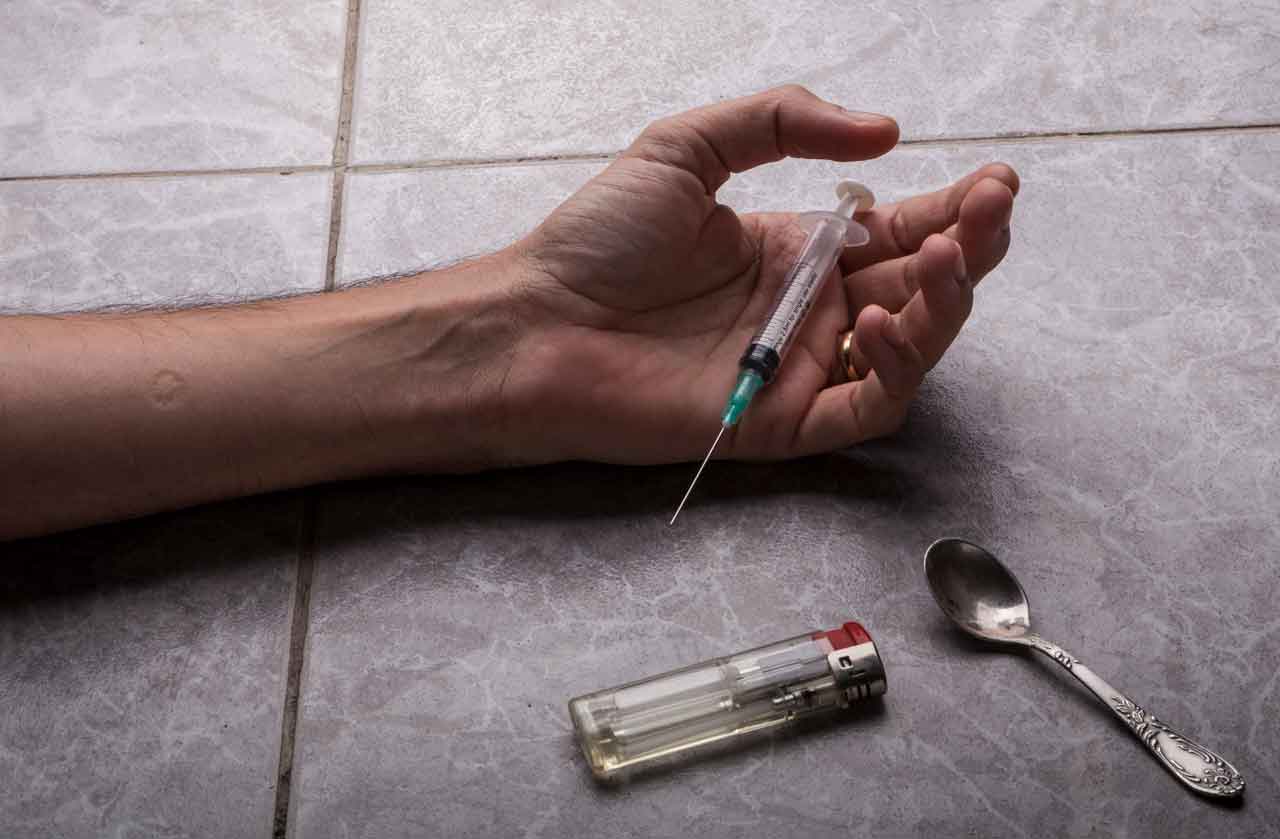
If Someone Is Overdosing, Act Immediately
An opioid overdose can include slow or absent breathing, unconsciousness, an inability to speak, blue or grey lips or fingernails, and loud snoring or gurgling sounds.
Call 911, administer naloxone when available, follow the dispatcher’s instructions and remain with the person until emergency responders arrive.
Naloxone can temporarily reverse an opioid overdose and is available free through participating community programs and pharmacies. The Thunder Bay District Health Unit provides naloxone kits and training through its harm-reduction services.
Canada’s Good Samaritan Drug Overdose Act provides some protection from simple drug-possession charges for people who seek emergency help during an overdose. It does not protect against serious offences such as trafficking or outstanding warrants, but fear of police involvement should never prevent someone from calling for lifesaving assistance.
Found a Needle? Keep Children and Pets Away
Do not put a discarded needle in household garbage, recycling or a toilet. Do not recap it or break off the tip.
Residents who are not comfortable disposing of a needle can contact the Thunder Bay District Health Unit’s Superior Points program at 807-621-7861 to request pickup. The health unit also provides instructions and information about approved disposal locations.
Be Vigilant — Not a Vigilante
Safe neighbourhoods depend on residents paying attention. They also depend on fairness, restraint and accurate information.
Notice the pattern. Record what you can see safely. Report the facts. Then allow police and public-health professionals to do their jobs.
Looking away carries risks. Taking the law into your own hands creates new ones.