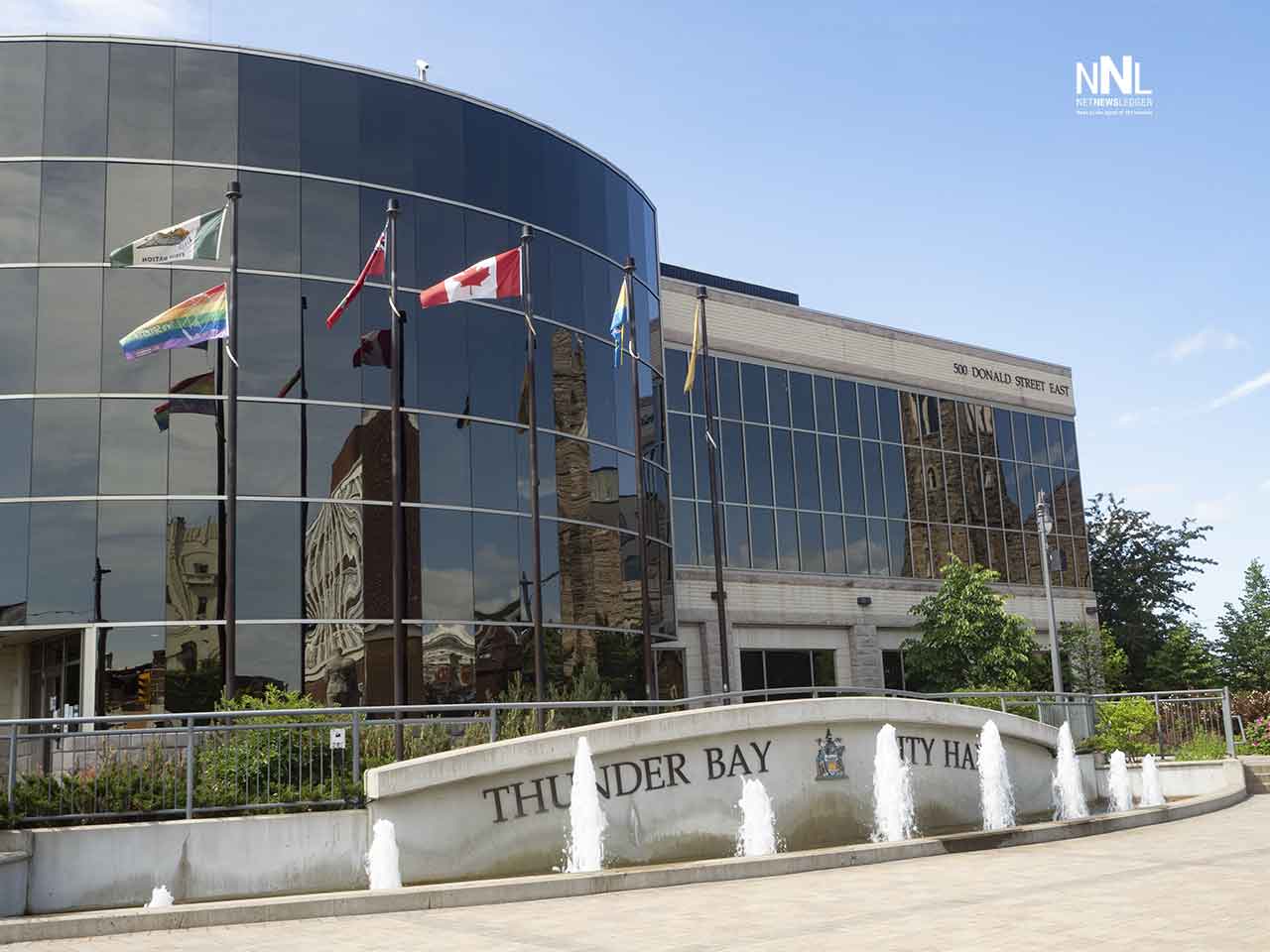
Skills Thunder Bay’s next council needs to govern budgets, housing, safety and regional growth
THUNDER BAY – OPINION – Voters in Thunder Bay will elect the next municipal council on Oct. 26, 2026.
There are going to be a number of new faces sitting around the Council chamber after this election as a number of Councillors are retiring. This means that change is very likely.
Now, without going into individuals, but rather looking at the tasks that our city’s new Mayor and Councillors will face in dealing with the issues facing our city, it comes down to what skillsets are needed around the Council Chamber?
While Ontario law establishes basic eligibility requirements, it does not require candidates to hold a university degree, professional designation or previous political office.
Candidates for municipal office must be Canadian citizens, at least 18 years old, connected to the municipality through residency or property qualifications, and not legally disqualified from holding office.
Those rules determine who may run. They do not tell voters who is prepared to govern.
The more useful question is not which personalities should occupy council chambers, but whether the council elected as a whole will possess the financial, legal, planning, relationship-building and crisis-management skills needed to guide a regional city facing infrastructure pressures, housing shortages, social emergencies and economic change.
The job is governance, not individual performance
Ontario describes councillors as representatives, policy-makers and stewards. Council sets priorities, adopts by-laws, approves budgets and holds the municipal organization accountable. City employees and administrators carry out those decisions and manage daily operations.
That distinction matters. A capable councillor does not need to know how to operate every city department.
However a councillor does need to understand how to question a recommendation, assess evidence, weigh financial and legal risks, listen to competing views and make a decision that can withstand public scrutiny.
Thunder Bay also does not need every council member to have the same background.
A council composed entirely of accountants would have gaps, just as one made up entirely of business owners, lawyers, social-service workers or neighbourhood advocates would.
The strongest council would combine complementary experience while expecting every member to meet common standards of preparation, ethics and judgment.
Financial literacy and long-term discipline
Financial competence should be among the highest priorities.
Councillors vote on operating and capital budgets involving roads, transit, emergency services, water systems, recreation facilities, waste management and other essential services.
They must understand taxation, reserves, debt, inflation, grants, procurement and the difference between one-time funding and permanent operating costs.
Thunder Bay’s municipal assets have an estimated replacement value of $4.9 billion. The city’s 2026-27 capital budget identified an annual infrastructure funding gap of about $30.6 million — the difference between what is required to maintain current service levels and the funding available.
The city’s long-range financial plan also projects tax-supported debt rising sharply and reaching a peak in 2027 as major projects are completed. That does not necessarily make borrowing inappropriate. Municipal debt can distribute the cost of a long-lived asset among the residents who will use it. The essential skill is knowing when borrowing is sustainable, when reserves should be protected and when a project’s future operating and maintenance costs outweigh its initial appeal.
Useful backgrounds could include accounting, finance, construction, engineering, public administration, business ownership or non-profit management. Equally valuable would be candidates who can demonstrate that they have managed limited resources, questioned optimistic estimates and made difficult choices without hiding the consequences.
Housing, land-use and project-delivery knowledge
Housing decisions are not simply about announcing a target. Council influences zoning, servicing, building approvals, density, transportation, neighbourhood design and the use of municipal land.
Thunder Bay’s Housing Accelerator Fund program is intended to help the city reach 1,691 new permitted homes by February 2027. Delivering housing at that scale requires more than approving individual developments. It requires co-ordination among planning, roads, water, transit, developers, non-profit housing organizations and other orders of government.
The next council would benefit from members who understand planning legislation, construction timelines, infrastructure capacity and the economics of rental and affordable housing. Councillors should be able to distinguish between legitimate planning concerns and opposition based mainly on discomfort with change.
They must also understand that approving new subdivisions, facilities or roads creates decades of future maintenance obligations. Growth that expands the tax base can strengthen municipal finances, but poorly planned growth can leave existing taxpayers responsible for expensive new infrastructure.
Project-management experience would help councillors evaluate schedules, contingencies, contract changes and cost overruns. That experience could come from construction, information technology, health care, community development, major events or other fields where projects must be delivered against measurable deadlines.
Reconciliation and Indigenous partnership
Indigenous relations cannot be treated as a ceremonial portfolio assigned to one council member. Often over the years, many times Indigenous people. organisations and political associations have felt that the city is not doing everything it could to foster better relationships.
Thunder Bay’s strategic plan places truth and reconciliation alongside safety, growth and sustainability as a central municipal priority. The city has also committed to strengthening relationships with Indigenous communities, organizations and residents.
Effective council members should understand treaty relationships, the history and continuing effects of colonial policies, urban Indigenous realities and appropriate engagement protocols. More importantly, they must know how to build durable working relationships with Fort William First Nation, Nishnawbe Aski Nation, Métis organizations, Indigenous service providers and First Nations throughout Northwestern Ontario.
This requires listening, consistency and an understanding that consultation is not the same as partnership. Candidates should be able to point to relationships they have built, training they have undertaken or collaborative work they have completed.
Indigenous knowledge and lived experience on council would be valuable, but responsibility for reconciliation must be shared across the full council rather than placed solely on Indigenous members.
Understanding public safety and social systems
Municipal debates about policing, homelessness, addictions, mental health and downtown safety can quickly become polarized. Council needs members capable of examining how these systems interact.
In February 2026, Thunder Bay declared homelessness a humanitarian crisis, recognizing that existing systems were unable to meet the level of need and that a co-ordinated response involving Indigenous partners, the District of Thunder Bay Social Services Administration Board, community organizations and senior governments was required.
No municipal council can independently solve homelessness, addictions or shortages in health care. Council can, however, influence shelter responses, land use, supportive housing, emergency services, transit, municipal enforcement, public spaces and advocacy for provincial and federal resources.
The best skill set would combine compassion with operational realism. Councillors should understand evidence-based prevention, policing governance, emergency response and the limits of municipal authority. They must be able to ask whether a program is achieving measurable results while recognizing that moving a problem from one neighbourhood to another is not the same as solving it.
Experience in health care, social services, policing oversight, emergency services, housing or community outreach would be useful. So would lived experience with poverty, disability, mental-health systems or insecure housing, provided candidates can translate that experience into policy decisions affecting the whole community.
Emergency management and climate readiness
Thunder Bay is both a municipality with its own climate risks and an emergency-service centre for Northwestern Ontario.
During the 2026 wildfire emergency, the city activated its Emergency Operations Centre, managed smoke-related service disruptions and helped support evacuees arriving from surrounding communities. The experience demonstrated how regional emergencies can rapidly affect local accommodations, transportation, recreation programs, public communications and city staffing.
Future councils will face decisions involving wildfire smoke, flooding, severe storms, shoreline conditions, winter weather and infrastructure resilience. Climate readiness should therefore be understood as an asset-management and public-safety responsibility, not only an environmental issue.
Council would benefit from members familiar with emergency planning, logistics, environmental science, utilities, communications or public health. Every councillor should understand incident command, continuity of essential services and the importance of communicating verified information during rapidly changing events.
Regional economic and intergovernmental skills
Thunder Bay’s economy is tied to decisions made well beyond city limits. Mining, critical minerals, forestry, manufacturing, transportation, tourism, immigration and health-care recruitment all involve provincial, federal, Indigenous and private-sector partners.
The Thunder Bay Community Economic Development Commission’s plan through 2030 emphasizes mining and critical minerals, forestry and the bioeconomy, logistics, manufacturing, workforce development and economic reconciliation.
Councillors therefore need the ability to assess economic proposals without becoming either automatic boosters or automatic opponents. They should ask how many permanent jobs will be created, what infrastructure will be required, whether local and Indigenous businesses can participate and who assumes the financial and environmental risks.
Negotiating ability is especially important. Thunder Bay often carries regional responsibilities that are not fully reflected in the municipal tax base, including emergency response, health services, transportation connections and support for people travelling from remote communities.
Council members must be able to present a coherent regional case to Queen’s Park and Ottawa. That requires preparation, coalition-building and sustained advocacy rather than occasional political statements.
Ethics, evidence and respect for institutional boundaries
Integrity is not an optional personality trait. It is a governing qualification.
Councillors must understand conflict-of-interest rules, confidentiality, open-meeting requirements, procurement fairness and the municipality’s code of conduct. Ontario identifies accountability and transparency as explicit council responsibilities because public trust depends on procedures being understandable and decisions being made openly.
Candidates should be comfortable disclosing potential conflicts and explaining how they would separate personal, professional or organizational interests from their public duties.
They should also respect the boundary between council and administration. Asking staff difficult questions is part of the job. Attempting to direct individual employees, interfere in operational decisions or publicly prejudge confidential matters is not effective oversight.
Evidence-based decision-making does not mean councillors must always follow staff recommendations. It means they should explain why they accept or reject a recommendation using facts, legal advice, financial analysis and clearly stated community priorities.
Communication, listening and collective decision-making
Council is a deliberative body. No individual councillor can implement a platform without obtaining support from colleagues.
That makes coalition-building, negotiation and respectful disagreement essential qualifications. The ability to deliver a forceful speech is less important than the ability to amend a proposal, find common ground and produce a workable majority.
Councillors must also communicate with residents who may be frustrated, frightened or angry. Strong constituency service involves listening, explaining which order of government is responsible, referring residents to the correct department and following up without promising outcomes that council cannot lawfully deliver.
Candidates should demonstrate that they can change their position when evidence changes. Consistency is valuable, but refusing to reconsider a weak decision is not leadership.
A council should reflect more than professional credentials
Professional expertise matters, but it should not become a barrier preventing working people, young adults, caregivers, renters or people from under-represented communities from seeking office.
A council needs knowledge of payrolls and balance sheets, but it also needs knowledge of transit, child care, shift work, disability access, neighbourhood conditions and the practical effects of municipal fees and property taxes.
The goal should be diversity of competence as well as diversity of identity, geography, age and lived experience.
Training can help a new councillor learn municipal law or budgeting. It is harder to teach curiosity, ethical judgment, willingness to prepare and respect for people whose circumstances differ from one’s own.
What voters should ask candidates
Rather than judging candidates primarily through name recognition, slogans or social-media performance, voters can ask for evidence of readiness.
Can the candidate explain the difference between council’s role and staff’s role? Can the candidate identify how a major proposal would be funded, operated and maintained? Has the candidate worked successfully with people holding opposing views? Does the candidate understand Indigenous partnership as an ongoing responsibility? Can the candidate identify a past decision they reconsidered after receiving better information?
Most importantly, can the candidate explain not only what should be done, but what it would cost, which government has authority and how success would be measured?
Thunder Bay does not need a council of identical experts. It needs a governing team with enough combined knowledge to recognize risk, enough humility to seek advice and enough discipline to make decisions that will remain affordable and defensible long after the election signs are gone.