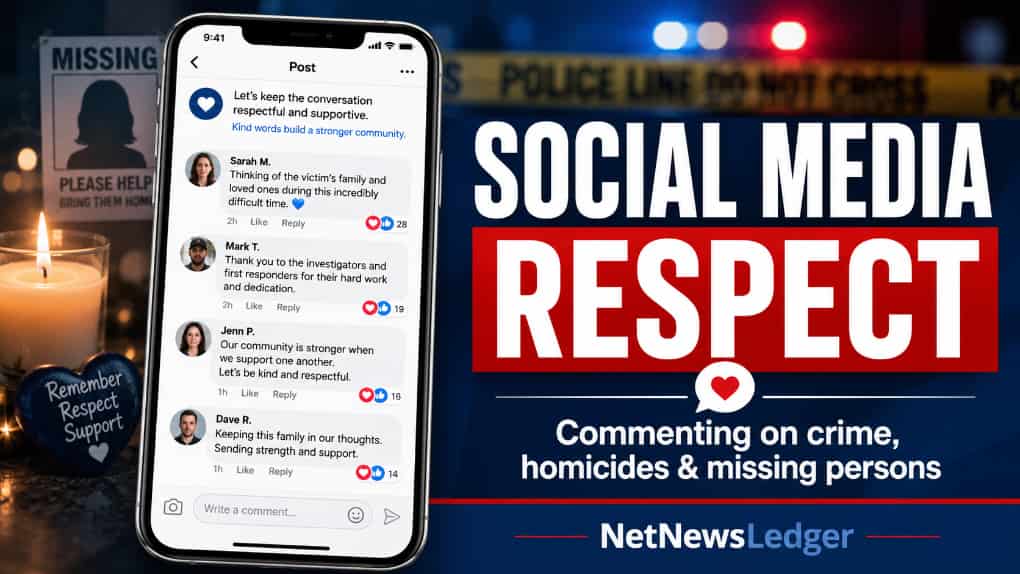
Think Before You Post: How to Be Respectful on Social Media During Sensitive News Events
THUNDER BAY — Social media can help spread urgent information during missing-person searches, crime investigations and public safety alerts. It can also cause real harm when people post rumours, accusations, graphic content or cruel comments before facts are known.
For Thunder Bay and Northwestern Ontario, where communities are closely connected and many families have personal ties across the region, respectful online behaviour is not just about manners. It can affect victims, families, police investigations, court cases and community trust.
Respect Starts With Remembering There Are Real People Behind the Story
A homicide, missing-person report, sudden death, police search or court case is not entertainment. It involves families, friends, co-workers, neighbours, First Nations, schools and communities who may be reading comments in real time while dealing with fear, grief or uncertainty.
Before posting, ask one simple question: would this comment help if the family saw it?
If the answer is no, do not post it.
What to Avoid Posting
Avoid speculating about what happened, who is responsible, where someone may be, or whether a person was involved in drugs, gangs, violence or other criminal activity.
Avoid blaming victims or families. Comments such as “they should have known better,” “what were they doing there?” or “that area is always trouble” add harm and rarely add facts.
Avoid posting graphic images, videos, body locations, private messages, addresses, vehicle plates or unconfirmed names.
Avoid naming suspects unless police, courts or credible news sources have already confirmed the information. While there are those claiming that “Fake News” isn’t telling you, the reality is humanity matters in many cases.
In Canadian law, people charged with offences are presumed innocent unless proven guilty in court.
Avoid racist, anti-Indigenous, sexist, homophobic or dehumanizing language. These comments can deepen trauma, especially in cases involving Indigenous people, women, youth, newcomers, unhoused people or people living with addictions.
Why Rumours Can Hurt Investigations
Unverified posts can send people in the wrong direction, spread fear, damage reputations and interfere with police work. In a missing-person case, a false sighting can pull attention away from more useful information. In a homicide or serious crime case, public speculation can affect witnesses, families and future court proceedings.
If you have information, do not post it publicly first. Report it to police.
For emergencies or crimes in progress, call 911. For non-emergency reports in Thunder Bay, Thunder Bay Police Service lists 807-684-1200 as the non-emergency number.
Anonymous tips can be made through Crime Stoppers at 1-800-222-8477.
Missing-Person Posts: Share Carefully and Update Quickly
Missing-person alerts can move quickly online, and sharing official police posts can help. The best practice is to share the original police or family-approved post, not a rewritten rumour.
Do not add theories. Do not suggest the person is “hiding,” “partying,” “in trouble” or “already dead.” Those comments can be deeply harmful and may be wrong.
If the person is found, update or remove posts when appropriate, especially when the case involves a youth, medical privacy, domestic violence, mental health or family safety concerns.
Crime Cases: Protect Fairness and the Courts
A police charge is not a conviction. Comment sections often move faster than the justice system, but court cases depend on evidence, due process and the presumption of innocence.
Do not pressure witnesses online. Do not threaten accused people or their families. Do not publish information that could violate a publication ban.
The Youth Criminal Justice Act restricts publication of information that would identify a young person dealt with under the Act, and also protects the identity of children or young people who are victims or witnesses in certain youth justice matters. Violating those rules can create legal consequences.
Online Comments Can Become Police Evidence
A comment made in anger can have consequences. Under the Criminal Code, uttering threats includes knowingly conveying a threat to cause death or bodily harm, damage property or harm an animal belonging to someone. Criminal harassment can include repeated communication or threatening conduct that causes a person to reasonably fear for their safety.
Sharing intimate images without consent is also a Criminal Code offence. The law applies when someone knowingly publishes, distributes, transmits, makes available or advertises an intimate image while knowing the person depicted did not consent, or being reckless about consent.
This article is not legal advice.
The point is practical: if a post threatens, harasses, exposes private material or interferes with a case, it can move from “just a comment” to something police may review.
How to Comment Respectfully
Use language that centres the person, not the crime.
Instead of posting, “What happened?” or “I heard this was gang-related,” write, “Thinking of the family and hoping accurate information comes forward.”
Instead of accusing someone by name, write, “Anyone with information should contact police.”
Instead of sharing a rumour, share the official police contact information.
In missing-person cases, useful comments include the date, time and location of an official alert, a police file number if provided, and a reminder to check dashcam, doorbell or business video.
Special Care for Indigenous Families and Communities
Many Indigenous families in Northwestern Ontario have lived through generations of inadequate responses to missing-person cases, violence and systemic racism. Comment sections can become places where that harm is repeated.
Respectful posting means avoiding stereotypes, listening to families, sharing official information, and recognizing that every missing or murdered person is loved and connected to a wider community.
In Thunder Bay, where many people travel from First Nations for school, health care, court, employment and family reasons, online comments can quickly reach home communities across the North.
Before You Hit Post
Pause. Check the source. Ask whether the information is verified. Ask whether the family would be harmed by reading it. Ask whether police should receive the information privately instead.
Good social media use can help find missing people, support families, identify witnesses and correct misinformation. Bad social media use can spread fear, deepen grief and damage investigations.
In sensitive cases, the safest rule is simple: share facts, report tips, protect dignity and leave room for the truth.
Thunder Bay, social media, missing persons, homicide, crime news, public safety, Thunder Bay Police, Crime Stoppers, Indigenous communities, online conduct, NetNewsLedger