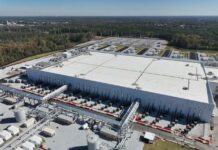
Harvard-led researchers say the facilities’ electricity demand was linked to 25.7 million tonnes of carbon dioxide, but could not isolate AI’s share
THUNDER BAY ON. – TECH NEWS – A new study estimates that 403 of the largest U.S. data centres used between 68 and 99 terawatt-hours of electricity over one year, underscoring the energy demands behind cloud computing and artificial intelligence.
The Harvard-led research, published Monday in Nature Sustainability, examined facilities between May 2024 and April 2025. Researchers estimated that electricity consumption by the centres was associated with approximately 25.7 million tonnes of carbon dioxide during that period.
The figures are estimates, not direct meter readings for every site. They also describe a historical period and cannot be treated as a measurement of emissions today.
How the researchers made the estimate
The team used satellite imagery to identify hyperscale data centres, then estimated electricity use under a range of operating scenarios. It used U.S. Environmental Protection Agency data on regional electricity generation to estimate associated carbon emissions.
Hyperscale centres are very large facilities that support services such as cloud computing, AI model training and online applications. Harvard said about 54 per cent of the electricity attributed to the studied centres came from fossil fuels, chiefly natural gas and coal.
The researchers found substantial regional differences. Four states, Virginia, Oregon, Ohio and Iowa, accounted for more than half of the estimated electricity use in the facilities studied.
An AI question the data cannot yet answer
The study could not distinguish electricity used for AI from power used for other computing at each facility. Nor did it include every U.S. hyperscale centre or directly measure health effects.
Those limits matter: the findings show the scale and estimated carbon footprint of a group of large data centres, not the precise footprint of AI alone. The researchers say demand may have risen since their study period as facilities expanded, but that is not a new measured total.
For Canadian communities considering data-centre projects, the research highlights questions worth asking before construction: how much power a facility expects to use, when it will draw that power, what sources supply the grid and who pays for any upgrades. The U.S. emissions estimates cannot simply be applied to Canada, where electricity mixes differ by province.
Sources: Harvard T.H. Chan School of Public Health, Nature Sustainability study