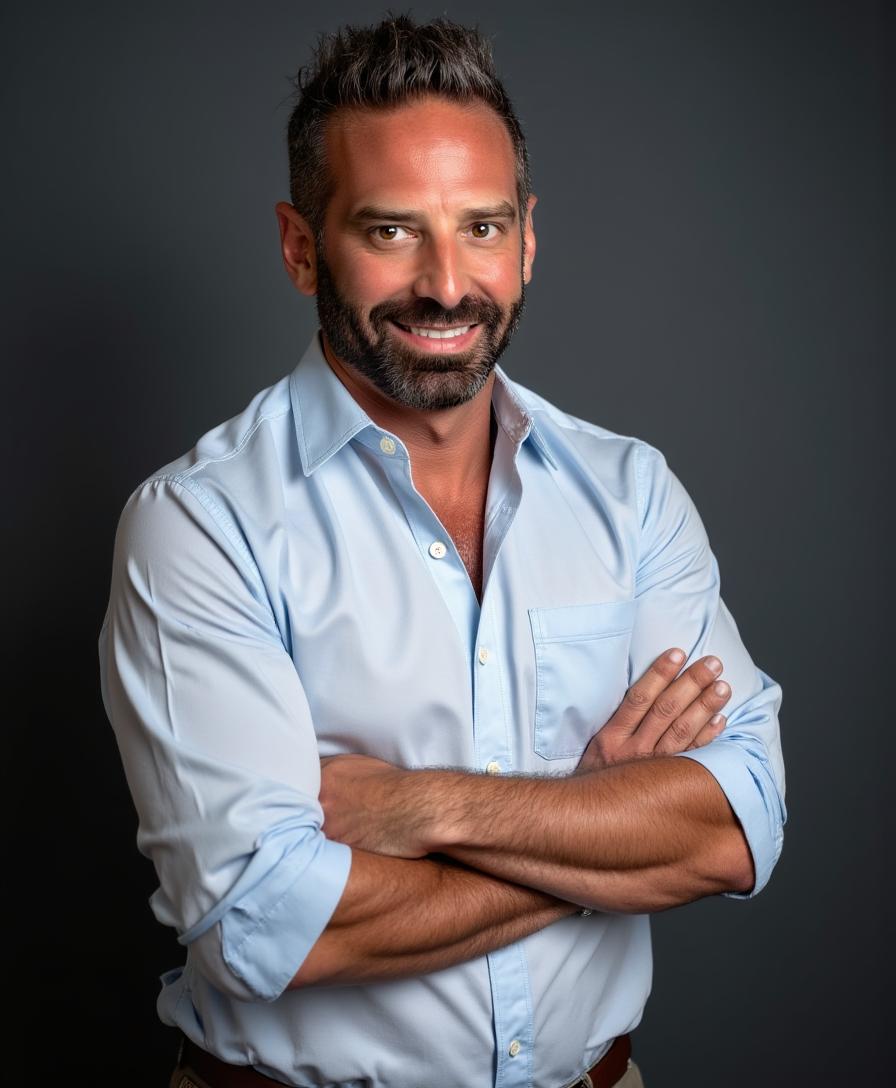
BRICK, N.J., November 19, 2026 — An internal candidate walks into an interview for a role they have effectively been performing. They know the function, the stakeholders, and the problems better than anyone outside the organization could. According to Brian Baldari, Pharm.D., MBA, founder of ResilExec® Coaching, that advantage is frequently why they lose.
“The external candidate is evaluated against what they say,” Baldari says. “The internal candidate is evaluated against what everyone already thinks. Those are completely different standards, and the second one is much harder to win.”
Baldari spent 24 years inside pharmaceutical, healthcare, and enterprise leadership organizations. He held five successive Director-level roles, advanced from Director to Vice President and Senior General Manager in 18 months, and participated in sixteen brand launches. He now works with Associate Directors, Directors, Senior Directors, Executive Directors, and Vice Presidents inside pharmaceutical, healthcare, and enterprise IT organizations.
A fixed picture against a blank page
In Baldari’s assessment, the asymmetry is structural rather than unfair. Everyone in the room has watched the internal candidate for years. They hold a settled view, assembled from hundreds of small observations, most of which have nothing to do with the role being filled.
The external candidate arrives with no picture at all, which means they are permitted to supply one. They describe themselves at the level of the open role, and nothing in the room’s memory contradicts it.
“You are not competing on capability,” Baldari says. “You are competing against a description of yourself that was written before the role existed, by people who were not thinking about this job when they wrote it.”
Why forty-five minutes does not move it
Baldari argues that interviews are poorly suited to revising an existing impression. In his observation, a panel that already holds a view tends to use the conversation to confirm it, and the internal candidate supplies the confirmation without meaning to.
He points to three habits that appear almost universally. Internal candidates rely on shared context, answering in shorthand because the panel already knows the background. They reference history rather than describing capability, assuming the record speaks. And they answer at the level of the job they hold, because that is the material they have.
Each of those, in his view, reinforces the existing picture at precisely the moment it needed to change.
What changes the outcome
Baldari’s recommendation is to interview as though nobody in the room has met you.
That means stating what everyone already knows out loud, because unsaid is functionally unheard in a formal process. It means describing the work at enterprise scale rather than functional scale, even when the panel watched you do it. And it means answering as the person who would hold the role rather than the person who currently supports it.
“Every instinct you have says do not explain things these people already know,” Baldari says. “That instinct is correct socially and wrong in that room. The panel is not comparing memory to memory. They are comparing your answer to the external candidate’s answer, and the external candidate explained everything.”
The variable underneath it
Baldari’s Promotion Math™ framework treats advancement as a function of five variables: Performance, Visibility, Sponsorship, Narrative, and Timing. In his assessment the internal interview is where Narrative becomes visible, usually too late to do anything about it.
If the description of a leader has not shifted from functional to enterprise in the eighteen months before a role opens, he argues, the interview is not where that shift happens. It is where the leader discovers it never did.
“Performance gets you noticed. Positioning gets you promoted,” Baldari says. “An interview is a very short window in which to discover which one you were relying on.”
About Brian Baldari
Brian Baldari, Pharm.D., MBA, based in Brick, New Jersey, is the founder of ResilExec® Coaching and Resilient Performance Group LLC. He spent 24 years inside pharmaceutical, healthcare, and enterprise leadership organizations, held five successive Director-level roles, and advanced from Director to Vice President and Senior General Manager in 18 months. He participated in sixteen brand launches across rare and chronic disease categories, led an organization of more than 250 people, and has mentored more than 50 leaders across three continents. Through ResilExec Coaching, he helps Associate Directors, Directors, Senior Directors, Executive Directors, and Vice Presidents accelerate career growth through personalized executive coaching, leadership development, and strategic career positioning.
Media Contact
Resilient Performance Group LLC
admin@resilexec.com
https://resilexec.com