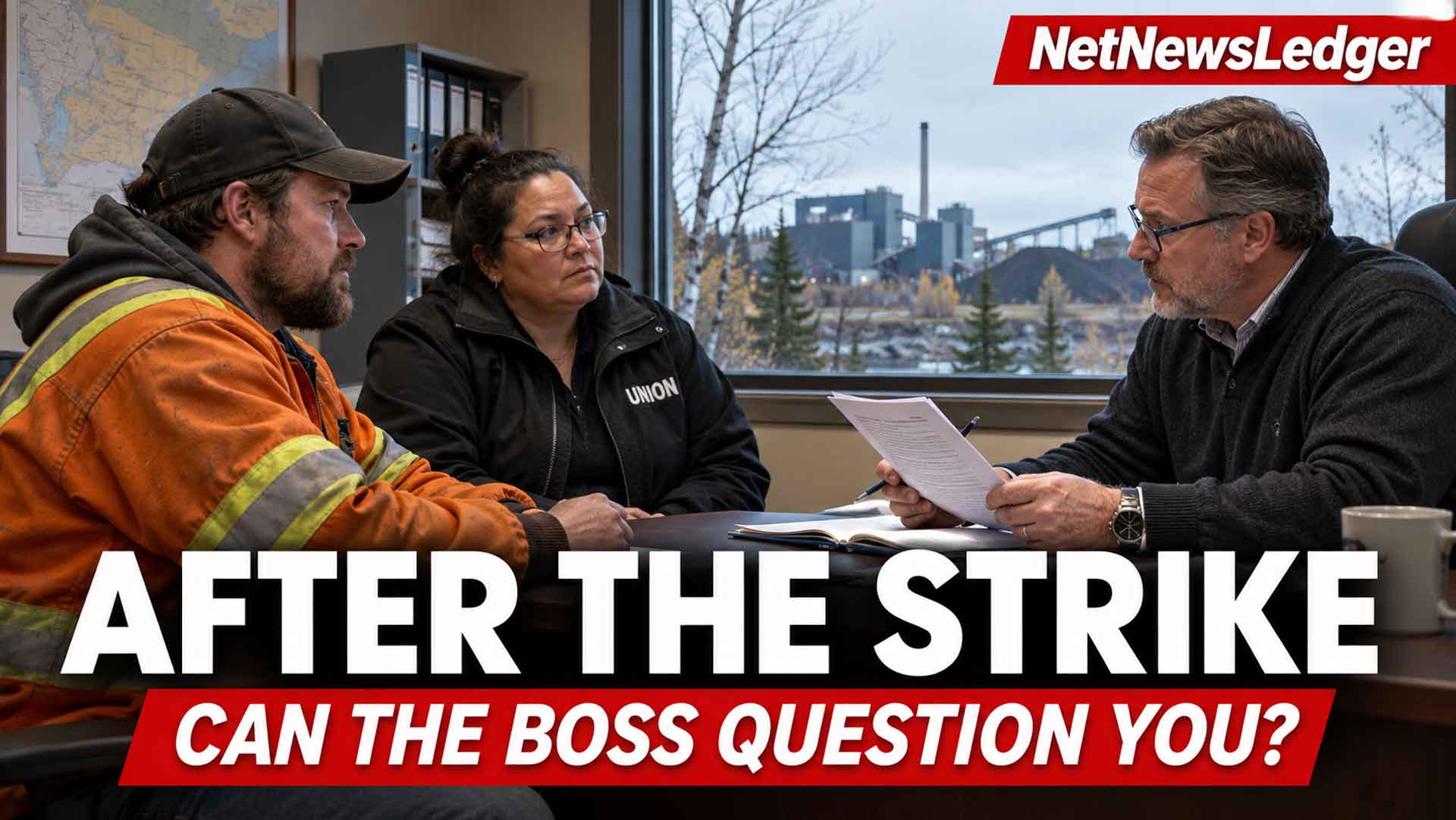
There is a need for management and labour to seek to put the strike behind them
THUNDER BAY — Business – A company and its unionized workers have just completed a contract after a month long strike.
There is likely to be some friction between management and labour following a strike. Often in today’s environment it can be tempting for the employer to want to deal with social media comments, things that were said during the dispute, and seek some form of retribution on workers.
Probably not the best plan as it will simply make things seem worse instead of better.
What happens when Management Seems Determined to Intimidate the Workers?
Once things start to settle down after a labour dispute, for most that is a time to start moving forward again.
Under Ontario Labour legislation, an employer can investigate alleged misconduct during a strike, but a return-to-work interview cannot be used to punish or intimidate employees for exercising their rights under Ontario law.
For unionized workers in Thunder Bay and across Northwestern Ontario, the answer depends on what management is investigating, how it conducts the interviews and what the collective agreement and any return-to-work settlement say.
An employer may have a legitimate reason to ask about a specific incident, such as an allegation of threats or property damage.
But calling workers into an office is not, by itself, proof of wrongdoing, and participation in a lawful strike is not itself misconduct.
Ontario’s Labour Relations Act, 1995 protects employees’ rights to participate in union activities and prohibits employer interference, intimidation and discrimination connected to the exercise of rights under the act.
Questioning that pressures workers to reveal union activity, discourages participation or threatens reprisals may raise an unfair labour practice concern.
Whether it crosses that line depends on the circumstances.
Workers can ask for representation
A worker called into a meeting about strike conduct can ask what the meeting concerns, whether discipline is being considered and whether a union representative can attend. The worker should contact a steward or union representative promptly and ask to postpone the meeting until representation is arranged.
The right to representation at a particular meeting may depend on the collective agreement and the circumstances. Some agreements expressly cover investigations that could lead to discipline; others use different wording. Workers should not assume that every meeting automatically carries the same representation rights.
A worker should also be cautious about refusing to attend or answer questions without first getting advice from the union or a lawyer.
The consequences depend on the circumstances and the agreement.
Keeping a factual record of the meeting notice, questions, participants and any proposed discipline can help the union assess what happened. A worker can ask for time to review a written statement or document with a representative before signing it.
Returning to work
A return-to-work agreement may address reinstatement, investigations, discipline or amnesty for strike-related conduct.
The wording matters: an amnesty provision may have exceptions, and an employer cannot assume that an allegation has been proven.
Ontario’s legislation also provides a reinstatement process for employees in a lawful strike who make an unconditional written application to return within six months of the strike’s start, subject to statutory exceptions.
That is a specific legal process, not a blanket statement that everyone automatically loses reinstatement rights after six months. Workers and unions should check the law, their settlement and the facts of the dispute promptly.
If discipline is imposed or an employee believes an interview breached the collective agreement, the union may pursue a grievance. An alleged violation of the Labour Relations Act may also be brought before the Ontario Labour Relations Board. Grievance and complaint deadlines can matter, so workers should seek advice quickly.
The rules described here concern provincially regulated workplaces.
Some Northwestern Ontario employers, including banks and certain rail, telecommunications and interprovincial transportation businesses, fall under federal labour law instead. Jurisdiction for Indigenous organizations depends on the particular operation and should not be assumed.