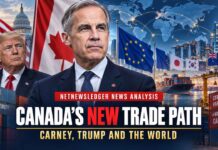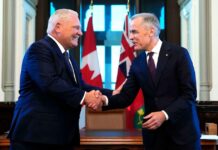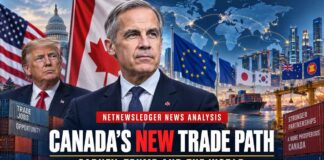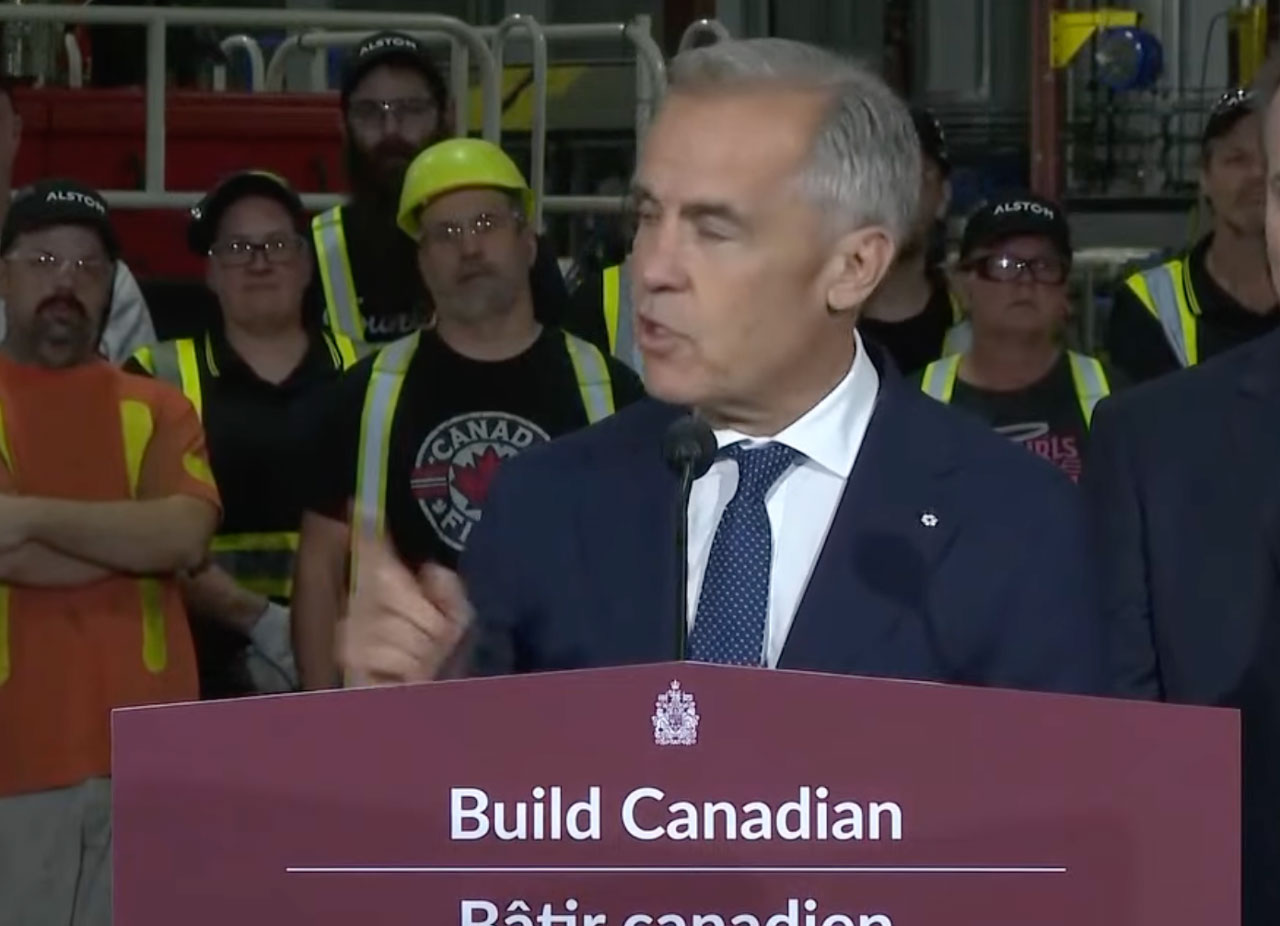
MANILA, Philippines – International News Service — Prime Minister Mark Carney says Canada and the United States are moving closer to a trade agreement, but he cautioned that the two countries have not settled the terms.
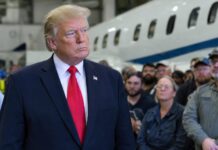
Carney told reporters in Manila that he spoke at length with U.S. President Donald Trump before leaving Canada for a trip to Europe and Asia. He said U.S. Trade Representative Jamieson Greer and White House chief of staff Stephen Miller also joined the call.
The comments are the clearest recent signal that talks have regained momentum after negotiations broke down in August. They are not an agreement, and neither government released a joint statement or draft terms.
Carney said Canada would not accept an arrangement that leaves the domestic auto sector unable to compete. Autos, steel and aluminum have been among the industries hit by U.S. tariffs, while Canada has answered with tariffs of its own.
The dispute matters well beyond the negotiating table. Canada and the United States have tightly linked factories and supply chains, and the U.S. remains Canada’s largest export market. Tariffs can raise costs for businesses on both sides of the border and put investment and jobs at risk.
The Associated Press reported that Washington imposed 50 per cent tariffs on about $20 billion in Canadian goods after the summer talks failed. That figure and any current tariff coverage should be checked again before publication because measures can change quickly.
Carney is also trying to reduce Canada’s reliance on the U.S. market. In Manila, he announced that negotiations had concluded on a trade agreement with the Philippines and were substantially complete with the Association of Southeast Asian Nations. Those agreements still need final legal work, signatures and domestic approval before they can take effect.
The next test in the U.S. file will be whether the two governments produce written terms and identify which tariffs would be removed. Key questions include the future of auto, steel and aluminum duties, Canada’s counter-tariffs and how any bilateral arrangement would fit with the wider review of the Canada-United States-Mexico Agreement.