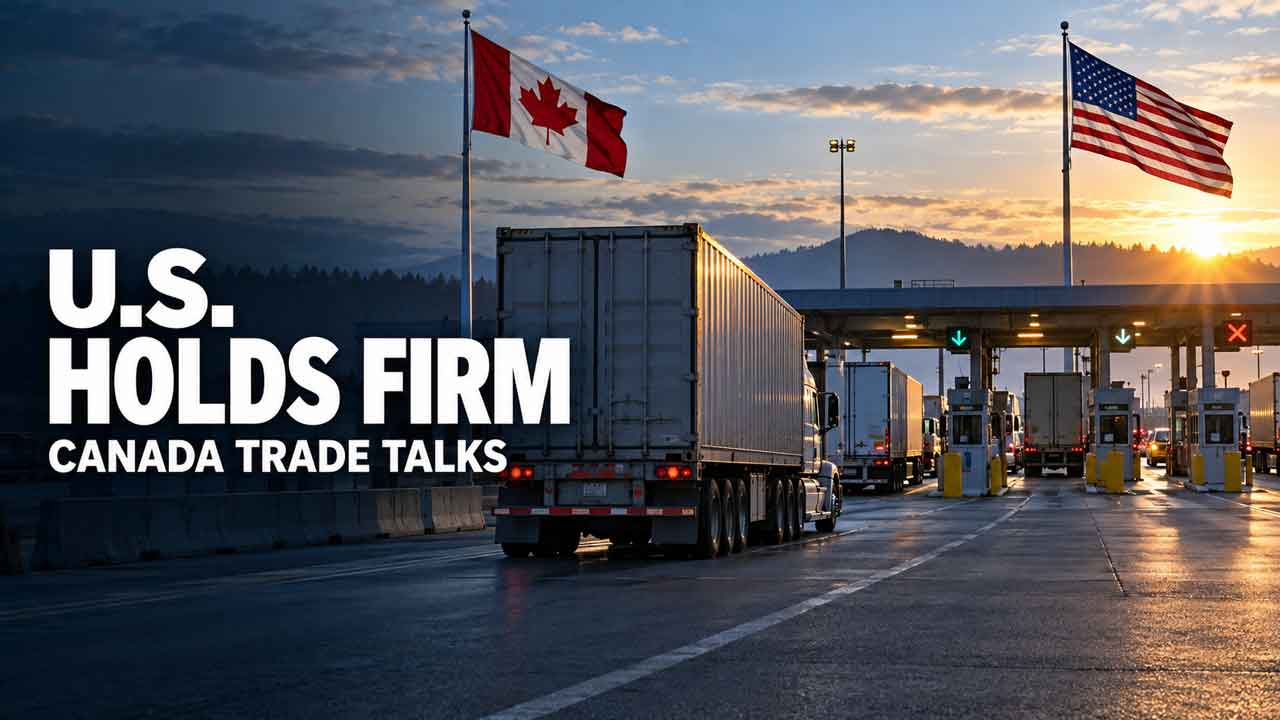
U.S. Trade Representative Jamieson Greer says Washington is holding firm in Canada talks. Existing counter-tariffs and Northwestern Ontario risks explained
Greer says senior-level discussions remain open, but no new U.S. tariff action was announced
OTTAWA/WASHINGTON — U.S. Trade Representative Jamieson Greer said October 8 that Washington is “holding fast” to its position in trade discussions with Canada.
Greer said senior-level contacts between the two countries continue and that the United States is ready to negotiate when Canada is prepared to reach an agreement. He also suggested that political developments in Quebec have added to Ottawa’s focus.
The comments are a negotiating signal, not a new tariff order. No new products, tariff rates, effective date, import ban, exemption, remission order or quota were announced.
No new U.S. tariff measure announced
The United States Trade Representative’s current press-release list includes an October 8 action involving Mexico, but no new Canada-specific tariff announcement. The list also includes a September 8 statement responding to Canada’s retaliation.
That distinction matters. Public comments can influence markets and business planning, but they do not change customs charges unless followed by a formal presidential action, agency notice, customs instruction or other legal measure.
For now, Canadian exporters should not treat Greer’s remarks as proof that another round of tariffs is imminent.
Canada’s counter-tariffs remain in place
Canada’s existing counter-tariff regime includes 15 per cent, 25 per cent and 50 per cent surtaxes on selected U.S.-origin products.
Finance Canada says the measures took effect at 12:01 a.m. on September 8, 2026, and cover about C$27.6 billion in U.S. imports. Targeted sectors include steel, dairy, appliances, agricultural equipment, pulp and paper, and electronics.
The surtaxes apply according to tariff classification and country-of-origin rules. A product sold by an American company is not automatically considered U.S.-origin, and a Canadian product may contain components imported from the United States.
Importers and businesses should confirm the correct Harmonized System classification and origin before changing suppliers or prices.
What this means for Canadian consumers
Greer’s statement does not create an immediate additional charge for Canadian consumers.
The bigger effect is continued uncertainty. Businesses may delay purchases, increase inventory, renegotiate contracts or seek suppliers outside North America. Those decisions can affect prices even before a new tariff is imposed.
Existing Canadian surtaxes may also move through wholesale and retail supply chains. The effect will vary by product, supplier, inventory levels and the ability of companies to absorb some of the added cost.
Consumers could eventually see higher prices or fewer choices if the dispute continues. However, no new consumer price increase can be attributed directly to the October 8 statement.
Northwestern Ontario businesses remain exposed
Businesses in Northwestern Ontario with the greatest potential exposure include:
- Mining companies buying U.S.-origin equipment, parts and industrial supplies;
- Construction firms purchasing machinery, steel and electrical products;
- Transportation companies buying vehicle parts and maintenance equipment;
- Manufacturers relying on cross-border components;
- Retailers importing appliances and other tariff-listed goods.
These are areas of potential risk, not confirmed losses. The impact will depend on the product’s tariff code, country of origin, supplier arrangements and whether a company can pass costs along to customers.
For mining and construction firms, even a small increase in the cost of replacement parts can affect maintenance schedules and project budgets. Delays at the border can also create operational problems when specialized equipment is needed quickly.
Canada describes the relationship as active engagement
Global Affairs Canada says Canada is responding to U.S. tariffs through countermeasures, business support and continued engagement. The department says the two countries are working to address trade issues and promote a stable and predictable relationship.
That language suggests Ottawa is keeping diplomatic channels open while maintaining pressure through its counter-tariffs.
The central challenge is balancing two goals: protecting Canadian interests while avoiding steps that make it harder for Canadian exporters, manufacturers and consumers to operate in an integrated North American market.
A separate softwood lumber panel decision
One important clarification is needed. Although no new broad Canada-U.S. tariff measure was announced in response to Greer’s comments, Global Affairs Canada records a separate October 5 decision involving Canadian softwood lumber.
A NAFTA Chapter 19 panel affirmed the U.S. Department of Commerce’s second remand determination, effectively concluding that particular challenge. It was a trade-panel decision, not a new general tariff order or Canada-U.S. trade agreement.
The decision may matter to affected forestry companies, but it should not be confused with a new tariff announcement covering Canadian goods generally.
What to watch next
The next material developments would include:
- A formal U.S. tariff or import action;
- A new Canadian counter-tariff list;
- A remission order or exemption;
- A customs notice changing how goods are treated;
- A court or trade-panel decision affecting current duties;
- A completed Canada-U.S. agreement.
Until one of those actions occurs, Greer’s comments are best understood as a firm negotiating position.