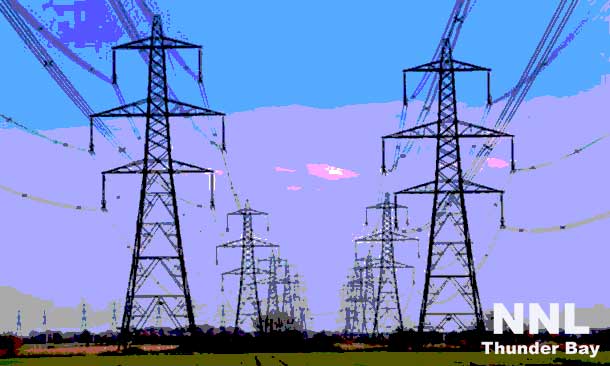
Northwestern Ontario’s relationship with electrical infrastructure is unlike that of most Canadian regions. Thunder Bay sits at the edge of one of the most geographically challenging service territories in the country — a vast expanse of boreal forest, Canadian Shield terrain, and remote First Nations communities connected to the provincial grid by transmission lines that traverse hundreds of kilometers of wilderness before reaching their destinations. When electrical infrastructure fails in this region, the consequences for communities range from significant inconvenience to genuine hardship, particularly in winter months when temperatures drop well below minus thirty and the heating systems, water infrastructure, and essential services that residents and businesses depend on are powered by electricity.
The reliability of this electrical infrastructure depends on many factors: the condition of transmission towers and lines, the health of switching equipment and protection systems, the adequacy of generation capacity, and the reliability of the transformers that step voltage up and down throughout the transmission and distribution network. Transformers are among the most capital-intensive and operationally critical components of the electrical grid — and the chemical product that keeps them functioning reliably over their designed service lives of several decades is transformer oil.
What Transformer Oil Does and Why It Matters
Transformer oil serves two essential functions inside a power transformer. First, it acts as an electrical insulator — preventing the high-voltage current flowing through the transformer’s windings from arcing across to adjacent components or to the transformer tank. Second, it acts as a coolant — absorbing heat generated by the transformer’s electrical losses and carrying it to the cooling fins and radiators on the transformer’s exterior surface, from which it dissipates to the surrounding air.
Both functions are critical to transformer reliability, and both degrade over time as the oil ages in service. Oxidation is the primary mechanism of transformer oil degradation: as the oil is exposed to oxygen, heat, and catalytic metals over years of operation, oxidation byproducts accumulate in the oil, its dielectric strength diminishes, and its ability to cool the transformer adequately may be compromised. The rate of this degradation depends on the operating temperature of the transformer, the oxygen content of the oil, the presence of moisture, and the quality of the oil originally installed.
For transformers serving Northwestern Ontario’s grid — including the large transmission transformers at major substations and the distribution transformers throughout Thunder Bay’s urban network and the surrounding regional distribution system — the management of transformer oil condition is a direct determinant of equipment reliability and service life.
The Special Challenges of Remote Northwestern Ontario
The transformer oil maintenance challenge is particularly acute for electrical infrastructure serving remote communities in Northwestern Ontario. Large power transformers at major transmission substations are expensive, custom-engineered equipment with lead times measured in months to years — if a critical transformer fails, replacement is not a matter of ordering from a supplier and receiving delivery within days. The extended outage that a major transformer failure creates in a remote community, during a period of extreme cold, represents a public safety emergency of a type that is difficult to manage regardless of the quality of emergency response.
This reality gives preventive maintenance of transformer oil a different quality of importance in Northwestern Ontario than it might have in densely connected southern Ontario, where multiple grid pathways provide redundancy and where rapid transformer replacement is more feasible. In remote communities served by single-line radial feeds or small local substations, preventing transformer failure through diligent oil condition monitoring and timely maintenance intervention is not simply good utility practice — it is the difference between reliable service and a community emergency.
Transformer oil condition monitoring typically involves periodic sampling of oil from in-service transformers, with laboratory analysis of multiple parameters: dielectric strength, moisture content, total acid number, dissolved gas analysis, and the concentration of specific oxidation byproducts. Each of these parameters tells a different part of the story about the transformer’s oil condition and, by inference, about the health of the transformer itself. Dissolved gas analysis in particular — which detects trace quantities of gases produced by specific types of electrical fault within the transformer — can provide early warning of developing internal problems that would not be apparent from external inspection.
Transformer Oil Selection and Grades
Not all transformer oils are equivalent in their performance characteristics or their suitability for specific applications. The selection of transformer oil for a specific installation depends on the transformer’s design and cooling method, the ambient temperature range of the installation location, and the performance requirements of the electrical system it serves.
For Northwestern Ontario applications, low-temperature performance is a particular consideration. Transformer oil must flow adequately at the lowest ambient temperatures the installation will experience — and in a region where temperatures can reach minus forty degrees Celsius or lower, the pour point and cold-flow characteristics of the transformer oil are operationally relevant specifications rather than academic concerns. Naphthenic base oil transformer oils, produced from crude oil feedstocks with high naphthenic hydrocarbon content, have inherently better low-temperature flow characteristics than paraffinic alternatives — a physical property advantage that makes them the preferred choice for cold-climate electrical applications.
The distinction between inhibited and uninhibited transformer oils — whether the oil contains antioxidant additives that slow oxidative degradation — is another specification decision with direct consequences for the maintenance interval requirements and service life of the oil in service. Inhibited oils resist oxidative degradation significantly longer than uninhibited alternatives, reducing the frequency of oil testing and treatment that condition monitoring requires.
Infrastructure Investment and Community Resilience
For Thunder Bay and Northwestern Ontario’s communities, the reliability of electrical infrastructure is a foundation of economic activity and quality of life that is easy to take for granted until it is disrupted. The mining operations, forestry facilities, healthcare institutions, and commercial businesses that drive the regional economy depend on reliable power supply in ways that are difficult to quantify until an extended outage occurs.
Transformer oil maintenance — regular condition monitoring, timely reconditioning or replacement of degraded oil, and careful attention to oil specification in new installations — is one of the less visible but genuinely consequential dimensions of maintaining the electrical infrastructure that Northwestern Ontario’s communities depend on. For utility operators, municipal electrical systems, and industrial operators managing transformer assets in this demanding environment, treating transformer oil as a critical maintenance input rather than a commodity procurement is the approach that infrastructure reliability and community resilience require.