Atikokan OPP charge a 31-year-old after reports of a driver asleep at the wheel downtown
ATIKOKAN — A 31-year-old Atikokan resident is facing impaired-driving and cocaine-possession charges after Ontario Provincial Police responded to reports of a driver asleep at the wheel in downtown Atikokan.
Atikokan OPP say officers were called at about 6:30 a.m. on Thursday, Aug. 6, after concerned citizens reported the vehicle. Police located the vehicle and driver following a brief search.
OPP allege drug impairment
According to police, the investigation led officers to believe the driver’s ability to operate the vehicle was impaired by drug consumption.
The driver was arrested at the scene.
OPP also allege officers found a personal-use quantity of suspected crack cocaine and drug-use items in plain view.
Police transported the driver to the Atikokan OPP detachment, where investigators obtained a blood sample following a demand as part of the impaired-driving investigation.
Drew A. Legarrie, 31, of Atikokan, has been charged with:
- operation while impaired — alcohol and drugs; and
- possession of a Schedule I substance — cocaine.
Legarrie was released from police custody and is scheduled to appear before the Ontario Court of Justice in Atikokan on Oct. 29.
None of the allegations have been proven in court.
Legarrie is presumed innocent unless and until proven guilty in a court of law.
What the impaired-driving charge means
Section 320.14(1)(a) of the Criminal Code makes it an offence to operate a vehicle or other conveyance while a person’s ability to operate it is impaired to any degree by alcohol, a drug, or a combination of alcohol and a drug.
The offence does not require police to allege that a collision occurred. The issue before the court is whether the Crown can prove the required elements of impaired operation beyond a reasonable doubt.
Impaired operation under Section 320.14(1) is a hybrid offence, meaning the Crown can proceed either by summary conviction or indictment.
For a first offence, the Criminal Code establishes a minimum $1,000 fine. If prosecuted summarily, the maximum available sentence is a $5,000 fine, imprisonment for up to two years less a day, or both. If prosecuted by indictment, the maximum term of imprisonment is 10 years. Minimum penalties increase for repeat convictions, including at least 30 days in custody for a second offence and 120 days for subsequent offences.
A conviction for impaired operation also generally carries a mandatory driving prohibition. For a first offence, the Criminal Code provides for a prohibition of between one and three years, in addition to any period of imprisonment imposed by the court.
The sentence in any individual case depends on the circumstances, the offender’s record, the Crown’s election, applicable sentencing principles and the evidence accepted by the court.
What the cocaine-possession charge means
Cocaine is listed as a Schedule I controlled substance under Canada’s Controlled Drugs and Substances Act.
Unlike the impaired-driving allegation, simple possession of cocaine is prosecuted under the Controlled Drugs and Substances Act, not the Criminal Code.
Section 4(1) of the Controlled Drugs and Substances Act prohibits unauthorized possession of controlled substances listed in the applicable schedules.
For possession of a Schedule I substance, the offence can proceed by indictment or summary conviction. An indictable conviction carries a maximum sentence of seven years in prison. On summary conviction, a first offence can result in a fine of up to $1,000, up to six months in jail, or both. Higher statutory limits apply to subsequent summary convictions.
Those are the penalties available under federal law and do not indicate what sentence, if any, would be imposed in this case.
Community call led to police response
The investigation began after members of the public contacted police about the driver.
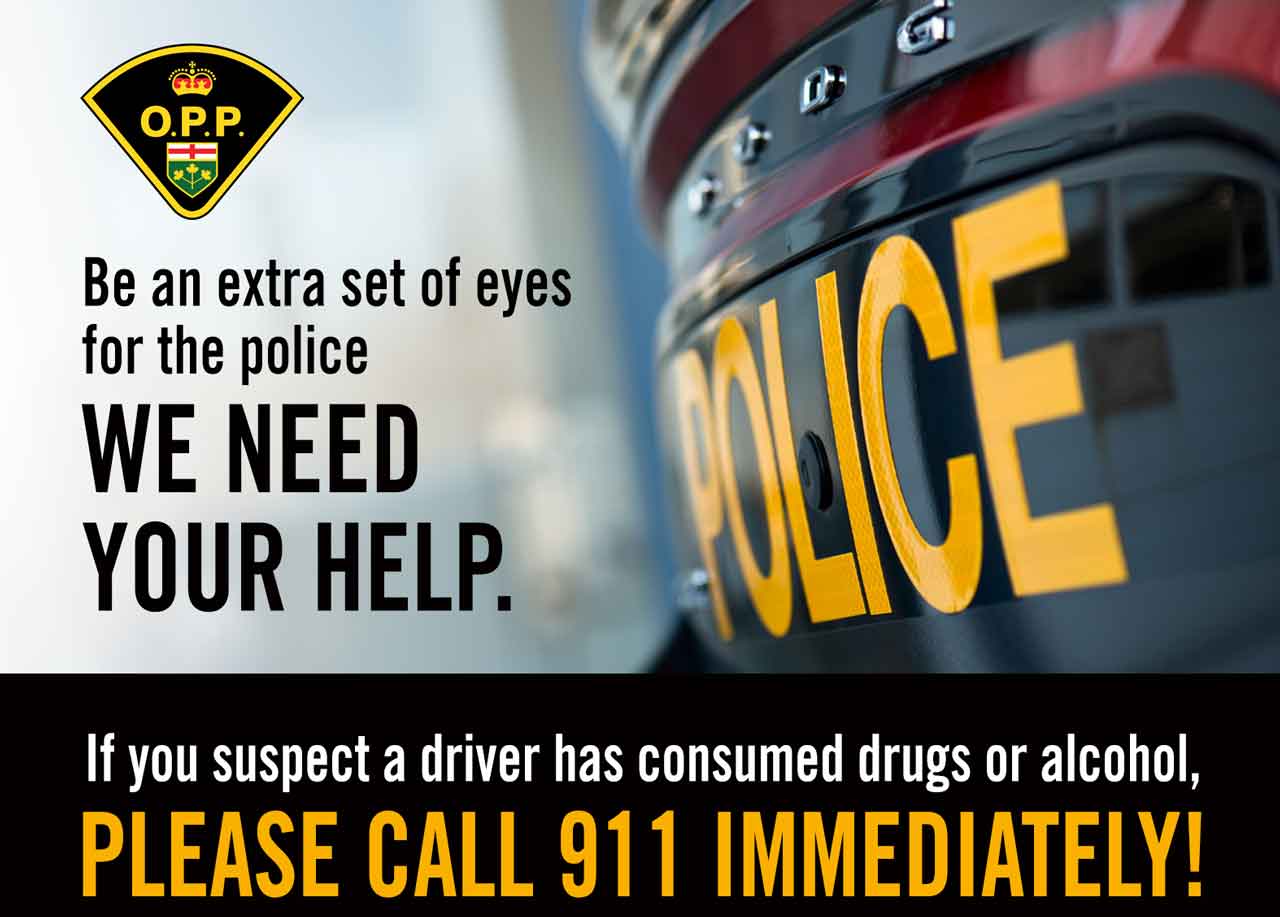
OPP continue to encourage people who suspect an impaired driver to call 911.
That message is particularly important across Northwestern Ontario, where long distances between communities and substantial travel on Highway 11, Highway 17 and secondary roads can increase the consequences when an impaired driver enters traffic.
People reporting a suspected impaired driver should provide a vehicle description, licence plate if safely observable, location and direction of travel. Drivers should not attempt to follow or confront a suspected impaired driver if doing so would put themselves or others at risk.
Plan a safe ride before drinking or using drugs
Impaired driving is preventable. Anyone who has consumed alcohol, cannabis or another impairing drug should make transportation arrangements before getting behind the wheel.
Safer alternatives include using U-Ride where available, calling a taxi, taking public transit where available, arranging for a sober designated driver, calling a friend or family member for a ride, or staying overnight and travelling once it is safe to drive.
Prescription and non-prescription medications can also affect driving ability. Drivers should follow medical advice and medication warnings and arrange another way home when there is a risk of impairment.
If you believe someone is driving impaired, call 911.