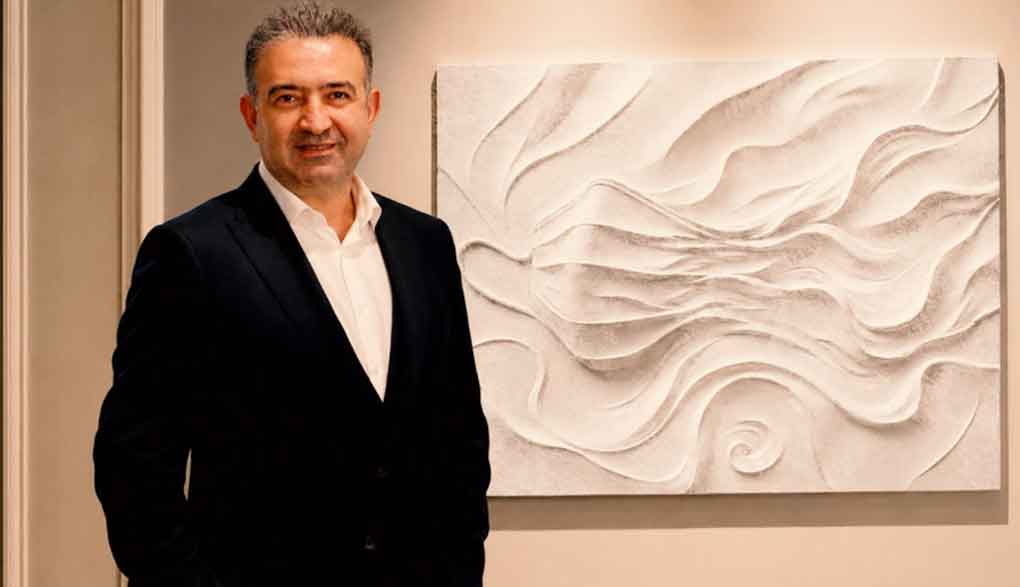
Before the pandemic, his life had been shaped by industry, commerce, and constant responsibility. Covid gave him something rare: time still enough to return to art, and painful enough to give that return meaning.
For years, Hamid Taherypour’s life moved at the speed of decisions. His name was associated with enterprise, industrial work, commercial ambition, and social initiatives that demanded presence, judgment, and endurance. Long before art became a visible part of his public identity, he had already lived through the intense rhythm of building, managing, negotiating, and carrying responsibility across different fields. That life brought recognition, but it also left little room for silence.
Then Covid arrived, and the world stopped.
For many, the early months of the pandemic were defined by fear and uncertainty. For Taherypour, they were also marked by a kind of time he had not known for decades. Meetings disappeared. Travel was suspended. The noise of ordinary momentum fell away. What remained was not leisure, but an unfamiliar stillness, heavy with the suffering of others.
It was in that stillness that art returned.
Taherypour had carried an interest in visual art since his youth, but life had repeatedly pushed that interest to the margins. The pandemic created a window he had never been able to open before. For the first time in many years, he could spend uninterrupted hours with material, form, and thought. He began to work not as a man looking for another public achievement, but as someone trying to give shape to an inner pressure that the pandemic had made sharper.
The pain of that period mattered. Around the world, people were grieving, isolated, afraid, or waiting for news they could not control. Taherypour did not approach this collective experience as a theme to illustrate. He absorbed it quietly. The anxiety, the loneliness, the fragility of ordinary life, the sudden awareness that everything familiar could be interrupted, all of it found its way into his handling of volume and surface.
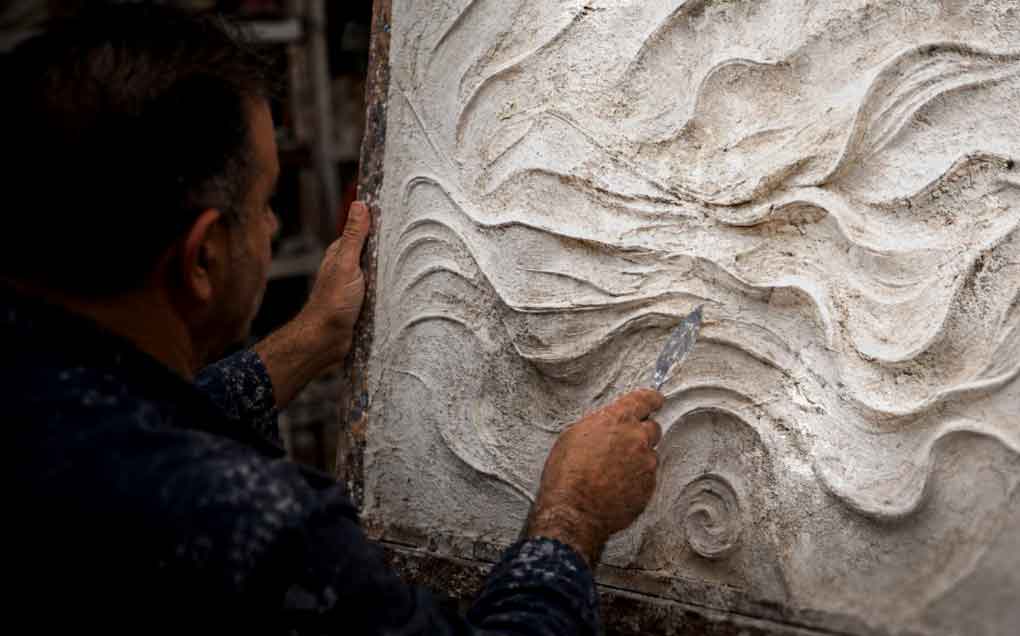
His work began to turn toward three dimensional presence with greater urgency. He has often reflected on the moment when an image leaves the flat surface and becomes volume. For him, once something gains dimension, it is no longer contained by those dimensions alone. A form that rises from two dimensions into three begins to gather other meanings. It carries memory, emotion, shadow, distance, and the physical presence of the viewer. It exists in space, but it also changes the space around it.
This belief is central to Taherypour’s recent practice. He works with materials that resist being merely decorative. Plaster has become especially important in his process, allowing him to build volume with directness, touch, and vulnerability. Bronze brings weight and permanence. Wood carries warmth, grain, and the memory of growth. Fabric introduces softness and bodily association. These materials are not chosen only for appearance. They allow him to think with his hands.
What began during Covid did not remain a temporary response to confinement. After the world resumed its movement, Taherypour found that he could not leave art behind again. The studio had become more than a place to make objects. It had become a refuge, not from responsibility, but from the hardening effect that responsibility can have on a person. In the studio, achievement is not measured by numbers. A surface either holds feeling or it does not. A form either breathes or it remains closed.
That may be why his artistic turn feels less like a reinvention than a return. Covid did not make Taherypour an artist. It made time for a part of him that had waited quietly beneath decades of work. Out of a global wound came a private opening. Out of stillness came form. And once that form took hold, it became impossible for him to step away from it.