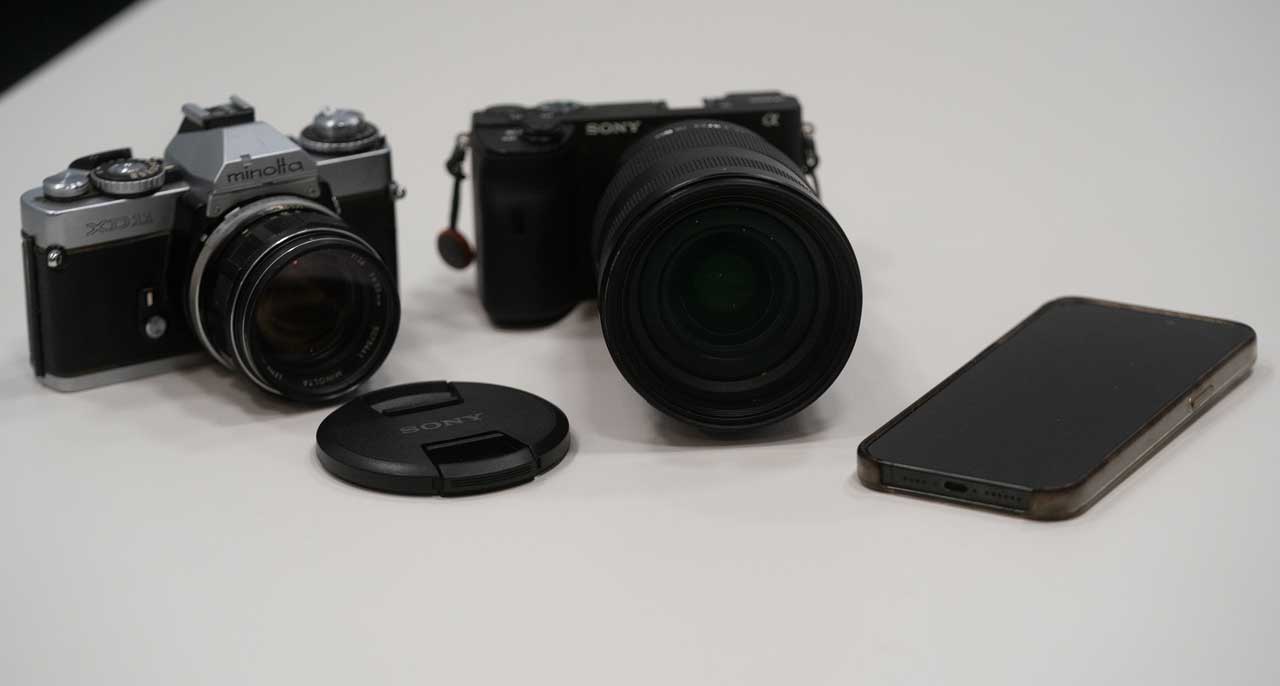
The right camera is the one that gets used
Photography has never been easier to start, but it has also never been easier to overbuy.
Modern cameras are packed with autofocus systems, video modes, wireless sharing, subject tracking, scene modes, and more menu options than most beginners need. That can be exciting. It can also be confusing.
The truth is simple: the best first camera is not always the newest or most expensive one. The best first camera is the one you can afford, carry, understand, and use often.
A beginner should start with three goals:
- Learn how light works.
- Learn how lenses change the look of a picture.
- Learn how to see a good moment before pressing the shutter.
That matters more than whether the camera has 24 megapixels or 33 megapixels, or whether it can shoot 10 frames per second or 30.
Still, choosing the right gear does matter. A smart starter kit can help a new photographer grow for years. A poor choice can leave someone frustrated, out of money, and stuck with gear that does not match the kind of photography they want to do.
Smartphone, compact camera, DSLR, or mirrorless?
Most people already carry a camera every day: their phone. Today’s smartphones are excellent for casual photos, quick videos, social media, food shots, and family moments. They are easy, fast, and always available.
But a dedicated camera still gives a beginner several big advantages:
It has a larger sensor, which usually means better image quality, especially in low light. It accepts different lenses, which changes how a scene looks. It gives better control over shutter speed, aperture, ISO, focus, and flash. It also teaches the craft in a way a phone often hides behind automatic processing.
There are three main digital camera paths for beginners: compact cameras, DSLR cameras, and mirrorless cameras.
Compact cameras have a fixed lens. Some are small point-and-shoot models. Others are high-end travel cameras. They are easy to carry, but they are less flexible because the lens cannot be changed. They make sense for travel, street photography, and people who want better quality than a phone without building a full camera system.
DSLR cameras use a mirror and optical viewfinder. When you look through a DSLR, you are seeing the scene through the lens using reflected light. DSLRs were the standard for serious digital photography for many years.
Mirrorless cameras remove that mirror system. Instead, they use the image sensor to feed a screen or electronic viewfinder. This is now the main direction of the camera industry.
For most beginners buying new gear today, mirrorless is the better long-term choice. For beginners buying used gear on a tight budget, DSLR can still be a smart move.
DSLR cameras: still useful, but no longer the future
A DSLR can still be a very good learning tool.
The biggest advantage is value. Because many photographers have moved to mirrorless, used DSLR bodies and lenses can often be found at lower prices. A beginner can sometimes buy a solid DSLR body, a kit zoom, a 50mm prime lens, and a telephoto zoom for less than the price of one new mirrorless body.
DSLRs also have excellent battery life. Their optical viewfinders do not drain power the same way electronic viewfinders do. Many DSLR bodies are comfortable to hold, especially for people with larger hands. They also have a huge used lens market, especially for Canon EF and Nikon F systems.
For learning still photography, a DSLR remains more than capable. Portraits, landscapes, events, sports, wildlife, family photos, and travel work are all possible.
The drawback is that the DSLR market is shrinking. Fewer new DSLR bodies are being released. Most research, development, and new lens design has moved to mirrorless. DSLR autofocus can also feel dated for video or live-view shooting compared with newer mirrorless models. Many beginner DSLRs do not have the same eye-detection autofocus, subject tracking, silent shooting, or advanced video tools found in current mirrorless cameras.
A DSLR is not a bad camera. It is just an older road. For budget-conscious learners, that road still gets you to the same place: better pictures.
Mirrorless cameras: the best first choice for most new buyers
Mirrorless cameras are now the safest first choice for most beginners buying new.
They are usually smaller and lighter than DSLRs. They offer electronic viewfinders or rear screens that show exposure changes before the picture is taken. If the image is too dark, too bright, or the white balance looks wrong, the beginner can often see that before pressing the shutter.
That live preview is a major learning advantage.
Mirrorless cameras also tend to have stronger autofocus, especially for faces, eyes, animals, birds, vehicles, sports, and video. Many entry-level mirrorless cameras can track a moving subject better than older beginner DSLRs could.
Video is another major reason to choose mirrorless. If a beginner wants to shoot YouTube videos, interviews, reels, local sports clips, family video, or short documentaries, mirrorless cameras are generally a better platform.
The downside is cost. New mirrorless systems can be expensive. Some lens mounts have more affordable lenses than others. Battery life can also be weaker because the camera is constantly powering a screen or electronic viewfinder.
The most important point is this: when you buy a mirrorless camera, you are not just buying a body. You are buying into a lens system. Canon RF/RF-S, Nikon Z, Sony E, Fujifilm X, Panasonic/Olympus Micro Four Thirds, and L-Mount all have different strengths, costs, and lens choices.
Choose the system as carefully as the camera.
Full-frame, APS-C, or Micro Four Thirds?
Beginners will see these terms quickly. They refer to sensor size.
Full-frame sensors are larger and often deliver excellent low-light quality, dynamic range, and shallow depth of field. They are popular with professionals and serious enthusiasts. They are also more expensive, and the lenses are usually larger and heavier.
APS-C sensors are smaller than full-frame but much larger than a phone sensor. APS-C is the sweet spot for most beginners. Cameras are smaller, lenses are usually cheaper, and image quality is more than good enough for web publishing, prints, sports, portraits, travel, and learning.
Micro Four Thirds sensors are smaller than APS-C but still far larger than most phone sensors. Their big advantage is compact lenses. A Micro Four Thirds wildlife, travel, or walking-around kit can be much lighter than a full-frame kit.
For most first-time buyers, APS-C mirrorless is the strongest starting point. It balances price, size, image quality, and lens choice.
What should a beginner look for in a first camera?
A good beginner camera should have:
A comfortable grip. If it feels awkward in your hand, you will not use it.
A viewfinder, if possible. A viewfinder helps in bright sunlight and encourages better composition.
Manual controls. You do not need to use them on day one, but you should be able to grow into them.
RAW shooting. RAW files give more editing flexibility than JPEG files.
Good autofocus. Eye detection and subject tracking are useful, especially for people, pets, sports, and events.
A hot shoe. This allows you to add a flash or wireless trigger later.
A flip or tilt screen. This helps with low-angle photos, video, selfies, and vlogging.
Decent lens options. The camera body will age. Good lenses can stay useful for years.
A beginner does not need a professional camera. Weather sealing, dual card slots, 8K video, huge burst rates, and premium full-frame sensors are nice, but they are not required for learning.
The best starter lens pack
A common mistake is spending too much on the camera body and too little on lenses.
The lens has a major impact on the final image. It controls the angle of view, background blur, low-light ability, and how close or far a subject appears.
A smart beginner kit should start simple.
Lens 1: the kit zoom
Most starter cameras come with a basic zoom lens, often something like 16-50mm, 18-45mm, or 18-55mm on APS-C cameras.
Do not dismiss the kit lens. It is light, affordable, and useful. It can handle family photos, travel, landscapes, street scenes, basic portraits, and everyday learning.
The kit lens teaches focal length. At the wide end, it captures more of the scene. At the long end, it narrows the view and is better for portraits and details.
The weakness is low-light performance. Most kit lenses have a variable aperture, often around f/3.5 to f/6.3. That means they do not let in as much light as a faster prime lens. Indoors, at night, or in arenas, the kit lens can struggle.
Still, every beginner should use the kit lens before replacing it. It helps reveal what kind of photography they actually enjoy.
Lens 2: a fast normal prime
The next lens should usually be a small prime lens.
A prime lens does not zoom. That sounds limiting, but it is one of the best teaching tools in photography. It forces the photographer to move, think, compose, and pay attention to distance.
For APS-C cameras, good beginner prime choices include 23mm, 24mm, 30mm, or 35mm lenses. These give a natural field of view for daily photography, people, street scenes, events, and indoor work.
For full-frame cameras, a 50mm f/1.8 is the classic starter prime. It is often affordable, small, sharp, and excellent for portraits, family photos, low light, and learning depth of field.
The main advantage is the wide aperture. A lens such as f/1.8 lets in much more light than a kit zoom. It also creates softer backgrounds, which helps make portraits stand out.
For a beginner, this lens can be a turning point. It shows what a dedicated camera can do that a phone or kit zoom often cannot.
Lens 3: a telephoto zoom
A telephoto zoom is the third useful lens for many beginners.
On APS-C systems, common budget choices include 55-200mm, 55-210mm, 55-250mm, or 70-300mm lenses.
This lens is useful for children’s sports, school events, wildlife, birds, community events, stage performances, parades, rodeos, hockey practices, baseball games, and distant details in landscapes.
A telephoto lens changes how a picture feels. It compresses distance, isolates subjects, and brings far-away scenes closer.
The budget versions are usually not great in low light. They are best outdoors or in bright conditions. For indoor sports, a beginner will eventually want a faster and more expensive telephoto lens, but that can wait.
A starter telephoto teaches timing, patience, and subject tracking.
Lens 4: a wide-angle lens, if landscapes or video matter
A wide-angle lens is not essential for every beginner, but it is very useful for landscapes, architecture, real estate, tight indoor spaces, northern scenery, and vlogging.
On APS-C cameras, this often means something like a 10-18mm, 10-20mm, 11mm, or 12mm lens.
Wide-angle lenses make foregrounds feel larger and backgrounds feel farther away. They can create dramatic images, but they also require care. If used poorly, they can make people look distorted or push important subjects too far away.
For Northwestern Ontario scenery, shorelines, forest roads, storm clouds, northern lights, and wide views of Lake Superior, a wide lens can be a strong addition.
For video creators, an ultra-wide or wide-angle lens helps when filming at arm’s length or in small rooms.
Lens 5: macro can wait
Macro lenses are used for close-up photography: flowers, insects, textures, coins, jewelry, food, and small product details.
They are excellent, but they do not need to be part of the first purchase. A beginner should first learn the camera, kit zoom, prime, and telephoto. Macro can come later if close-up work becomes a real interest.
A practical starter kit by budget
The lowest-cost path
Buy a used DSLR body, an 18-55mm kit lens, a 50mm f/1.8 prime, and a 55-250mm or 70-300mm telephoto.
This is the value route. It is excellent for learning still photography. It is not the best path for modern video, but it gives a beginner a lot of photographic range for the money.
Good for: students, hobbyists, families, still photography, budget learning.
Weak for: modern autofocus, video, compact travel, future system growth.
The best all-round beginner path
Buy an APS-C mirrorless camera with a kit zoom. Add a fast prime lens. Add a budget telephoto zoom when needed.
This is the most balanced choice. It gives a beginner modern autofocus, good image quality, video capability, and a system that should remain current.
Good for: travel, portraits, events, family, social media, video, general learning.
Weak for: buyers who expect full-frame performance right away or need professional sports gear.
The creator path
Buy a compact mirrorless camera with strong video features, a flip screen, microphone input, and a wide lens.
This works well for people making YouTube videos, interviews, short documentaries, product clips, or social media content. Stabilization, autofocus, audio input, and screen movement matter more here than high megapixel counts.
Good for: vlogging, video, interviews, social media, small business content.
Weak for: serious wildlife, long-lens sports, and traditional viewfinder shooting if the camera lacks an electronic viewfinder.
The outdoor and wildlife path
Buy an APS-C or Micro Four Thirds mirrorless camera and prioritize a telephoto zoom.
APS-C and Micro Four Thirds systems offer useful reach without the size and cost of full-frame telephoto glass. This matters for birds, wildlife, sports, and outdoor events.
Good for: wildlife, hiking, sports, air shows, outdoor community events.
Weak for: low-light indoor sports unless you invest in faster lenses.
Do not forget the boring gear
A beginner does not need a giant camera bag full of gadgets, but a few basics matter.
Buy at least one extra battery. Mirrorless cameras use power quickly.
Buy two good memory cards instead of one huge card. If one fails, not everything is lost.
Buy a simple camera bag that you will actually carry.
Buy a microfiber cloth and a blower. Do not wipe dust or grit across a lens.
Buy a tripod only if you will use it. It helps with landscapes, night photography, northern lights, long exposures, self-portraits, and video.
Do not rush to buy filters. A circular polarizer can help with skies, water, and reflections. Neutral density filters are useful for video and long exposures. Cheap filter bundles are often not worth it.
What beginners should learn first
Gear is only the start. The real progress comes from practice.
Start with the exposure triangle: shutter speed, aperture, and ISO.
Shutter speed controls motion. A fast shutter freezes action. A slow shutter shows blur.
Aperture controls light and depth of field. A wide aperture such as f/1.8 blurs the background. A smaller aperture such as f/8 keeps more of the scene sharp.
ISO controls how sensitive the camera is to light. Higher ISO helps in dark scenes but can add noise.
Then learn composition. Watch the background. Move your feet. Get closer. Look for leading lines. Pay attention to light direction. Do not put every subject dead centre unless there is a reason.
Most importantly, shoot often. Photograph the same place at sunrise, noon, and sunset. Photograph rain, snow, fog, and hard sunlight. Photograph people, streets, sports, animals, signs, buildings, and details.
Good photography is built by repetition.
Final advice: buy less, shoot more
For a beginner, the ideal first kit is not complicated.
Start with an APS-C mirrorless camera and kit zoom if buying new. Add a fast normal prime lens. Add a telephoto zoom if sports, wildlife, or events matter. Consider a wide-angle lens later for landscapes, interiors, and video.
Choose DSLR only if the budget is tight and still photography is the main goal. A used DSLR kit can still teach the craft very well.
Do not chase professional gear too early. A beginner with a basic camera who understands light will make stronger images than a beginner with an expensive camera who only shoots on automatic and hopes for the best.
The camera is the tool. The photographer makes the picture.