Flood watch issued for Whitefish River as ice jam raises risk of overtopped roads
THUNDER BAY – FLOOD Watch – The Lakehead Region Conservation Authority has issued a flood watch for the Whitefish River watershed, including the Townships of O’Connor and Gillies and the Municipality of Oliver Paipoonge, as ice jamming and spring runoff increase the risk of localized flooding.
The Whitefish watershed covers parts of those rural municipalities and has a history of rapid spring water level changes during breakup.
Ice jam and snowmelt driving current flood risk
According to the conservation authority, ice jamming on the Whitefish River is blocking the flow of water, while significant rural snowpack and rising temperatures are adding to runoff into local watercourses.
Environment Canada is forecasting rain Friday, with nearby Northwestern Ontario regions expecting 5 to 10 millimetres before colder air, gusty winds and possible flurries move in overnight and into Saturday.
The authority says roads could become overtopped while the ice jam remains in place, and again for a short time if the jam suddenly breaks and sends a surge of water downstream.
That kind of risk is part of the spring freshet pattern in Northwestern Ontario, where frozen ground, lingering snowpack and river ice can combine to create fast-changing local flood conditions.
What a flood watch means
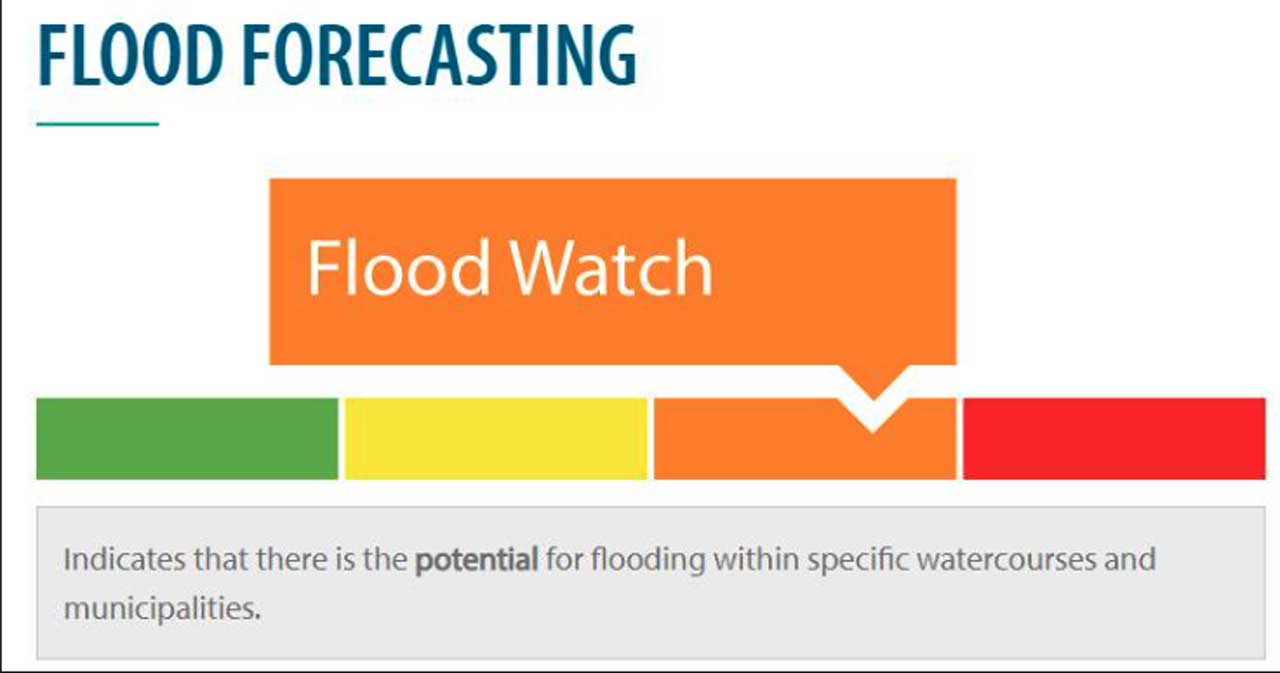
A flood watch means flooding is possible in specific watercourses or municipalities, and that municipalities, emergency services and landowners in flood-prone areas should be prepared. In practical terms for residents in the Whitefish corridor, that means paying close attention to road closures, avoiding low-lying routes and staying away from fast-moving water and unstable riverbanks.
Whitefish River has seen serious spring flooding before
This is not the first time the Whitefish River watershed has been under pressure during breakup season. In its 2025 annual report, the conservation authority said the highest rainfall totals during the April 28-29 flood event were recorded at the Whitefish gauge, with road closures reported in Gillies, O’Connor and Oliver Paipoonge. The authority’s 2022 annual report also noted overtopped roads in the Whitefish watershed during that spring flood event.
That history matters because it shows how quickly rural flooding can disrupt travel, property access and emergency response west and southwest of Thunder Bay. For communities tied to Highway 11/17 corridors and local concession roads, even short-lived overtopping can create major detours and safety risks.
Watch remains in effect through Monday morning
The flood watch is to remain in effect until 10 a.m. Monday, April 20, unless conditions change sooner. Residents are being urged to monitor local forecasts and conservation authority updates through the weekend as the weather shifts from rain to colder conditions, which can complicate runoff and ice conditions rather than ending the hazard immediately.